

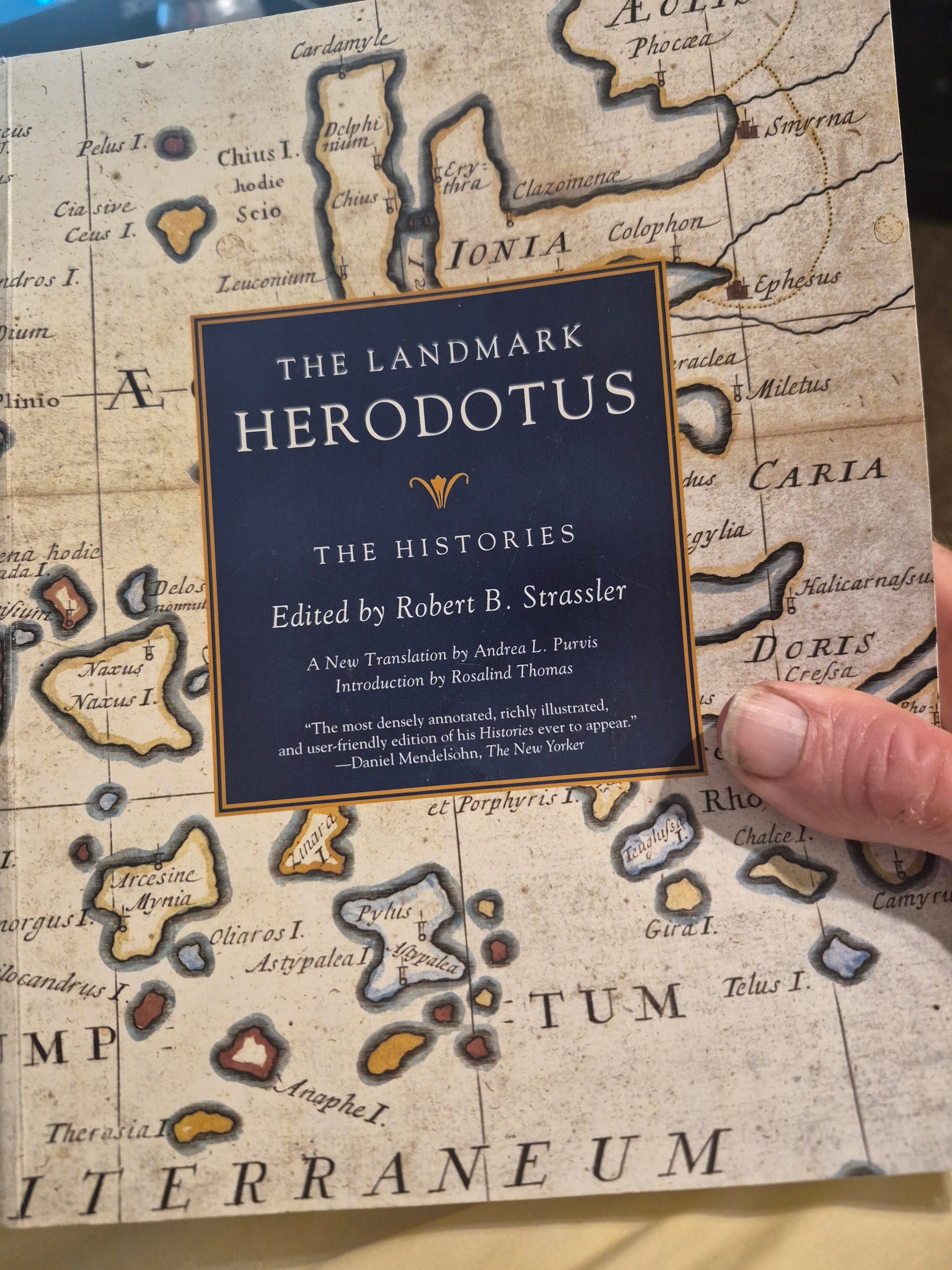
The Marathon story.
A Greek runner sprinted 26 miles from Marathon to Athens with news of a stunning victory. Panted “Nike!” — and keeled over dead.
And thus our term ‘marathon.’ Boston’s been running theirs since 1897.
A miraculous tale. Didn’t happen.
Herodotus, the so-called ‘Father of History,’ wrote the earliest account of the Battle of Marathon, working about forty years after the fact.
He never recorded that a messenger died, and no dramatic 26-mile run to Athens to spread the happy news.
But what Herodotus did write is even stranger: two miracle runs that are completely true.
One of them, a man who ran 150 miles through mountains, alone, before the Battle of Marathon, in a desperate plea for help.
His name?
The hemerodromos Philippides.
A trained day-runner. Athens kept a few on hand for exactly this kind of emergency.
Keep reading. The real Marathon story is about to get a lot stranger than “he ran and died.”
This newsletter is reader-supported. Please consider a $5 subscription:
3 weekly history essays. Easy reading. No dull dissertations.
3 weekly quick summaries of how we use AI for creating every essay.
1 monthly extra newsletter, rotating between a full AI breakdown for writers and video, and a Stoic philosophy article.
Open DM sessions on the month’s top article.
No Horse Could Make This Run
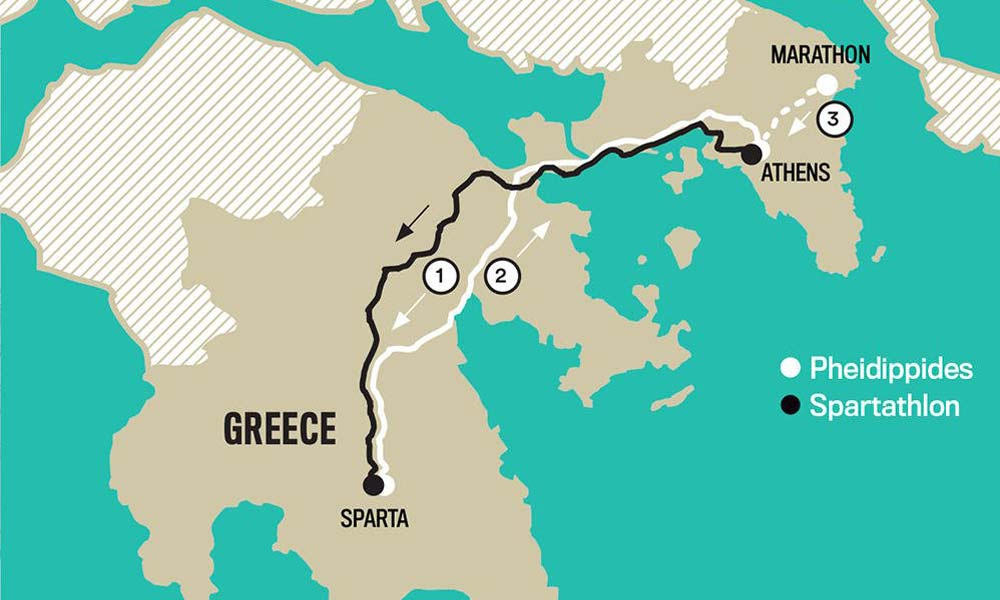
You’ve felt beat after a long day. Now imagine 36 hours of exhaustion, 150 miles, uphill, with your city’s survival on the line.
Nope, a horse was out.
The tortuous route cuts through the Peloponnese mountains. Narrow goat paths, loose rock, steep grades no animal could manage.
Greece didn’t have a network of roads built for riders either.
Philippides would have carried almost nothing. A runner moving that fast couldn’t afford the weight of supplies. Water came from mountain streams, not anything he packed.
Food, if he stopped at all, was whatever a runner in that era carried for endurance: figs, maybe barley cake, eaten on the move. Sweat and dust would have caked together in the heat, the kind of grime that doesn’t wash off until the run is finished.
He’d have known what was riding on his legs.
No Athens without Sparta’s spears. No Sparta’s spears without him crossing 150 miles of rock before his body gave out. One man, and an entire city’s survival waiting on whether he made it.
Philippides finished in about 36 hours.
Athens didn’t improvise the run on the fly. Greek city-states maintained a stable of these runners, ready for exactly this kind of emergency. The ancient Pony Express, but on foot, alone, through parched, hellish mountains.
Skeptics doubted the feat for centuries. Herodotus wasn’t around to prove it. Someone else did.
In 1982, 56-year-old RAF Wing Commander John Foden decided to find out. He and four other officers flew to Greece and ran the actual route Herodotus described.
Three of them made it inside the 36-hour window. Foden himself crossed into Sparta at 37 hours and 37 minutes, close enough to call it confirmed. The event they created still runs every year. It’s called the Spartathlon.
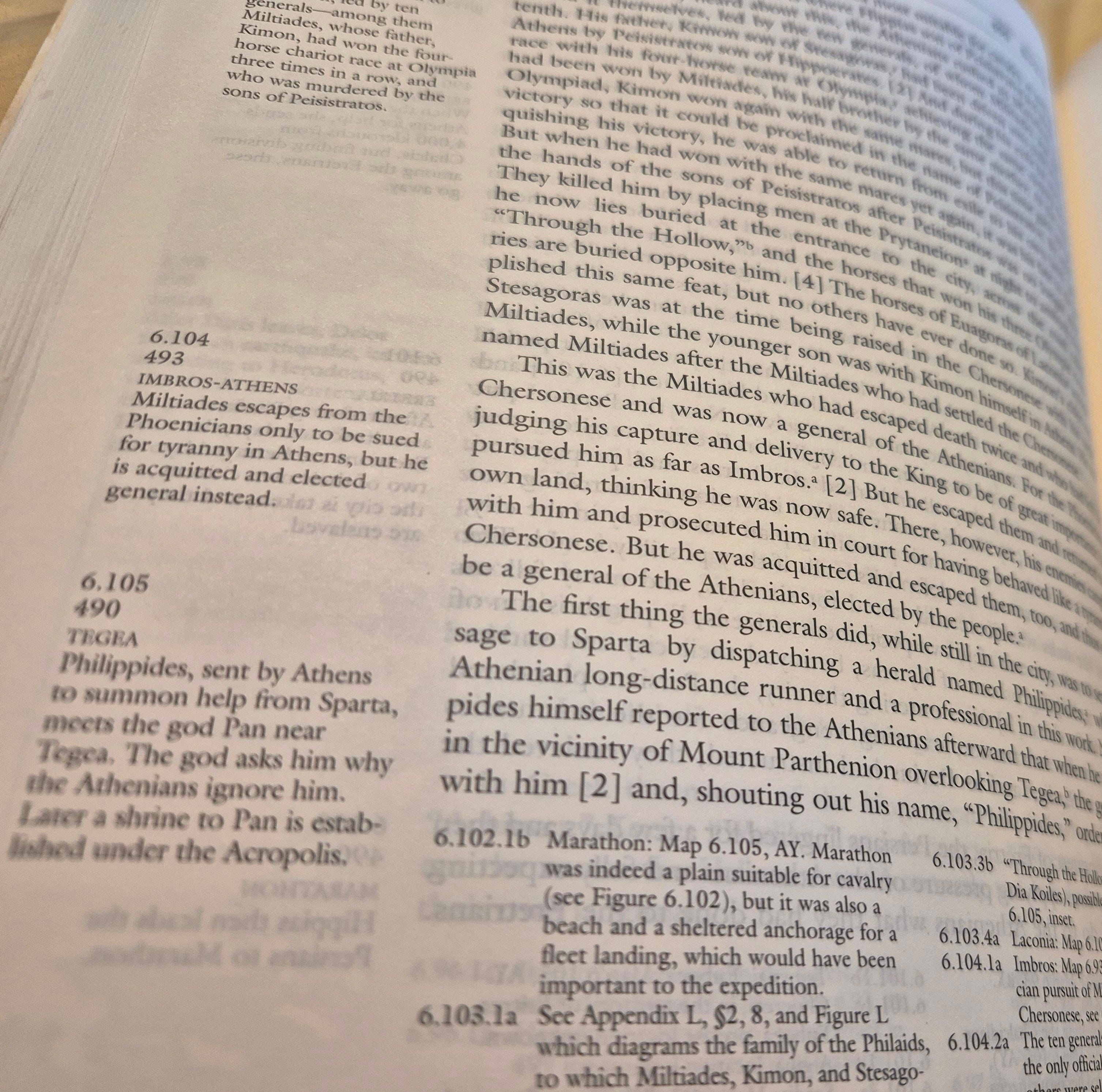
Herodotus records in Book 6, chapter 105, that Philippides claimed to have encountered the god Pan along the way, who asked why Athens had been neglecting him.
Sparta agreed to send troops. But not yet. Religious law forbade marching before the full moon. Help was coming.
Not in time to save the day at Marathon. The Athenians would fight the Persians alone.
The Battle Joined
A wide plain, dust and scrub grass, flat and open, hemmed by hills on one side and the sea on the other. Ground that gave the Persian cavalry ample room to work.
The outgunned Athenians had nowhere to hide.
