

Every politician promises to fix the roads. Around 66 BC, Julius Caesar did it and paid for the work himself with borrowed money.
He was buying votes. Politicians always have, and you can still stand on Caesar’s first purchase at Rome’s southern edge.
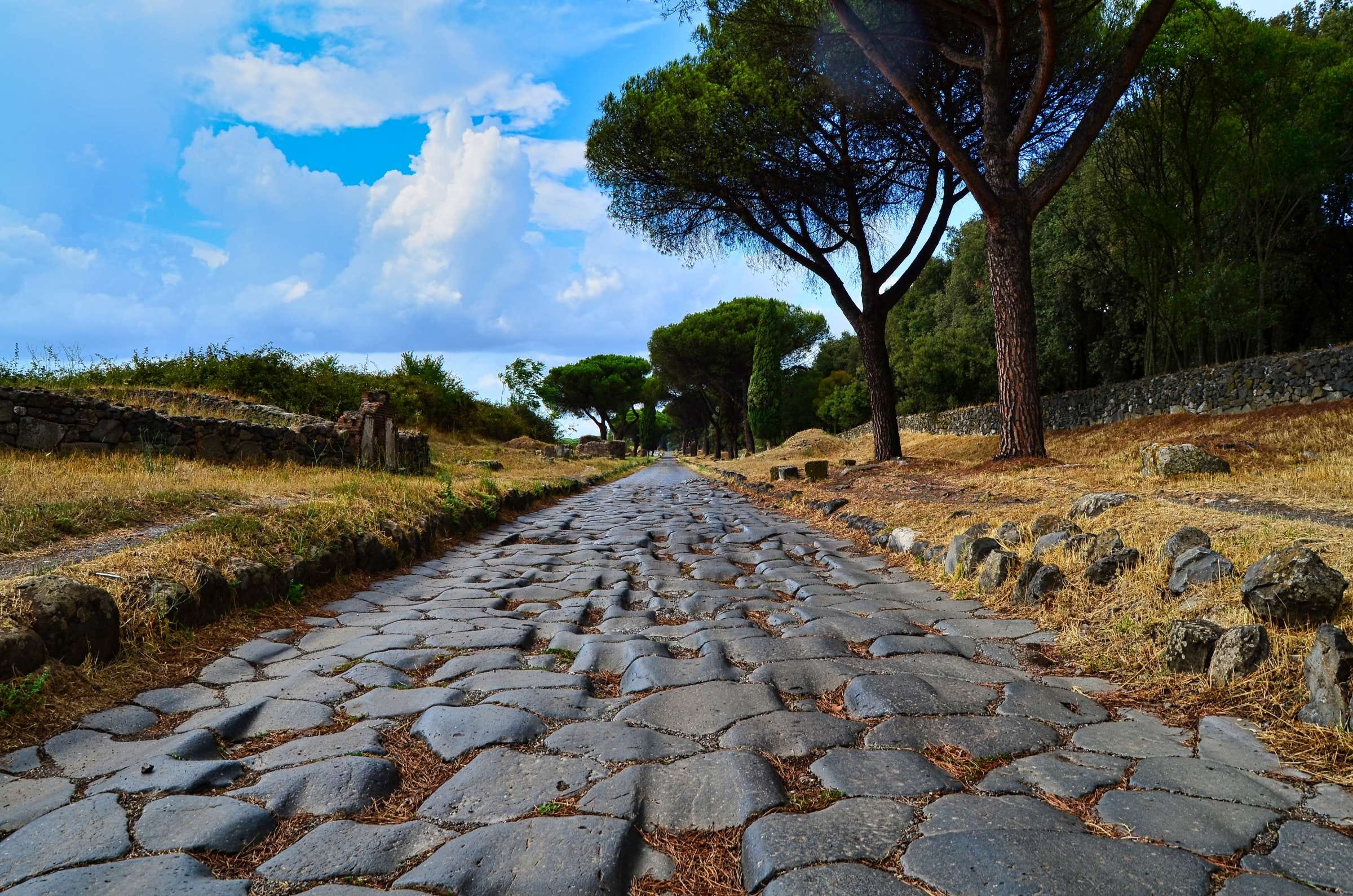
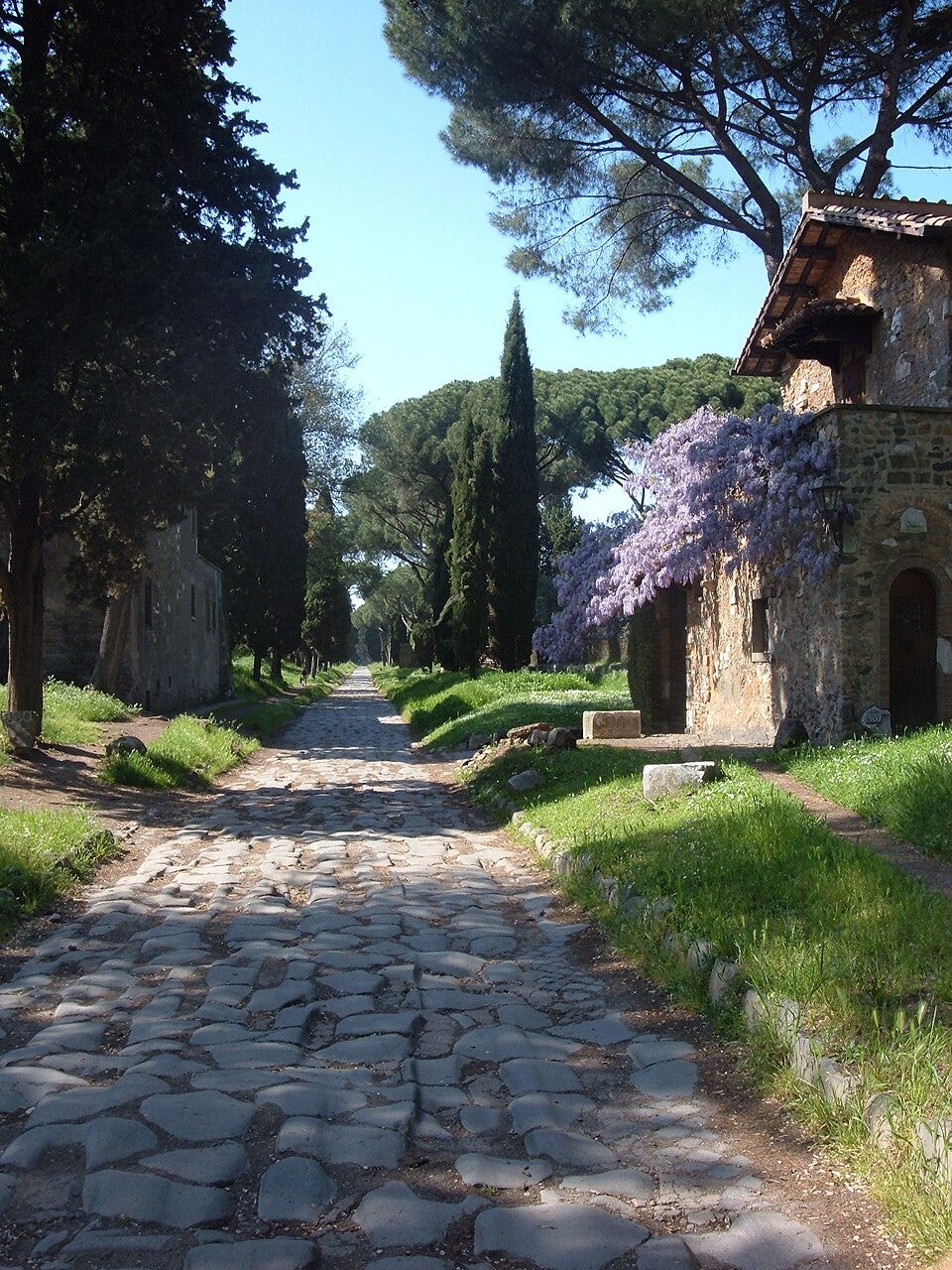
Walk the Appian Way today, and you’re stepping on lava. The dark stones were cut from a 277,000-year-old lava flow, worn smooth by twenty centuries of feet and wheels.
In the late afternoon, the sun filters through the umbrella pines and the gray road runs straight until it fades from view... 350 miles to the heel of Italy.
Rome started building the Appian Way in 312 BC, and it was about 250 years old when Caesar took charge of road maintenance.
Here’s how a man buried in debt bought Rome’s loyalty, starting with its most famous road...
Try Past Passport free for 7 days. Paid subscribers get:
3 weekly history essays. Easy reading. No dull dissertations.
3 weekly quick summaries of how we use AI to create every essay.
1 extra monthly newsletter, rotating between a full AI breakdown for writers and video and a Stoic philosophy article.
1-week free trial, then just $5 per month.
Caesar started out neck-deep in debt
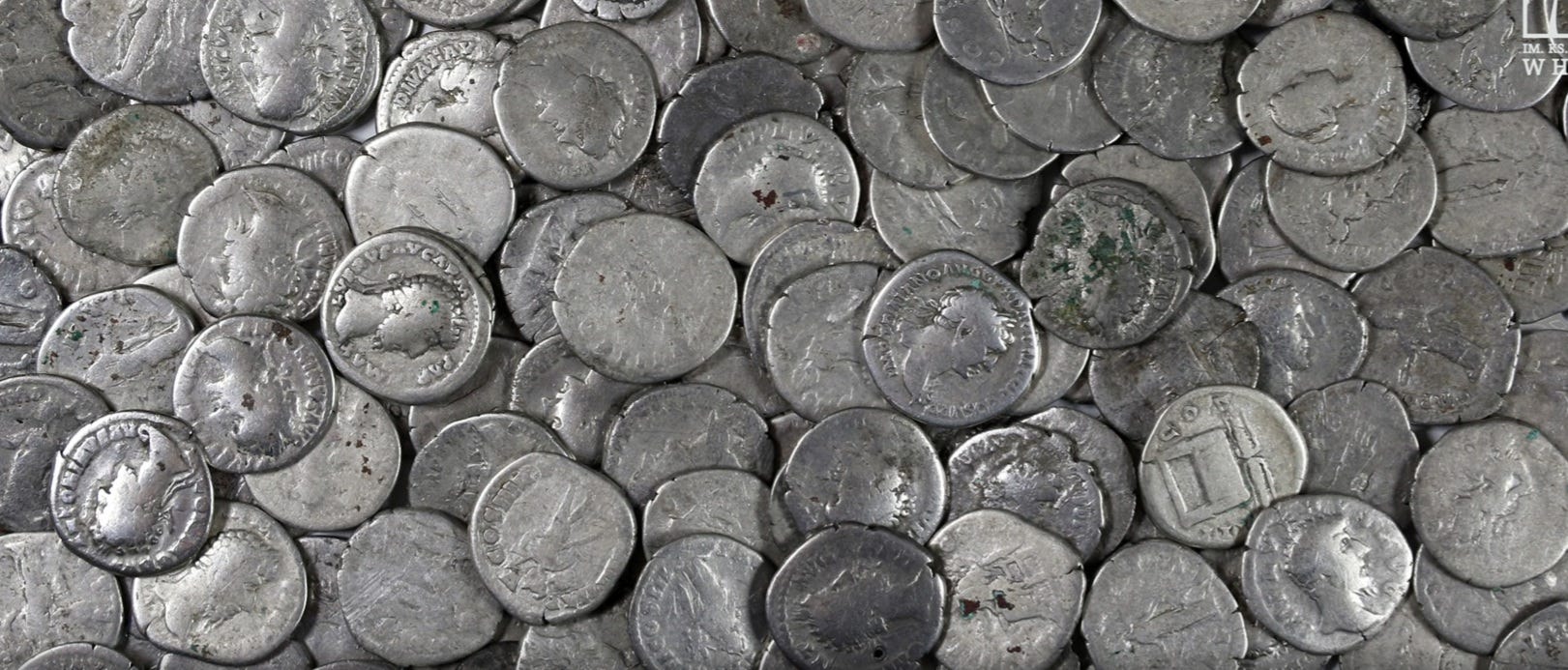
Before the road, there was the debt, and it was a ton. More than 30 tons, if you counted it out in silver coin.
Plutarch gives the figure: “before Caesar entered upon any public office he was thirteen hundred talents in debt.”
A Roman soldier would have needed about 69,000 years of pay to cover it.
He had an old family name and not much money behind it. At 18 he had refused the dictator Sulla’s order to divorce his wife, and it cost him her dowry and his inheritance.
Every office in Rome was won by vote, so he borrowed and spent where voters could see it.
You’d call that reckless, and his rivals did too. They expected his popularity to wither when the loans ran out.
Then Caesar found something bigger to spend on.
He fixed the Appian Way on borrowed money
The Appian Way today.
A young, ambitious Julius Caesar looked at the Appian Way in 66 BC and saw an opportunity. He wanted a name for himself, so he took charge of the road and seized on an idea any politician might: fix the roads.
He paid for the repairs himself, with more borrowed money. Plutarch doesn’t say what he fixed, only that it cost a fortune.
It was a grim road to put your name on. Five years before, it had been lined with dying men.
Crassus had crucified 6,000 of Spartacus’s men along it... a cross about every 35 yards, for 120 miles from Capua to Rome.
Caesar gave people a new reason to think about it. Farmers hauled their crops to market on those dark stones, and the legions marched south on them in hobnailed boots. Now every one of them traveled on Caesar’s money.
Buying voters like this was legal, and Rome expected ambitious men to spend on the public.
Who forgets the guy who fixed their road?
His rivals still thought he was throwing money away, and the road was the cheap part….
Then he filled the Forum with 640 gladiators
The road project bought Caesar loyalty, and he wanted more.
In 65 BC, he won the office of aedile, the official who ran Rome’s public games. Men on the way up used the job to get noticed, and they paid for the crowd-pleasing shows out of their own pockets.
Caesar put 320 pairs of gladiators in the Roman Forum. The Colosseum was still 145 years away. So they fought in the city’s main square while the crowd watched from temporary wooden stands.
The Roman Forum today.
Caesar called the show a tribute to his father, who had been dead for 20 years. Pliny says the fighters wore silver gear.
He added plays and parades, then fed the city at public banquets. It all ran on borrowed money, and Plutarch says it made Rome forget every aedile who came before him.
Say you’re a Roman voter that year. The man who fixed your road now fills the Forum with gladiators, and you watch for free.
Romans wanted to pay him back, Plutarch writes, and they did it by voting for him.
Caesar spent, and Rome repaid him in power.
It was all legal. What Caesar wanted next couldn’t be bought with a show, though.
Then he bribed his way to high priest
The high priest of Rome died in 63 BC. The office was pontifex maximus, head of the state religion. Whoever won it held it for life.
Caesar was in his mid-thirties and had never held a senior office. Both men running against him had already been consul, the highest office in Rome.
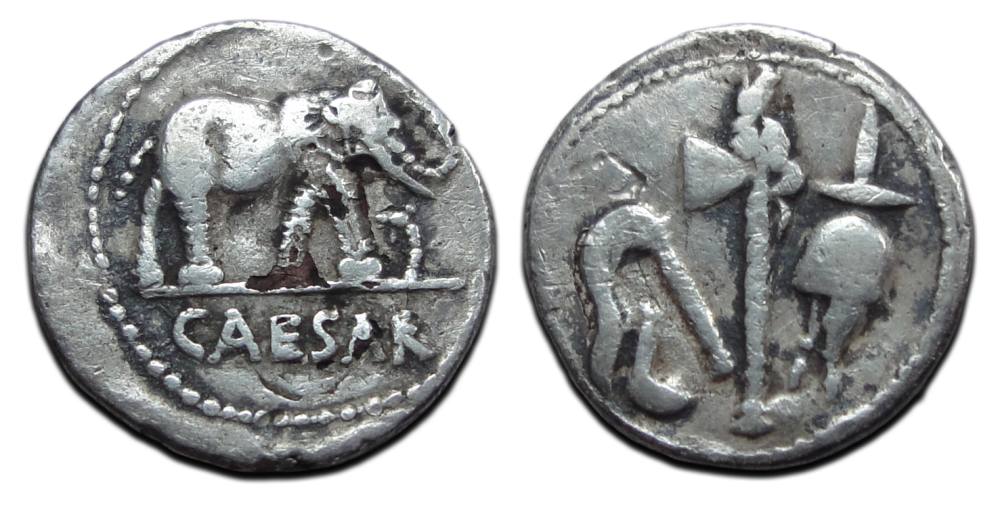
One of them, Catulus, offered him a large sum to drop out. Caesar answered that he would borrow more silver and stay in.
This time he skipped the roads and the shows... he handed voters cash. The Romans called it ambitus, and it was a crime. Suetonius says Caesar committed the crime on a lavish scale.
Think about what Caesar risked here.
If he lost, he’d owe more than ever with no office to pay it off.
And a bribery charge, to boot. Three years earlier, two men had won the consulship and lost it to exactly that charge.
On the morning of the vote, his mother, Aurelia, walked him to the door in tears. He kissed her and told her she would see her son that day as high priest or as an exile.
He came home, high priest. Suetonius says he won more votes in his rivals’ own districts than they won in the whole election.
Nobody charged him.
But he also came home even deeper in debt.
The richest man in Rome bought Caesar
By 61 BC Caesar had a way to pay everyone back. He had been named governor of Further Spain, and a Roman governor who knew what he was doing came home rich.
His creditors wouldn’t let him leave town, though.
They’d watched him borrow for years, and they wanted their money before he left Italy. Plutarch says they blocked his departure and made a loud public scene.
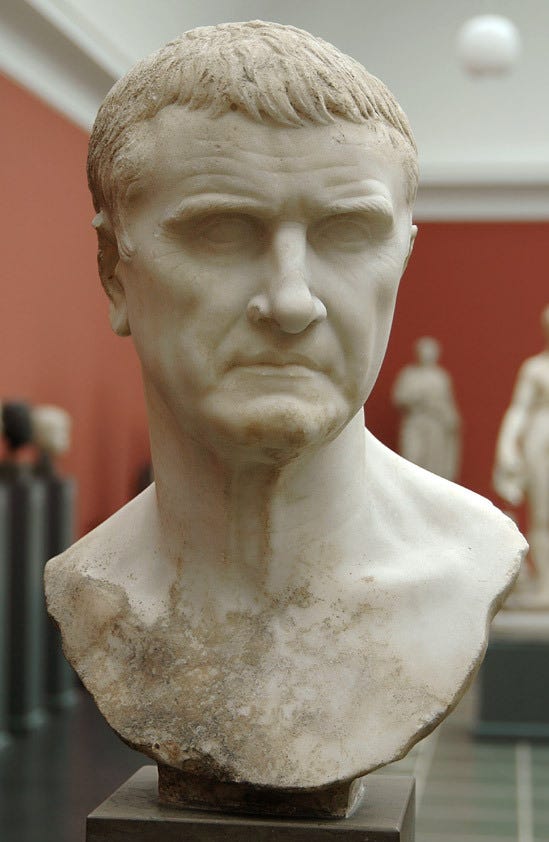
So Caesar went to Rome's richest man. You’ve met him already: Crassus, who lined the Appian Way with 6,000 crosses.
Crassus paid off the loudest creditors and put his own name behind 830 talents of the debt. About 19 tons of silver.
Plutarch says Crassus wanted Caesar’s energy on his side against his rival Pompey.
The man who bought Rome’s voters had been bought himself. Caesar left for Spain with one job: come back with enough to pay.
He kept buying voters after he died
The Spain strategy worked.
Caesar raised new troops and made war on the tribes of what is now Portugal, all the way to the Atlantic.
Suetonius says he sacked towns that had already opened their gates. He came home rich in 60 BC and won the consulship for the following year.
Then he picked Gaul for his next command. By Suetonius’s account, he chose it because it was the province most likely to make him wealthy.
It did. The man who once owed 30 tons of silver was soon paying off other politicians’ debts to win them over.
Plutarch saw what had happened. People thought Caesar was paying a high price for popularity that wouldn’t last.
He bought Rome's most valuable things and got them cheap.
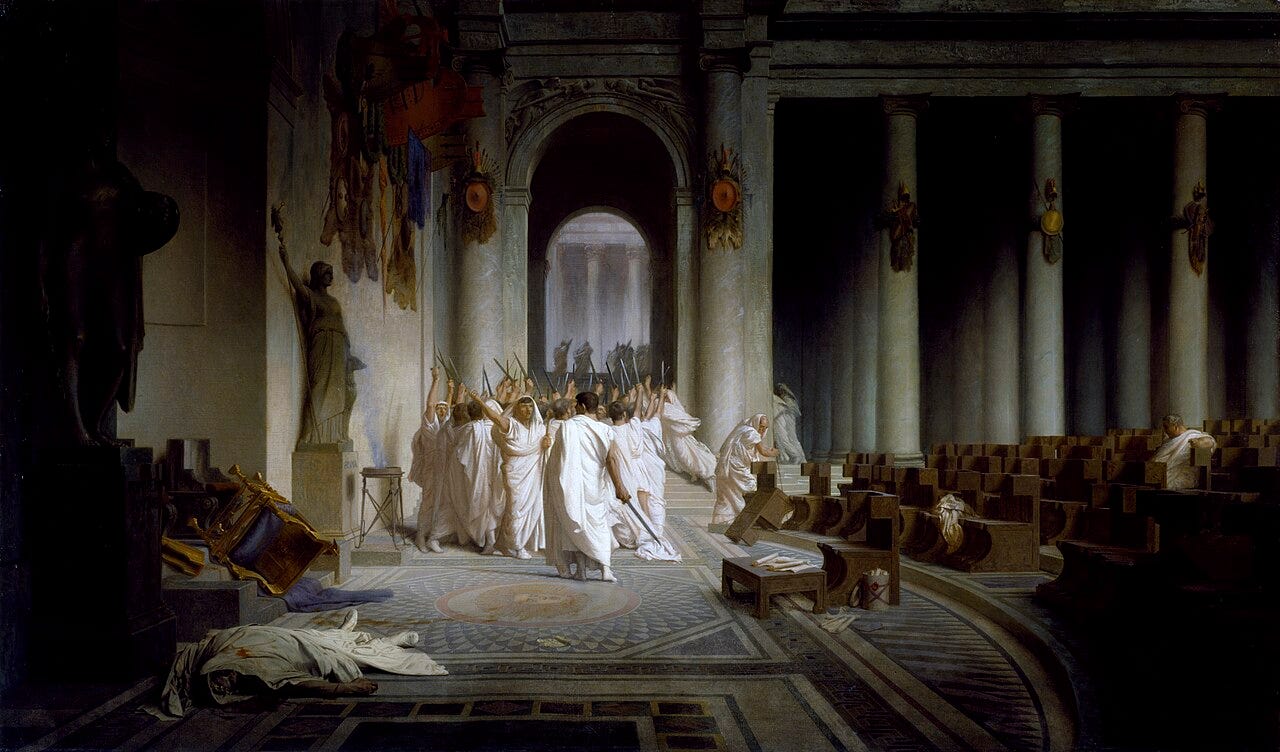
He was murdered in 44 BC, and he kept buying. His will left 300 sesterces to every citizen, about four months of a soldier’s pay, even after Caesar had doubled it. When it was read out, the crowd turned on his killers.
Politicians have always bought voters. Always will. People never change.
What changes is what the voters get for it. Rome got a road and a dictator.
Only the road remains, and you can walk its stones this afternoon.
If you know someone who thinks politics has never been this bad, send them this article. It’s been this way for 2,000 years, and we’re still here.
How Claude Helped This Essay
Walked the Appian Way myself. AI has never been there.
I used Claude for the money and number facts. 1,300 talents into tons of silver. A soldier’s pay across 69,000 years. The gap between 6,000 crosses. It told me to double-check its arithmetic. Fair enough.
It caught me twice in mistakes, such as using the wrong year for the road. And no, the Appian Way was not Rome’s oldest.
I caught Claude in a mistake once. It put Caesar’s gladiators in “the arena.” Which arena? The Colosseum was 145 years off. They fought in the Forum. News to me, you can expect a post on that one soon.
Tip: when AI hands you a fact, ask where. The answer usually beats the fact.