

Somewhere, someone’s thumb hovers over send on a text that means no turning back.
Divorce, bankruptcy. Something life-changing.
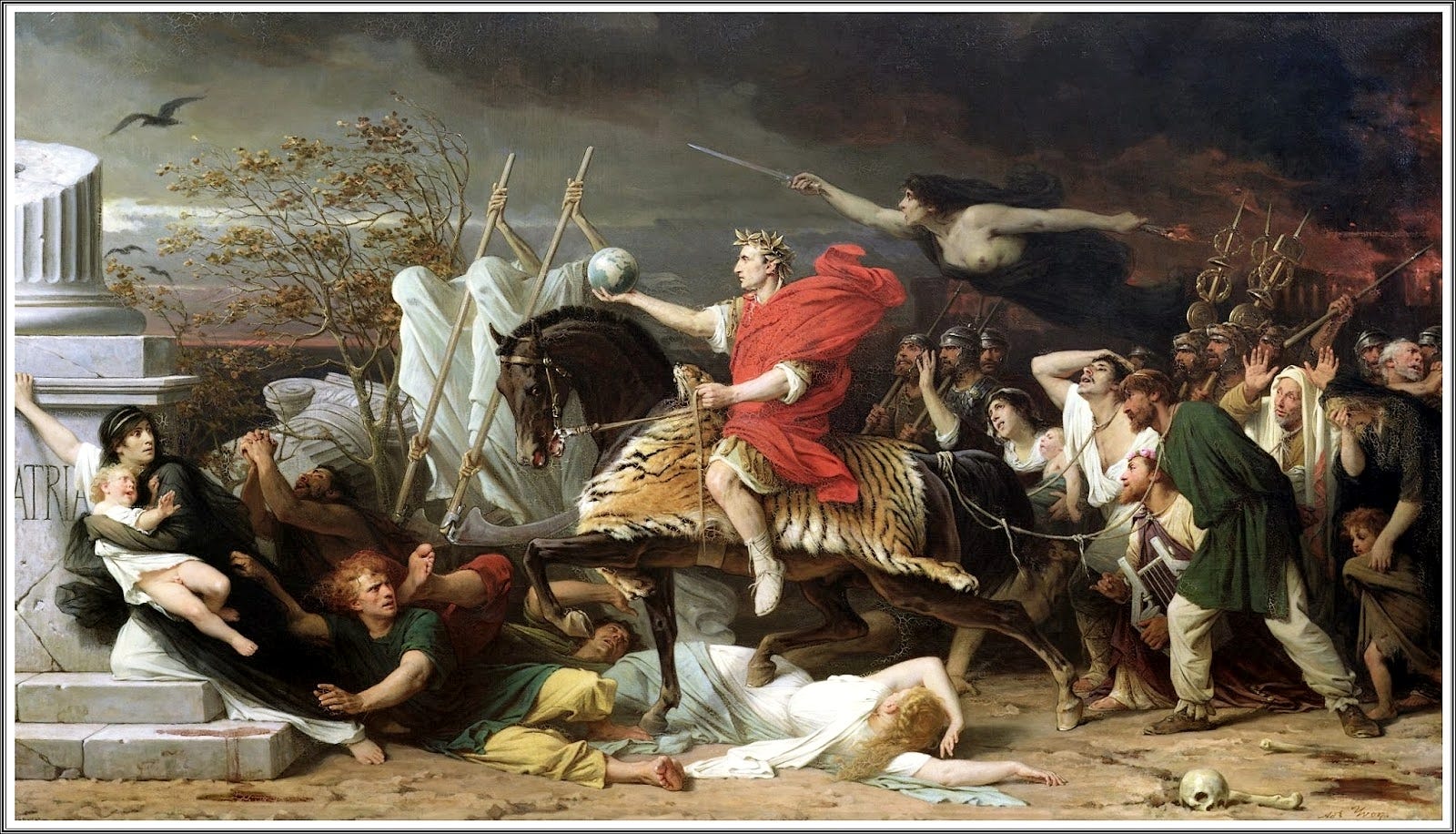
Caesar had the same choice in January 49 BC. His decision came with armies and civil war.
Because ancient Rome had a rule:
A general returning from a province must disband his army before bringing it into Italy.
Julius Caesar refused, defying the Senate.
And ordered his Thirteenth Legion to cross a shallow stream in northern Italy.
The Rubicon.
Roman law said a general who crossed that line with an armed force was no longer a commander.
He was a public enemy.
Sulla had passed the lex Cornelia de maiestate into law decades earlier. Cicero later named the crime outright in one of his own speeches: leaving your province, taking your army with you, both treason.
A serious crime in ancient Rome. The kind where anyone could kill you on sight. No trial. No charges required.
Every soldier who crossed with him was risking the same thing, by the same law, following orders that no longer legally existed. Caesar knew the penalty.
Suetonius wrote Caesar said it in Latin, ‘alea iacta est.’ The die is cast.
And crossed.
A decision so monumental that we find ‘Rubicon’ in the Merriam-Webster dictionary.
2,074 years later.
This newsletter is reader-supported. Please consider a $5 subscription to support our work:
3 weekly history essays. Easy reading. No dull dissertations.
3 weekly quick summaries of how we use AI for creating every essay.
1 monthly extra newsletter, rotating between a full AI breakdown for writers and video, and a Stoic philosophy article.
Open DM sessions on the month’s top article.
No Winning Move at the Rubicon
When money is tight, you probably choose the mortgage over the phone bill.
Caesar stood on the muddy riverbank in January of 49 BC with two suboptimal options.
Door #1 - Disband the army, go home, and stand trial in front of men who wanted him ruined.
Door #2 - Keep the army, and become, by law, an enemy of Rome the moment he crossed that line.
Caesar had battled in Gaul for nine years, building an army that adored him and a reputation the Senate feared.
He hadn’t made things easier for himself back home.
His first consulship in 59 BC was aggressive, headstrong.
Shoved legislation through and sidelined his co-consul Bibulus. So much so that Romans joked they were living through the consulship of “Julius and Caesar,” same man, twice.
That kind of political agenda isn’t forgotten by the men you’ve made enemies of.
His political cover had also evaporated.
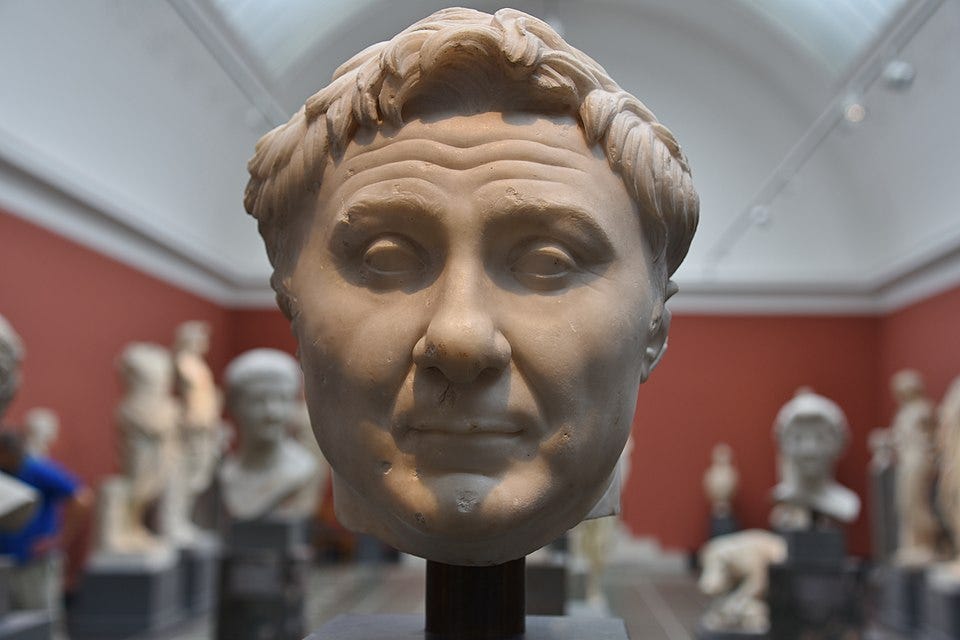
The alliance that protected him, an informal pact with Pompey and the wealthy Crassus, depended on all three men needing each other.
Crassus was killed by the Parthians at Carrhae in 53 BC. Without him, Pompey drifted back toward the Senate’s old guard, and married into it. He didn’t need Caesar anymore.
Caesar’s enemies in Rome wanted him stripped of command, then standing trial the moment he set foot back in Italy as a private citizen.
Conviction in Caesar’s case was almost certain.
On January 7, the Senate passed the senatus consultum ultimum, its emergency decree treating him as an outlaw if he refused to comply.
Two tribunes still loyal to Caesar, Mark Antony and Quintus Cassius, fled Rome that same week disguised as slaves and warned him: the Senate had turned on its own, stripping tribunes of their right to even speak.
Caesar would later point to that, the treatment of Rome’s own elected representatives, as his justification for what came next.
He chose Door #2. There was no Door #3.
The Senate thought this was the crisis. It was the opening move…
