

I liked Gladiator when it debuted in May 2000. After watching it again Saturday afternoon last month, I changed my mind.
It’s Citizen Kane compared to Hollywood 2026.
Today’s Hollywood either doesn’t know how to make a hero’s epic anymore or doesn’t want to. The evidence? Gladiator II and Christopher Nolan’s The Odyssey. Twenty-five years apart, Hollywood makes the same error.
Homer never made Odysseus regret it. In the actual Odyssey, the same man who tricks his way into Troy spends the rest of the poem bragging about it. He doesn't apologize for the horse.
He turns it into the reason gods and mortals both respect him. That’s kleos: the glory a hero earned by being unmistakably good at the thing he did, not by feeling bad about it afterward.
Nolan’s Odysseus, by early accounts, treats that same device as a wound to confess. Twenty-eight centuries of the real Odyssey working one way, and 2026 wants it to run backward.
We see modern culture’s belief system at work in Hollywood, but it didn’t start with Christopher Nolan.
Gladiator II: Double the Money and Half the Heart
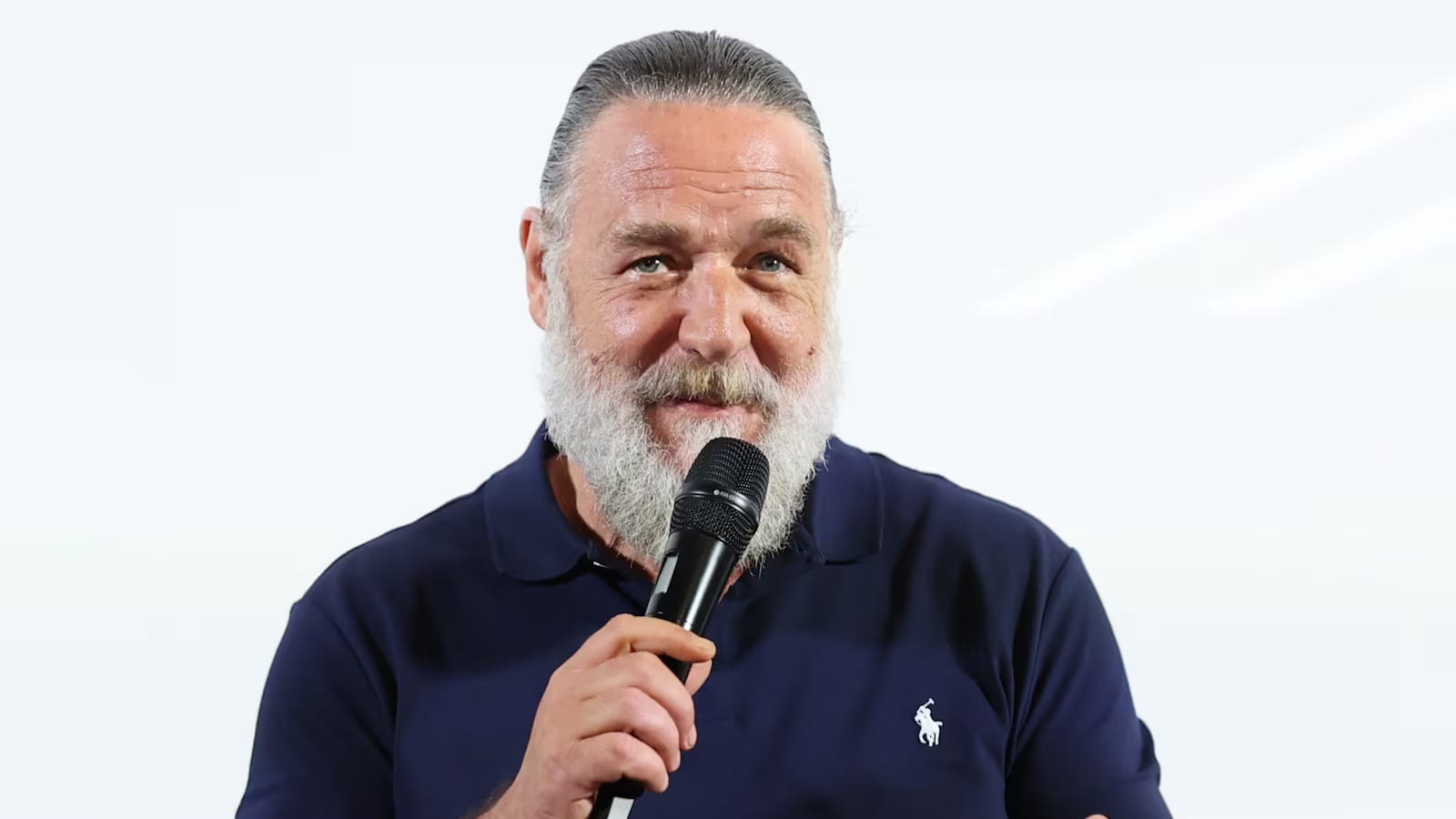
Russell Crowe blasted Gladiator II when it hit theaters. He said the sequel kept the action and the scale of Gladiator but dumped the values holding the whole thing together. Audiences noticed.
I didn’t watch Gladiator II. I knew Hollywood couldn’t produce a competent hero’s epic to save its life. I wasn’t the only one who thought so.
But, you say, Gladiator II earned $460 million worldwide, almost matching the original’s $465 million!
Right, but two problems.
Gladiator cost just $103 million. Gladiator II burned $250 million to make the same money, more than double the cost for the same ROI.
And adjusted for inflation, the original’s gross is almost $830 million in today’s dollars. Twenty years of goodwill and a much bigger budget still couldn’t make Gladiator II a winner.
Gladiator had other things going for it too. Ridley Scott's direction, Russell Crowe at his peak, a genre nobody had touched in decades. The sequel kept Scott and inherited a devoted fan base built over twenty years.
It just didn’t have Crowe, and it didn’t need to. What it needed was an ending that delivered the same emotional payoff.
Hollywood often assumes audiences come back for bigger battles and better effects. More often, they come back to feel what the first story made them feel. Gladiator understood that.
Maximus loses it all, earns his revenge, and dies at peace. His journey reaches its logical end. The sequel, judging by the reaction from fans and critics alike, never found an ending with the same punch.
You can replace an actor. You can spend twice as much on spectacle. But if the emotional resolution evaporates, so does the reason people cared in the first place.
Ever seen a sequel that kept the scale of the original but lost its soul?
That’s Gladiator II.
This is a reader-supported publication. Subscribe now for only $5 per month.
Get 12 history essays monthly, plus 1 AI creator tips and strategies newsletter. All for the price of a Starbucks.
Then Hollywood Struck Again, to an Ancient Greek Hero
Classicists and critics who have seen The Odyssey describe an ending where Odysseus goes into exile, weighed down by guilt. This is a punishment Homer’s own Odysseus never faced.
Homer’s own audience wouldn’t know what the hell is going on.
Even Emily Wilson, the classicist whose translation Nolan has cited as an influence, has mixed feelings.

She's glad the film brought new attention to Homer. But she's said it misses essential themes. Wilson claims it trades the Homeric ideal of heroic glory for a modern psychological lens instead.
A different studio, different century of source material, and the same faulty fix: give the hero guilt he never earned, then call it depth.
Note to Hollywood: Original Gladiator Is Streaming on Hulu
Maximus kills. Maximus wins. Maximus dies satisfied, having settled every score.
The audience cheered and threw fistfuls of money at everyone involved.
No guilt spiral required about the piles of bodies.
The film snagged five Oscars, including Best Picture and Best Actor, and a quarter century later it still boasts an 87% audience score on Rotten Tomatoes with 250,000 ratings. People don’t just remember Gladiator fondly. They still watch it and still love it, right now, on Hulu.
Hollywood keeps acting like it doesn’t know whether audiences will accept a clean-winning hero. The answer’s been streaming for over 10 years.
Ask yourself: did you ask for the guilt-ridden version of anything, or did it just start arriving that way from Hollywood?
Guilt: Hollywood’s Go-To for Depth
In the mid-2000s, prestige television and Nolan’s own Batman films trained a generation of writers and executives that moral complexity equals seriousness.
The Sopranos and Breaking Bad turned slow moral corrosion into the smartest thing on TV, and Nolan’s Batman brought the conflicted hero to the big screen.
By the 2010s, giving a hero guilt had become the default for anyone who wanted their film to be considered ‘art.’
Someone tell Marvel.
The Avengers made $1.5 billion worldwide in 2012, the same year The Dark Knight Rises ended Nolan’s brooding, guilt-soaked Batman trilogy. Iron Man, Captain America, Thor: none of them needed therapy to be worth rooting for.
By the end of the 2010s, the MCU had crossed $10 billion. Nolan’s own Batman trilogy, running the same years and drawing raves for its complexity, never touched that number. Two genres, one of them running through Nolan’s own decade, made different nine-figure bets.
The clean-hero bet won audiences’ hearts.
Kleos Built Odysseus. Guilt Built Walter White.
The real filmmaking error is borrowing one genre’s engine to run a different genre’s story. Antihero psychology exists to tell a story about a man’s slow moral collapse.
A Homeric epic runs on kleos, on glory, on proving yourself against gods and fate. These are not the same operating system, and audiences have always known the difference, even when Hollywood forgets it.
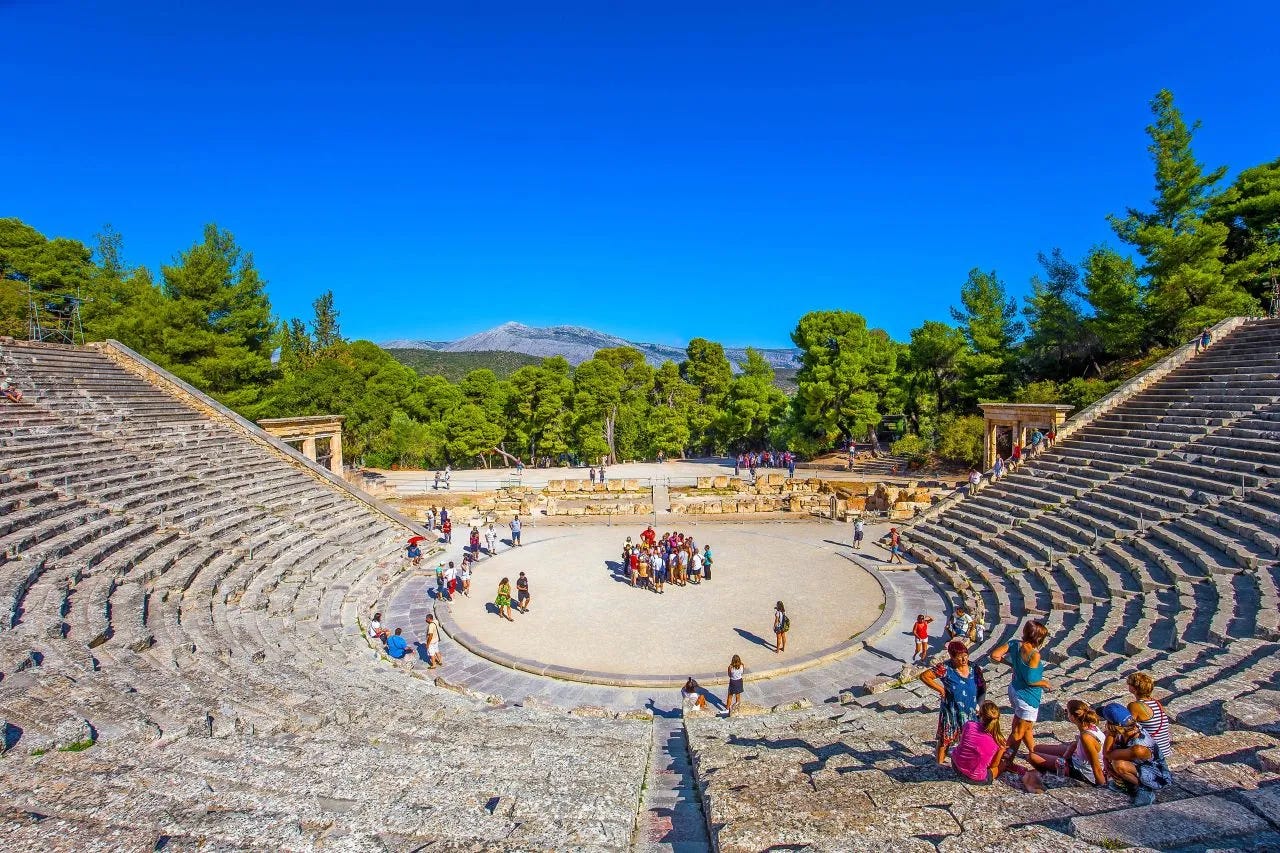
The Odyssey wasn't written once and locked in place in 800 BC. It was performed and reshaped by generations of bards, at festivals, in front of live audiences, for centuries before anyone wrote it down.
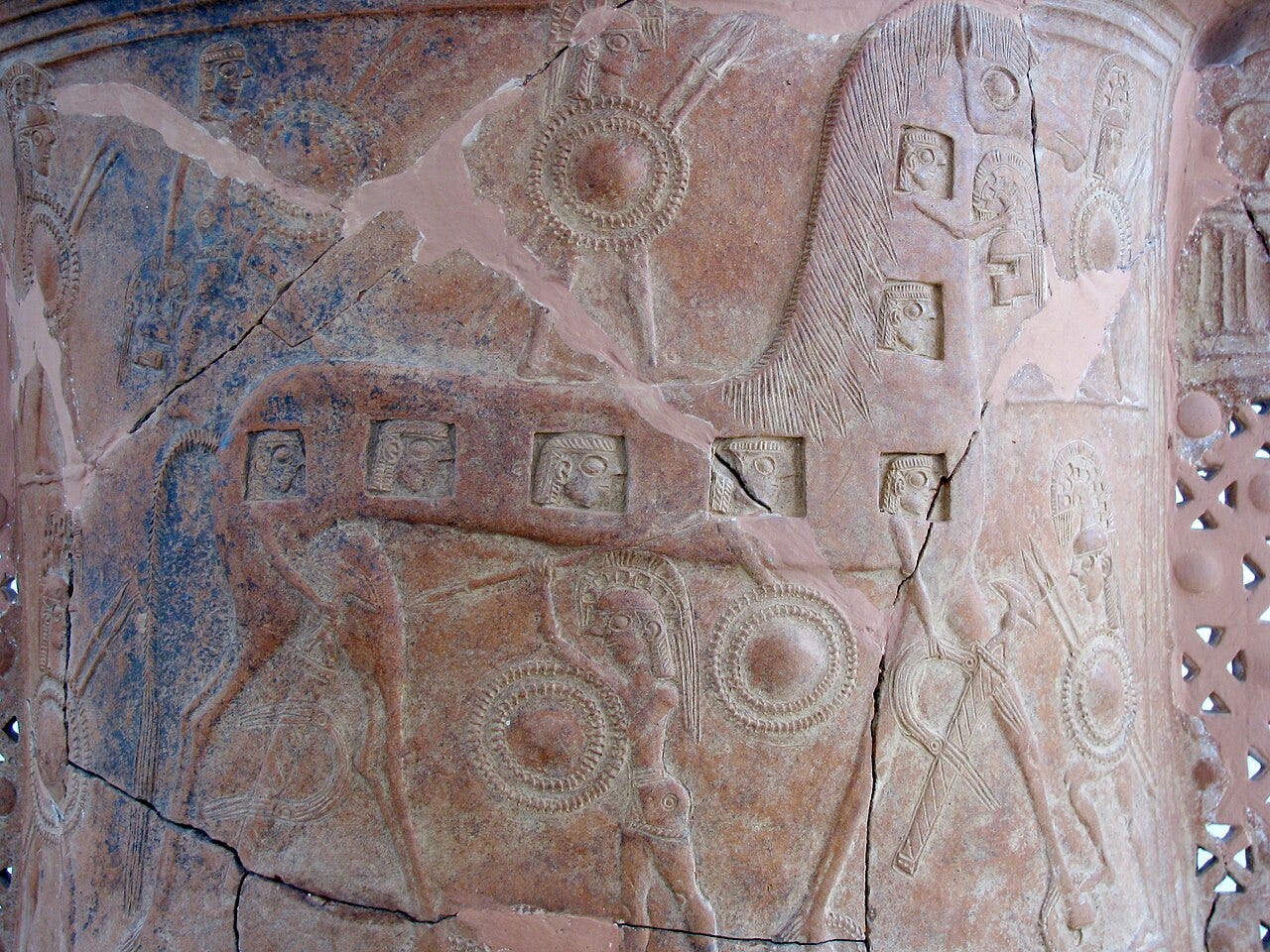
The Trojan Horse itself shows up on pottery from the 7th century BC, proof that this story was already old before Homer's version became the one that stuck.

What survived that process is what ancient audiences kept choosing to hear again.
Kleos and glory won out, generation after generation, because that’s what the ancient Greeks wanted from their heroes.
Running the Breaking Bad routine on a story that ancient audiences already field-tested for hundreds of years is a strange choice.
You rewatch endings that made you feel something, not endings where the hero worked through his guilt.
Gladiator has stood the test of time. Will The Odyssey?
Hollywood forgot what epic heroes are for. The answer has been on Hulu for years.
I’m not worried about the story. Twenty-five years hasn’t dulled it. I'm more concerned about the studio executives greenlighting these scripts.
This is why Past Passport exists. Every generation thinks the old stories stopped working. They didn’t. Someone just needs to remember how to tell them.
Join the community of historical optimists. Three history essays a week, proving the doomscroll wrong.
Editor’s note: We also write about how to use AI to improve your writing and newsletter results. These tips will go PAID on August 1, 2026! Subscribe today for $5 per month, the Substack minimum!
Most newsletters I follow send two essays a week. I send three, plus a monthly AI newsletter for paid subscribers. That’s 13 pieces a month for the price of a Starbucks.
Use AI to Boost Your Substack Read-Through Rate by 55%
Many argue about AI. It’s the end of the world. It’s the greatest thing since the wheel.
The truth, as usual, is in the middle.
One area AI excels: analyzing data, or writing, and finding patterns humans take far longer to spot.
In June, I noticed my Substack read-through rate was mediocre. Sure, 434 people viewed the article, but only 42% finished it.
Why?
The same week, I was reading one of the best history writers on Substack. His writing is sophisticated. It’s rich, but still easy to read. I always finish his essays.
I notice great writing that pulls me along. I don’t always know why.
Enter Claude.
I fed Claude ten of this writer’s essays and asked why they were so good. In seconds, it broke down why the essays work, and exactly what was making mine harder to finish.
Here’s what it found, and these are now rules I write by:
Short, clear headlines, usually under eight words.
Brief asides every few hundred words that pull the reader back into the essay.
Introductions under 175 words that state the essay’s actual argument, not just its topic.
For example, my first essay this week, “We Gave Odysseus a Guilt He Never Earned,” is a word longer than I usually prefer these days. But it worked. Read-through rate: 97-98 percent.
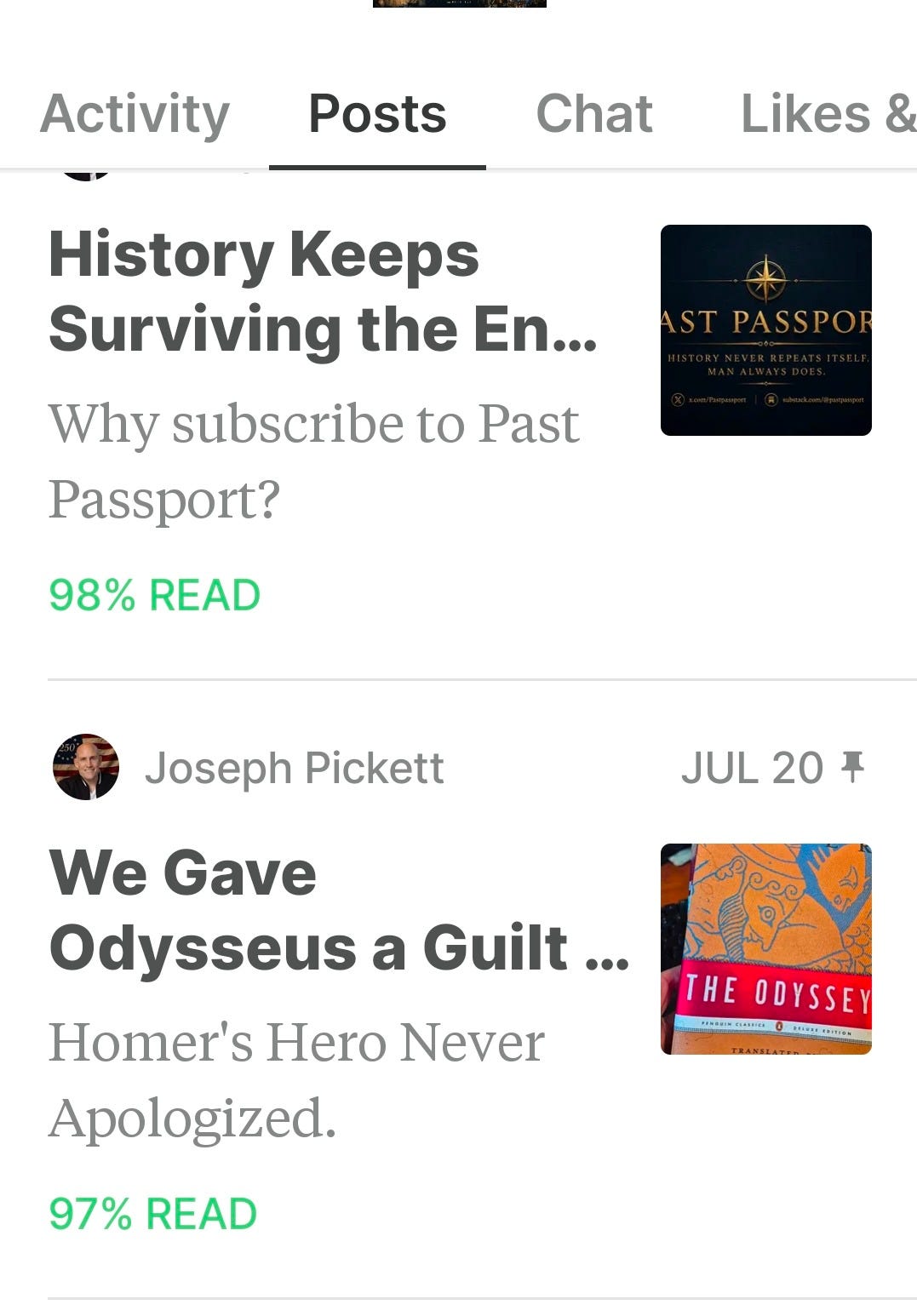
Almost everyone who opens that essay finishes it.
I also insert checkpoints with the reader two or three times per piece. Short lines like “maybe you’ve had a similar feeling,” dropped in right after I state a fact, pull the reader back into the essay before they drift.
Then I make certain the introduction ends with a clear statement about what’s next.
From my essay this week:
“Botch the Odyssey’s ending, and you’re not getting hired for the next festival. Replacing it with something gentler tells those audiences they misunderstood the story written for them. Here’s why anything less would have felt like a cheat.”
Your assignment: feed Claude ten essays from a Substack writer you admire. Ask what makes the writing work, then reverse-engineer it into your own.
No need to reinvent the wheel. Just study the one that’s already rolling.
Remember, these free AI tips to improve your essays and Substack won’t last. They’ll be subscriber-only on August 1.
Subscribers also receive one monthly AI newsletter with more proven methods I use to improve my work. Many are used by six-figure Substack writers I know.
Subscribe today!
I never bothered with Gladiator 2, either. I knew it was nothing more than an unnecessary sequel and a cash grab.
Modern Hollywood seems terrified of letting a hero simply be heroic.