

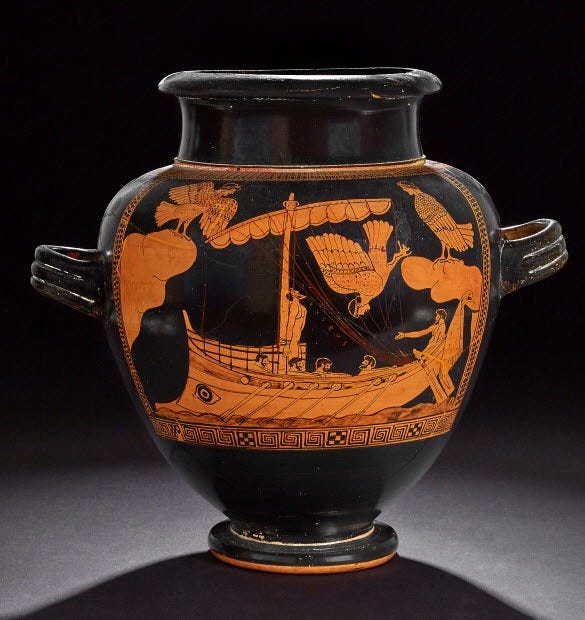
X is fighting about a 2,700-year-old Greek word this week: polytropos, Homer’s first description of Odysseus. It means something like “of many turns,” and no modern word matches it exactly.
Most of the people fighting about it don’t know they’re not the first.
Christopher Nolan built his Odysseus around one translator’s answer to that word. Emily Wilson translated polytropos as “complicated,” in the line “Tell me about a complicated man.” Half of X thinks it ruins the poem.
Robert Fagles answered the same word differently, years before Wilson: “the man of twists and turns,” in the line “Sing to me of the man, Muse, the man of twists and turns.”
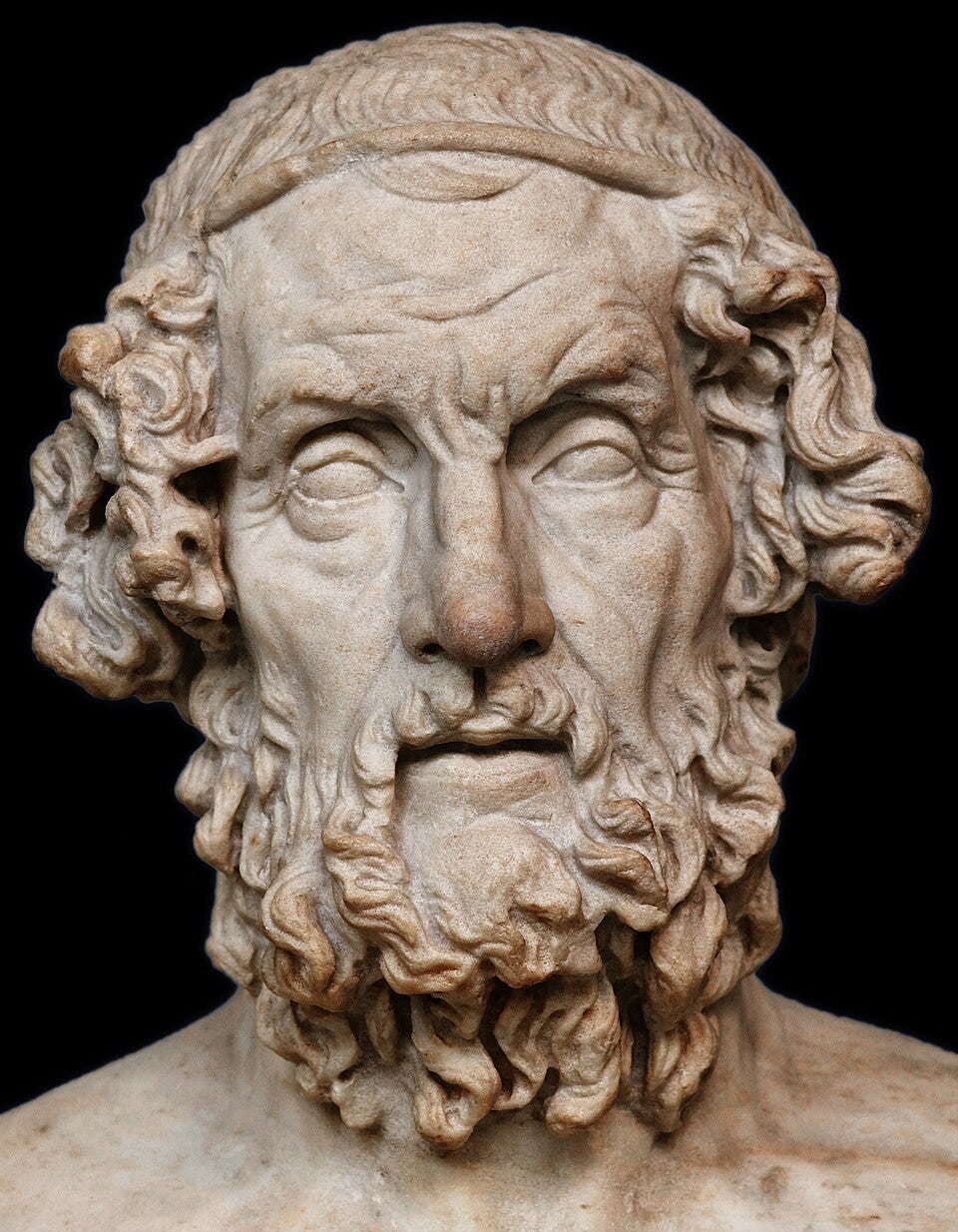
Alexander Pope, three centuries before either of them, answered with “the man for wisdom’s various arts renown’d.”
Is “complicated” an honest read on a Bronze Age hero clawing his way home from war, or a word that leans too hard on the century that coined it?
Nolan’s Odysseus was built on a word that may mean the opposite of what he thinks. “Complicated” means an inner life full of contradiction. Polytropos meant what a man could do: talk his way past monsters, lie without hesitation.
Pope, Fagles, and Wilson were never having separate arguments. It was the same dispute, replayed for four centuries, over whether Odysseus is a man of action or a man of contradiction.
Pope Made a Fortune. One Scholar Wasn't Buying It.
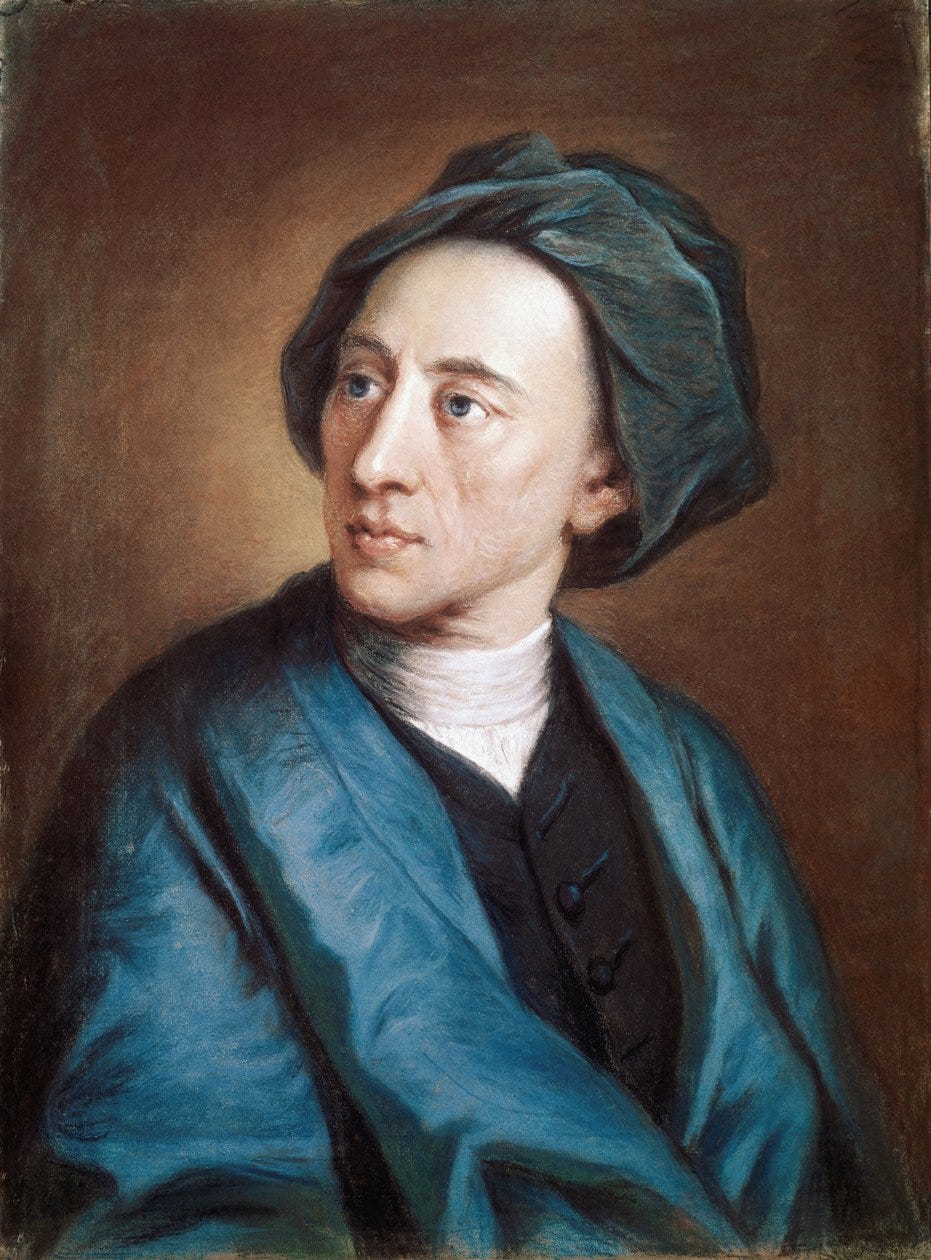
Alexander Pope published his Odyssey in 1725 after spending sixteen years studying Homer’s Greek. His answer to polytropos made him a rich man, enough to retire on the proceeds alone. Samuel Johnson later called it the noblest version of poetry the world had ever seen.
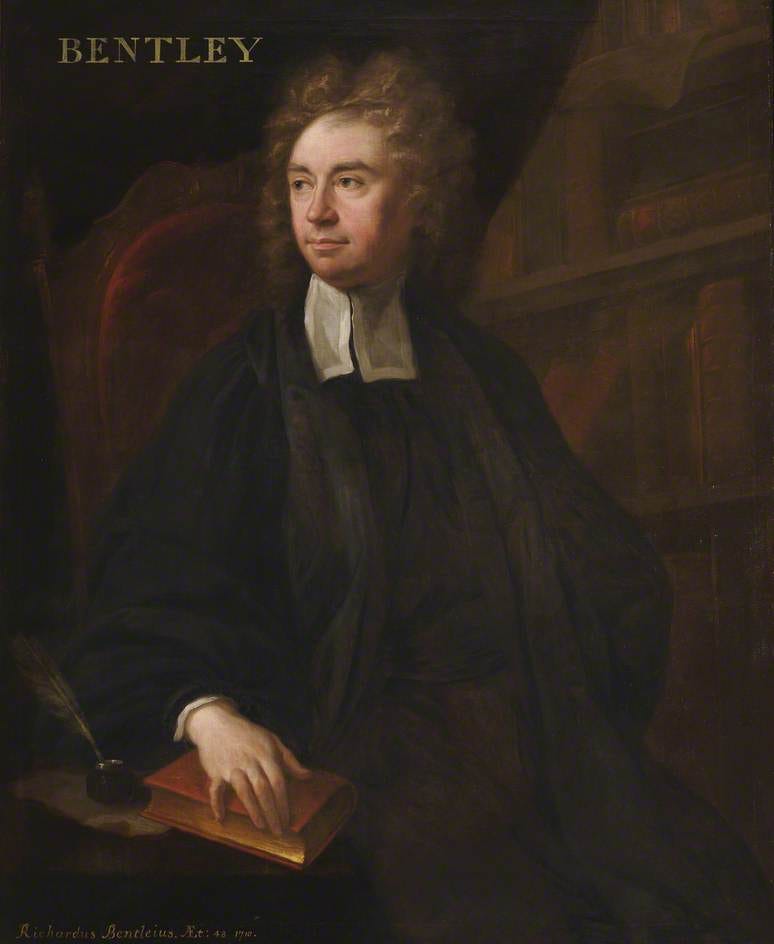
But the classical scholar Richard Bentley delivered a verdict that still gets quoted three hundred years later: “It is a pretty poem, Mr. Pope, but you must not call it Homer.”
Too polished, the complaint said, too elegant for a poem about a man barely surviving his way home to Ithaca.
Swap that complaint onto Wilson, and it’s the same one flooding X this week.
He Praised Her Translation. She Panned His Movie.
Christopher Nolan didn’t just borrow one line from Emily Wilson’s translation. He credited her whole book as an influence throughout his press tour, and told Empire that her opening line was the guide he used to build his Odysseus.
Wilson’s reply was direct. Writing in the London Review of Books, she said she would be ashamed to have written any part of Nolan’s script. She called his Odysseus thin and one-note, missing the calculating, contradictory man her own translation spent years trying to earn.
Imagine building a film on one woman’s book, only to have her publicly call the result abysmal.
Wilson’s Initiation Into a 400-Year-Old Argument
Pope chose grandeur. Fagles chose fluency, a phrase built to move fast and sound heroic. Wilson chose plainness, stripping the epithet down to a single blunt adjective. All three chose wrong, according to someone or other.
Pope got nailed for being too rhymed, Fagles for being too readable, Wilson for sounding too much like a modern diagnosis instead of an ancient epithet.
Wilson later said the same thing about Nolan's film: grandiose and superficial, a man in motion, with nothing underneath explaining why he moves.
This isn’t four separate disputes. It’s one long argument that never resolves, because the word itself refuses to resolve. Every generation picks the version of that contradiction it thinks is reality, then argues about whether the next generation got it right.
Every story we have loved eventually gets a version you don’t recognize. You decide, usually within minutes, whether it has earned the name of its predecessor.
Every “Ruined” Version Sent People Back to Homer
Wilson’s own review still concedes something to the film. She notes that Nolan studied English at University College London, where the Odyssey is still taught as a first-year foundational text, and says his film might persuade a few college administrators not to cut their literature departments after all.
That’s a bigger concession than it looks. It’s the same thing every “ruinous” translation has actually done. Pope’s readers, whatever they thought of his rhymes, went looking for the Greek underneath it.
US sales of the Odyssey are up 76 percent since the start of the year, according to Circana BookScan, the same publishing-industry tracker that logs bestseller data.
Fagles sold more than a million copies to people who had never opened Homer before and might never have otherwise. A three-hour, two-hundred-fifty-million-dollar action movie is now doing, for a much larger audience, exactly what a controversial 1725 translation did for its own.
The word has been argued over for four hundred years. The poem endures, and has encouraged another generation to read it.
Every generation gets handed this poem and decides for itself what kind of man Odysseus is. Chapman decided. Pope decided. Fagles, Wilson, and now forty million moviegoers are deciding too. That’s not the poem falling apart. That’s the poem still working, four hundred years and counting.
Join our community of historical optimists. We’re the people who read a controversy like this one and see a poem too strong to kill, not a culture too dumb to get it right. Three history essays a week.
Substack and Its AI Detector
Substack launched an AI detector. Some say Substack writers are sweating.
I couldn’t care less.
Most good Substack writers use AI in one way or another. I know multiple six-figure Substacks that use AI for research and drafting. AI speeds up and improves these essential parts of the writing process.
But the rough draft is just that, rough. Claude’s initial draft of my essay sounds nothing like me. I must edit Claude’s output for at least two hours before I’m satisfied with the result.
I don’t care if an AI detector says my draft is “AI polished” or “AI drafted.” Yeah, so what? I’m up front about it. But the end product can’t be replicated by a machine because a machine isn’t me.
If you use AI to draft your essays, it’s fine. Just spend sufficient time with your draft to make the document sound like you. Insert details and stories, delete pat, annoying AI words and phrasing (land, sit with, anyone?). Then it doesn’t matter what any AI detector says. The end product is yours.
Im Greek and my command of demotic needs google translate middle of conversation in Greece. I've always wanted to know Koine well enough to read Polybius and the Hellenistic ahead if its time epic Argonautica. But even back in 3rd century BC there were complaints about how Apollonius of Rhodes RUINED it by being contemporary. The equivalent of "TOO WOKE I refuse to read this trash!" Since everything we can read at all times in Greek world said culture is in decline 300sBC to...pretty much the present. Romans and Greeks stated 500s-400sBC was golden age and everything made since is garbage. All of Hellenistic era. Romans felt similarly just move the years a bit, same crap. Civilization is always in decline for the men in personal decline.
I found and still find Wilson's choice of "complicated" about as puerile as a circa 2008 Facebook relationship status update: it's complicated.
Cunning is, was, and ever shall be the correct English word to describe Odysseus. Full Stop. Forever.
Like William Jennings Bryan's Cross of Gold, I shout my imprecation proudly: "you shall not crucify Odysseus on a cross of complication!" Odysseus embodies μῆτις--metis--cunning.
But, she earned my respect and will receive a fair minded re-assessment and re-reading for her savaging of Nolan's Odyssey. I thought the movie was a one dimensional train wreck filled with far too much presentism.
I found her comments about Nolan's version quite compelling.
I may have been to callow when I read her version; too hidebound in my love of Fagles; too arrogant about my ability to read Thucydides in the original Attic. In short, I think I judged her unfairly. We shall see.
I will happily add that I am gratified we as a people are actually discussing Homer.
In 2026, no less.
That is all for the good if you ask me.
Great essay. As always.