

My dad asked me to do a job I didn’t want when my mom died.
I walked into the funeral home and told the clerk, “I’m here for my mom’s remains.”
She gaped at me in horror. “You mean the CREMAINS?” she exclaimed.
“Oh. Yeah,” I said. “That.”
Grief requires a new vocabulary.
I drove home with the box of Mom’s cremains on the passenger seat.
It was small.
Something hit me as I left, something other than grief -
My mom lost her mother and father. My dad lost his decades ago.
Everyone in my line older than me had felt this pain.
I didn’t feel so alone.
I felt the burden of grief lift. Slightly.
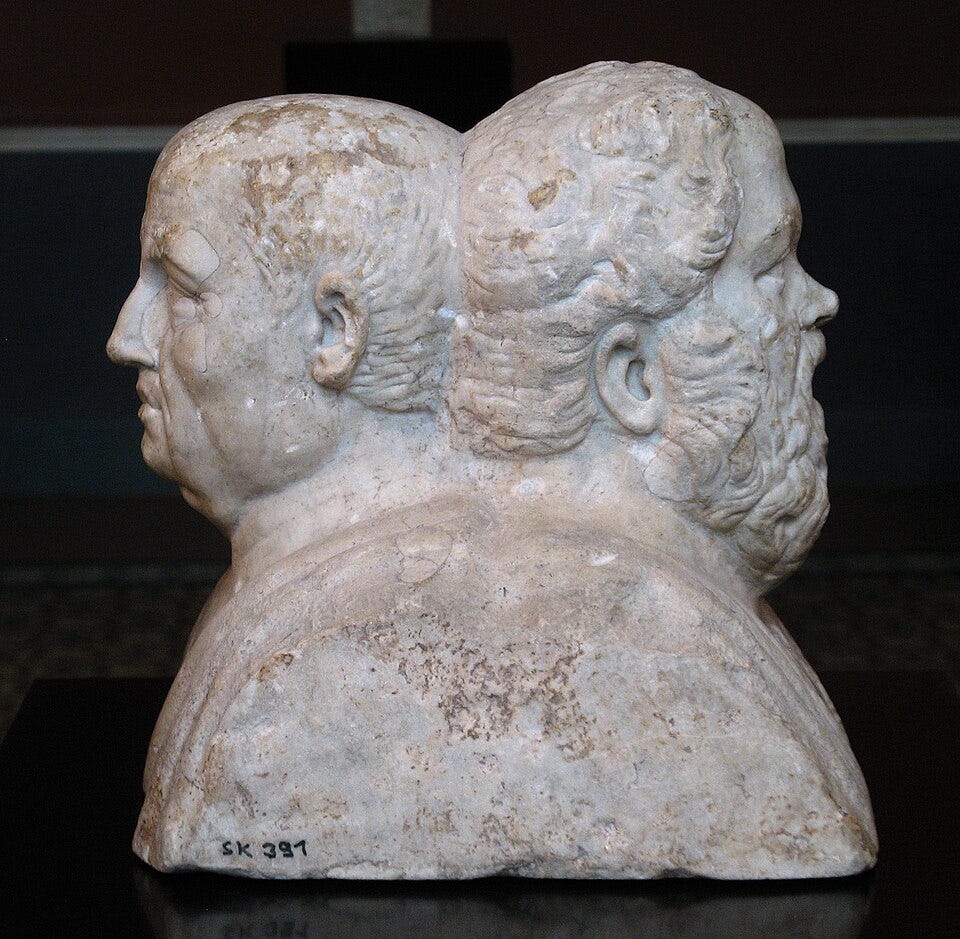
Didn’t know it, but I had discovered philosophic tools built by men who’d buried people they loved two thousand years before I did.
I didn’t know Seneca’s name. I didn’t know Epictetus’s name.
I just recognize the pattern now.
I want to show you exactly what I did to manage my grief, so you can, too.
My Mom Already Survived This Pain
In 42 AD, Seneca wrote something similar to his own mother.
She had buried her mother, her husband, and three grandchildren by then:
“You have been struck through the scar of an old wound.”
My mom’s grief for her mother wasn’t a new wound either.
It’s the same one that’s been in her family line all along, and she got through it the same way everyone before her did.
That’s what helps me at 2 a.m., when the abstract fact that “people die” rings hollow.
What helps me is knowing that this person I knew survived this specific thing and still built the life I got to grow up in.
I Used Epictetus’s Two Piles on My Own Grief

That thought may not be enough for a sleepless night as you grieve.
You may need something more specific, and it comes from a man who knew loss and pain.
Epictetus wasn’t born in comfort.
He was a slave, born around 50 AD in Hierapolis, in what’s now Turkey.
His leg was broken by his owner and never allowed to heal, so he walked with a limp for life.
He owned nothing, controlled nothing about his own body or schedule.
Out of that life, he became one of the most influential Stoic philosophers Rome ever produced.
He opened his most famous book, the Enchiridion, with the idea that Stoicism is built on:
Some things are up to us, and some things aren’t. Everything else follows from sorting them.
I call it the two piles. That’s Stoicism: being honest about which parts of a disaster you can actually change, not pretending you feel nothing.
The question that Stoicism asks: did this happen to you? Or did you do it?
If it happened to you and it’s done, that’s not yours to fix, only to respond to. If you did it, that’s the part you can still act on.
My mom dying suddenly sucked, but it wasn’t up to me. How I reacted to it was.
The same is true for you, whatever your pain is today.
You control how you respond to the pain.
I Cried for Days
Responding to pain doesn’t mean you always stay dry-eyed.
Stoicism isn’t about denying grief.
I pulled into my dad’s driveway. I walked straight to the extra refrigerator in the garage, the one my mom always stocked with a case of Coke Zero before I came home.
It was empty.
I sat down on the garage steps and sobbed.
It was the first real evidence that she was gone, not an idea anymore, an actual missing thing.
Seneca would understand that. He buried friends, too, and told the people grieving them something that sounds harsh out of context:
“We must not wail.”
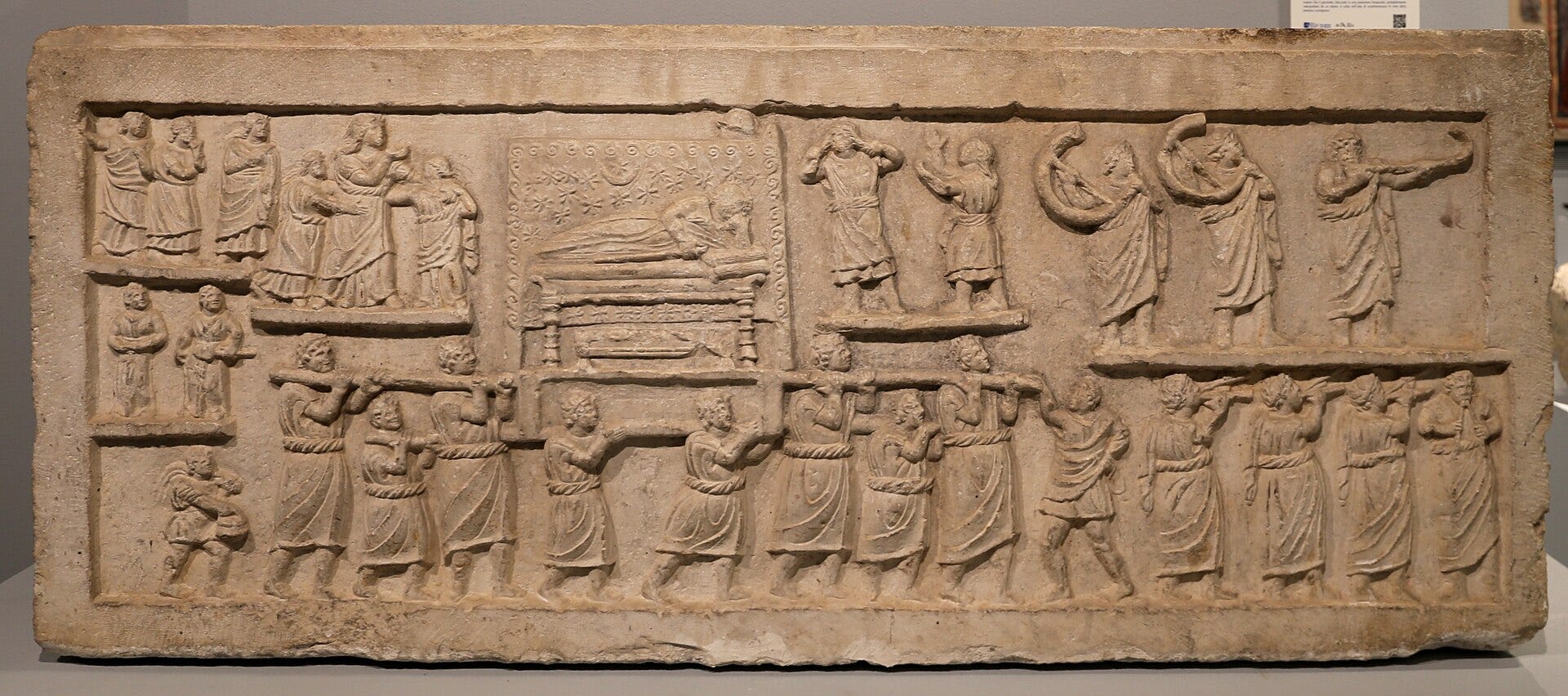
He didn’t mean for me to stop sobbing on the steps. He meant grief that consumes you, the wailing that’s still going on five years later.
Cry the day it happens and the day after. Don’t let it become the rest of your life.
You're controlling the reactions to the pain, not the pain itself.
Negative reactions to pain are often the problem that haunts us: “I’ll never recover.” “I should have called more.” These thoughts are understandable, but unhelpful.
You can’t control the loss, but you can control what you do with it afterward.
My Family Already Proved I Can Survive
Every person in my family has already gone through this. My grandmother, for example, grieved the loss of her own parents decades before I was born.
She survived it. I can, too.
Stoics have managed pain like this for two thousand years.
Seneca’s line about the old wound and Epictetus’s question are two versions of it you can use for your pain or grief today.
I don’t know if Stoic thinking would help my dad.
Losing a parent and losing the woman you married sixty years ago are different animals.
It worked for my loss and for Romans who’d lost far more.
If you’re dealing with pain like mine, maybe it will work for you, too.
My dad’s doing this himself right now, at 86, grieving the woman he spent his life with.
But he’s not the first person in my family to feel this heavy loss, and he won’t be the last to come out the other side.
This newsletter exists not for vague comfort, but evidence, specific and repeatable, that people with less than we have figured out worse than what we’re facing.
That’s what our community of historical optimists is built on. Join us for three pieces per week.
Editor’s note: Past Passport also covers AI for non-technical creators. We explain how we use it, what works, what doesn’t, and new developments you can use to improve your processes.
Making AI Sound Like You
Making AI sound like you is easier said than done. AI is like my daughter’s toddler: tell her not to do something, and she’ll say “okay,” then do it again two minutes later.
These days, I don’t tell AI as much about how I write. Instead, I ban specific words and sentence patterns.
“Write like me” produces generic prose almost every time. A running list of exact words you never use catches most of what makes AI writing sound like AI writing.
Words, phrases, and patterns on my “Absolutely Never” list include:
Wild
Quiet
Sit with
Carry
Reframe
It’s not X, it’s Y (”It’s not about willpower. It’s about systems.”)
Land
Ship
Actually and genuinely
Wisdom-stacking cadences (”He didn’t call. Not once. The silence said everything.”)
Build your ‘Never’ list one caught mistake at a time. You’ll never think of it all upfront, but every editing pass adds a rule, and the list gets sharper every time you use it.
And remember, always check up on your AI “toddler” to make sure it isn’t sneaking any of these back into your drafts.
I've been lucky, in regards my parents. Both are still alive and healthy. I don't know what I'll do when my father passes. He and I have always had a unique and powerful bond. He's been my best friend for so long I cannot remember. He's 83 going on 25. And Mom? Well, you only get one of those. She's all about love. I see her as often as possible.
But this year has seen its share of loss. Two people very close to me, damn near family.
This was an excellent read in every way. Thank you.
This hit hard, brother:
I walked straight to the extra refrigerator in the garage, the one my mom always stocked with a case of Coke Zero before I came home.
It was empty.