

“Piss off.”
My Russian wife used those words to end a phone call with her boss a few years ago.
Silence on the other end, and then “Pardon me?”
Yikes. “Peace out,” she corrected herself.
Katya is fluent in English, but American idioms are a minefield.
Blame Brezhnev. She grew up in the Soviet Union speaking only Russian... which has one vowel where English has two.
Her ear insists “peace” and “piss” are the same word. Tomayto, tomahto.
Her boss had one second to decide whether he’d been insulted.
A former slave named Epictetus had a one-sentence rule for that second, and the rule works on any insult, intended or not.
Social Media, Inc. wants you mad and consuming content. At Past Passport, we use history, art, and beauty to beat the doomscroll. Join us and get:
3 history essays a week. No dull dissertations.
3 weekly notes on how we use AI to create more and consume less.
1 extra issue a month: an AI breakdown or a Stoic essay.
First week free, then $5 a month.
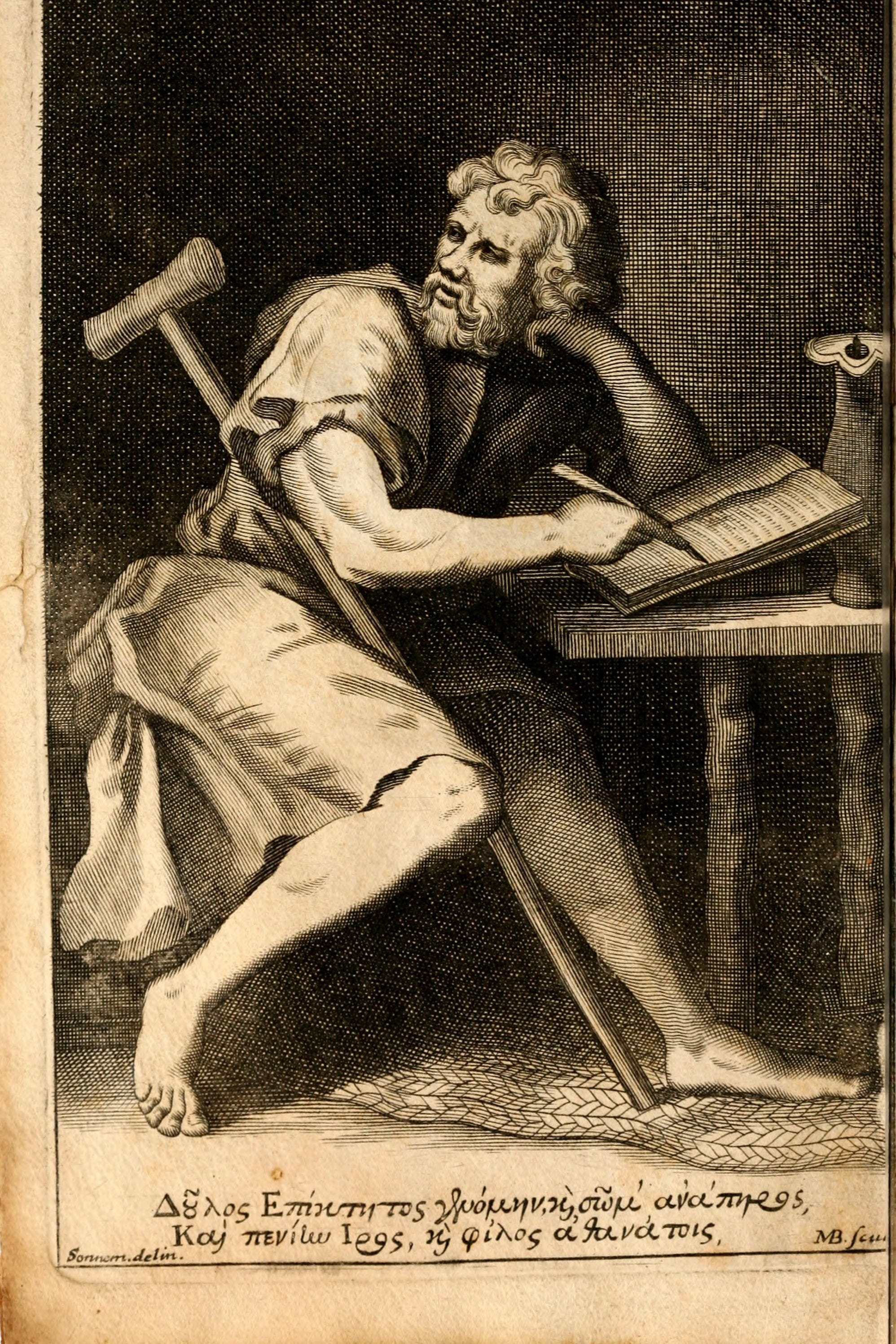
Epictetus: the listener finishes the insult
Epictetus had a rough life.
He was born a slave around 50 AD in Hierapolis, in what is now Turkey. His owner in Rome was Epaphroditus, Nero’s secretary. He limped for decades on a lame leg.
After his release, he taught Stoic philosophy in Rome until around 93 AD. Emperor Domitian expelled every philosopher from Italy.
Epictetus made lemonade out of lemons. Crossed the sea to Nicopolis, a harbor town on Greece’s west coast that Augustus built to celebrate defeating Antony and Cleopatra, and opened a school.
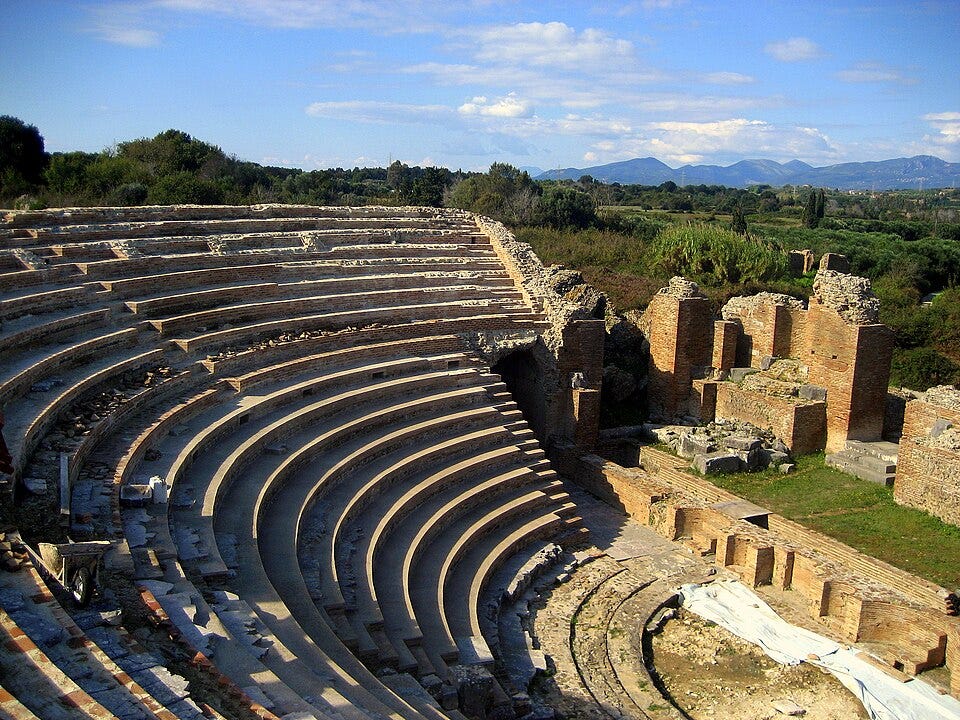
He taught for the rest of his life in a house with a straw mat for a bed and a clay lamp for light. Simplicius, a later writer, says the door never needed a lock because nothing inside was worth stealing.
He left the writing to somebody else. A student named Arrian took notes and boiled them into a short handbook. Entry 20 is about insults.
A curse or a slap becomes an insult only when you decide it is. “It is your own opinion which provokes you,” he told his students.
Epictetus’s idea is easy to accept when the insult was an accident. It’s a harder sell when somebody spits in your face.
Cato wiped off spit and the insult
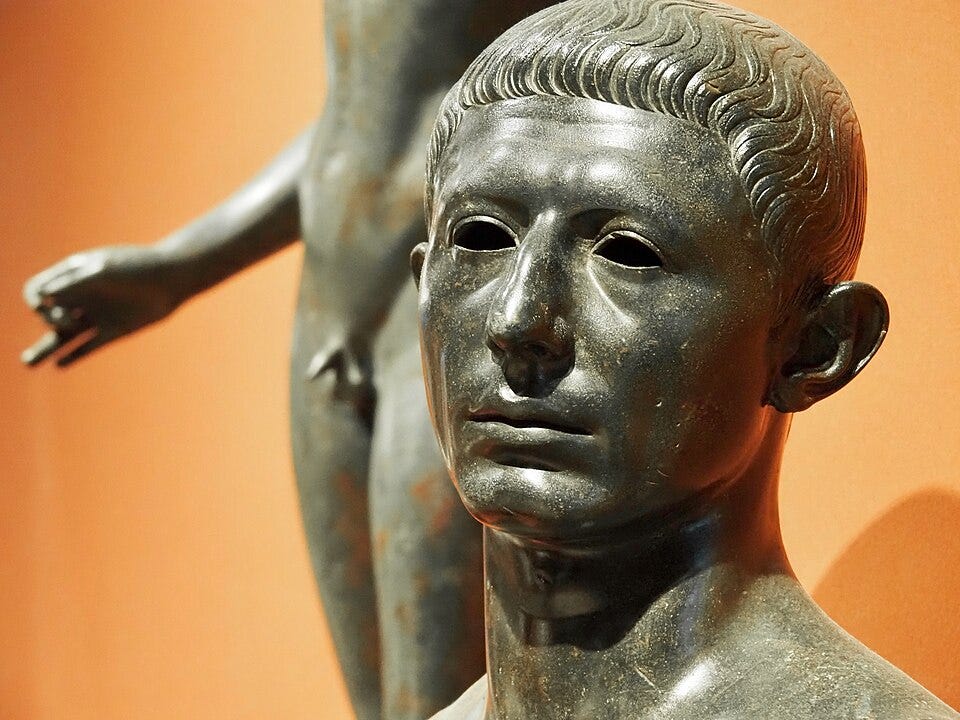
Cato the Younger was mid-argument in a Roman court. His opponent, a hothead named Lentulus, worked up all the phlegm he could... and spat an artistic loogie onto Cato’s forehead.
Translators not required. Cato wiped his face and said, “I’ll tell everyone, Lentulus, that they’re wrong when they say you have no mouth.”
In Latin, “mouth” also means “nerve.” Stoic writer Seneca liked the story so much he included it in his essay On Anger.
Cato followed Epictetus’s rule, without knowing it, with spit on his forehead. Epictetus wouldn’t be born for another 100 years.
People were still mishearing each other 2,000 years later. By then the stakes were hydrogen bombs.
A misread Russian idiom alarmed America
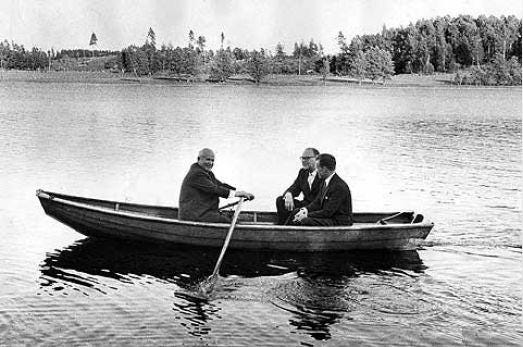
November 18, 1956. Nikita Khrushchev was lecturing a room of Western ambassadors at a tony party at the Polish embassy in Moscow. His tanks had crushed the Hungarian uprising two weeks earlier.
History was on the Soviet side, he told them. “My vas pokhoronim.” His interpreter translated the phrase word for word: “We will bury you.”
A Russian speaker hears “we’ll be at your funeral.” Khrushchev was bragging that communism would outlive capitalism.
Americans heard a death threat from a man with about 400 nuclear weapons and a newly tested hydrogen bomb 100 times stronger than the one dropped on Hiroshima.
Nobody buried anyone.
The Soviet Union hung the “Going Out of Business, Everything Must Go” sign in 1991.
Epictetus could have cleared up the kerfuffle in one second with one rule…
