

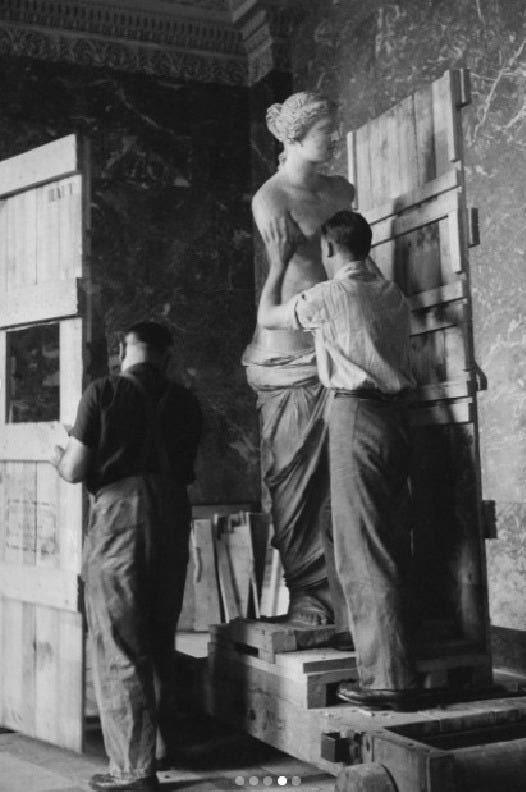
The parking space 250 Roman paces from the entrance, waiting until the last person is served before getting in line... boarding the plane 5 minutes before departure to avoid the masses.
That’s the introvert’s life. Maybe you know one.
That’s me.
The mob of bodies and cell phones crowded around the Mona Lisa, a zoomed-in photo or two... high time this introvert darted in the other direction.
Three corners later, the Venus de Milo and I were alone in her hall. Save for the cleaning woman with squeaky shoes.
Nine million people visited the Louvre last year. About 20,000 a day head straight for the Mona Lisa. By the museum’s own count, each one looks at her for about 50 seconds.
Some leave after getting their snap with the once-stolen masterpiece. Maybe you were one of them. No judgment here.
The Venus de Milo and some 35,000 other works play second banana. Good news for those who shun the crowd and crave solitude to soak in the details.
Seneca’s friend Lucilius once asked him what to avoid above all. The answer came back in one Latin word: turbam, the crowd. Later in the same letter, he gave the second half:
Withdraw into yourself as far as you can.
A nearly empty room with one statue in it is a good place to give this philosophy a shot.
Here’s the story of the statue the crowd walked away from, and what you see when you finally have her to yourself.
Try Past Passport free for 7 days. Paid subscribers get:
3 weekly history essays. Easy reading. No dull dissertations.
3 weekly quick summaries of how we use AI to create every essay.
1 extra monthly newsletter, rotating between a full AI breakdown for writers and video and a Stoic philosophy article.
1-week free trial, then just $5 per month.
Venus owned the crowd for 90 years
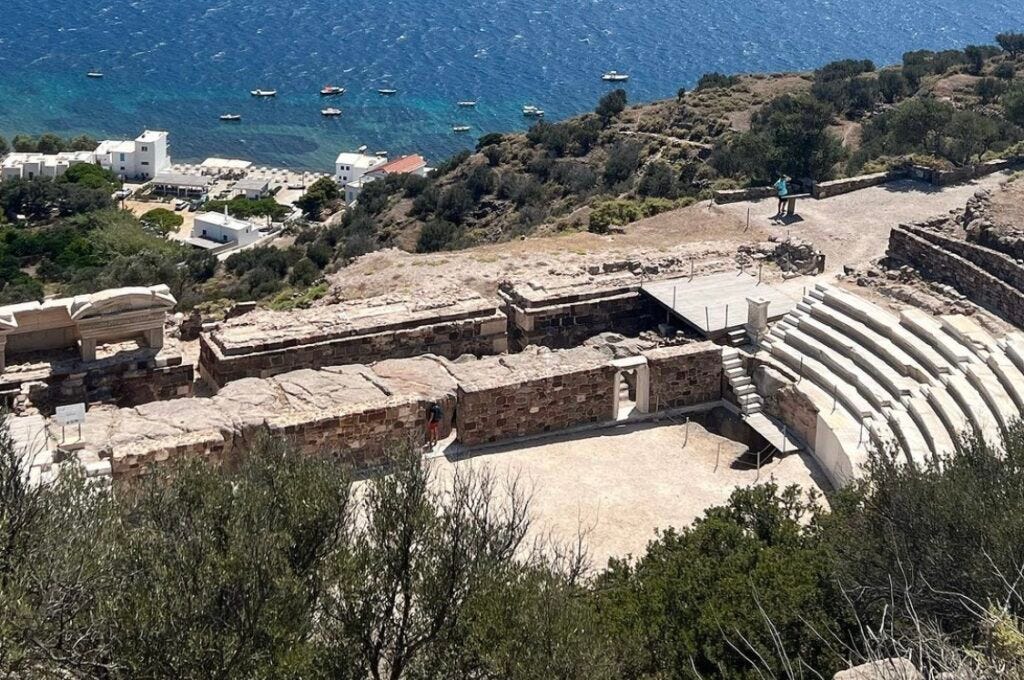
April 8, 1820. A Greek farmer on the island of Melos uncovered the top half of a mysterious marble woman.
Olivier Voutier, a French sailor and amateur archaeologist, was standing close enough to see it. He urged the farmer to keep digging.
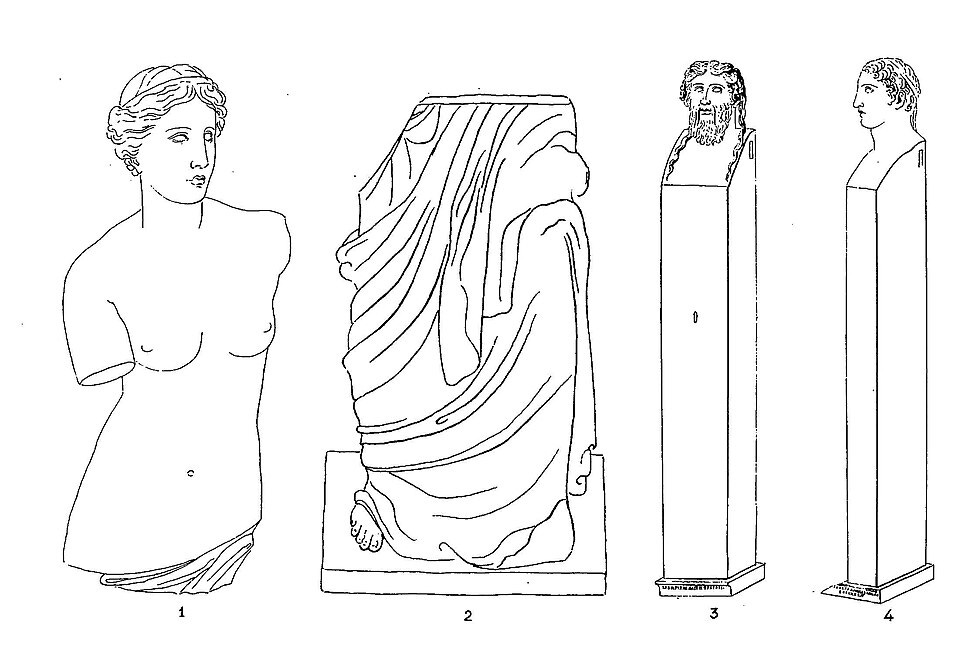
They pulled Venus out of a stone niche in pieces. Two big ones and a smaller third, plus a chunk of arm and a hand holding an apple.
She wasn’t alone in the island soil. Two carved pillars called herms rose from the ground with her, and Voutier sketched the whole lineup then and there.
A year hence, she belonged to the king of France. The Marquis de Rivière gave her to Louis XVIII, and Louis handed her to the Louvre in March 1821.
France needed her. Badly.
Napoleon had hauled the Medici Venus home from Italy as booty. In 1815, with Napoleon over and done, France had to return it.
Now here came the perfect replacement goddess, straight from a rocky Greek field.
So the French did what you’d do. They told everyone the Venus de Milo was the New and Improved sculpture you had to see.
Worked impeccably.
Berlin’s academy had a plaster cast of her by 1822, and the Brits gave another cast the best spot in the Crystal Palace’s Greek court. More than 70 poems have been penned about her.
I’d always figured she was famous for being beautiful. True, but she had a hell of a publicist, too.
The Mona Lisa hung in the same building through it all. As late as 1911, Mona was far from the most visited object in the Louvre... you could have stood in front of Leonardo with nobody’s bad breath in your nostrils.
That changed on a Monday in August 1911. Hold that thought.
Alone with her, you stop noticing the arms
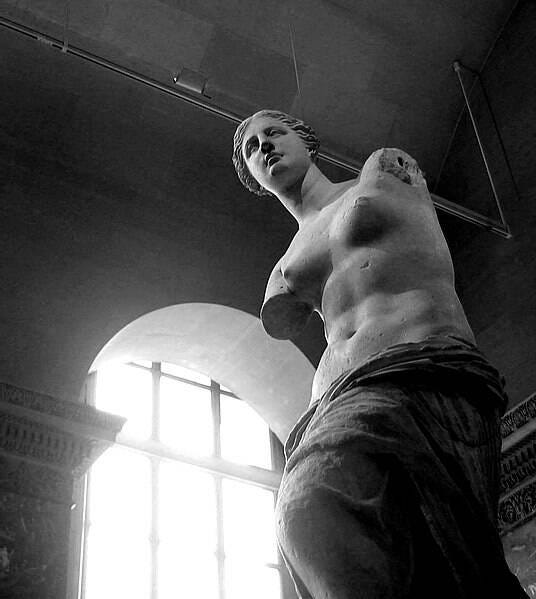
She’s bigger than you expect. Six foot eight on top of a pedestal, so you crane your neck the whole visit.
The room is red marble from Napoleon’s day, and it’s all hers.
The Mona Lisa crowd is still out there. You can hear it a few turns back, a low murmur, like a party in an apartment 8 units down the hall.
In here, the only sound is the cleaning woman’s shoes squeaking in the corner as she works her broom.
In photos, the first thing you see is what’s missing. No arms. It’s The Brand, after all.
Stand in front of her in solitude, and the arms fall away.
You start noticing what’s there….
