

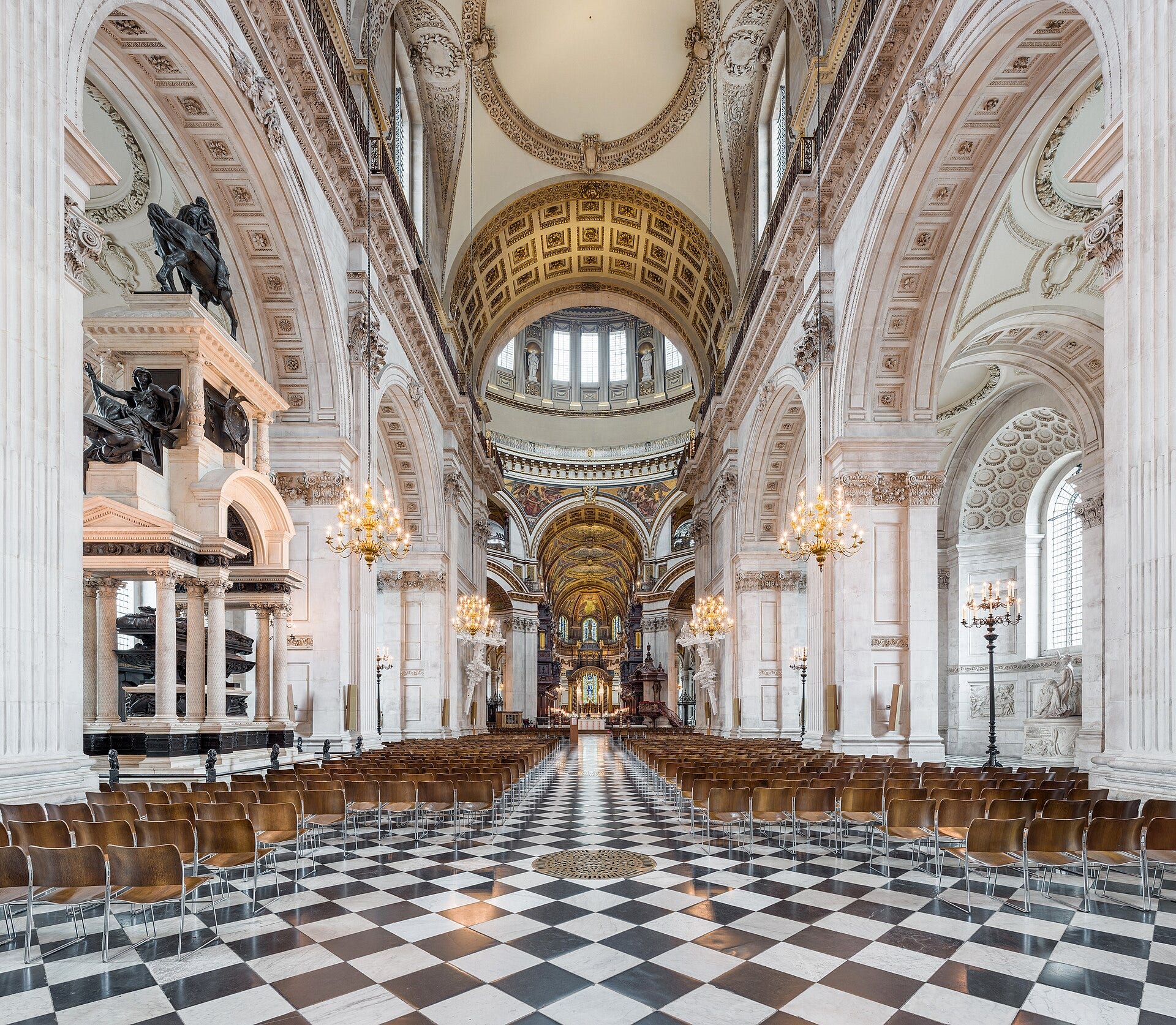
Picture dozens of lasers streaking the dark nave of London’s St. Paul’s Cathedral, techno shaking the windows, twenty-year-olds dancing over the graves of Nelson and Wellington.
St Paul’s just signed a four-year deal with Fabric, London’s most famous nightclub. Exclusive rights to hold concerts inside the building through 2030. First show: October 29.
A church has stood on this site since 604 AD. The current building dates to 1710.
The public reaction: this is the end. Civilization is imploding.
Past Passport isn’t thrilled, either. But let’s slow down.
Seven hundred years ago, arrows flew in St. Paul’s. People shooting at birds nesting in the walls after the market in the aisle shut down for the day.
Ancient churches being reused is old news. Cathedrals have survived worse than a DJ set. Every time it happened, someone cried that the end was nigh.
St Paul’s got off easy, compared to other famous buildings.
Thank you for reading! Your support makes Past Passport possible. You get:
3 weekly history essays. Easy reading. No dull dissertations.
3 weekly quick summaries of how we use AI to create every essay.
1 monthly extra newsletter, rotating between a full AI breakdown for writers and video, and a Stoic philosophy article.
Open DM sessions on the month’s top article.
Nobody Shot 4K of the Chaos in 1400
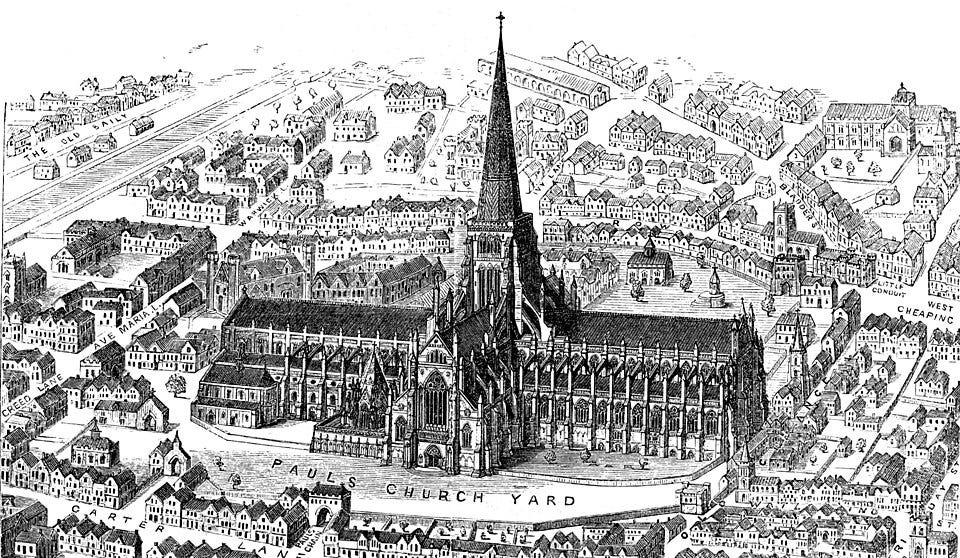
No cameras existed then. No footage of every service, every fight, every deal cut in the pews. No footage means no mess, right?
Nah.
Rowdy is the word for it. The nave of St Paul’s had its own nickname: Paul’s Walk.
Flickering candles. People bartering, haggling, arguing, their voices bouncing off stone walls built to carry a choir, not a babbling crowd.
Footsteps echoed on the floor with every step. Hundreds of conversations blurred into one constant hum. One writer at the time called it Babel.
A bit of a hellhole, even in one of the most famous churches in the world.
Merchants met by name near a certain pillar. Lawyers took clients there for legal advice, mid-morning, mid-cathedral.
People nailed notices to the west door: jobs, lost property, meetings. They even had a name: siquisses, after the Latin opener, si quis — “if anyone.”
One regular described the routine: gentry and courtiers walked the middle aisle from eleven to noon, then three to six, some talking business, others trading news. The gossip was juicy enough that men close to the throne were leaking state secrets to complete strangers in the nave.
Someone was always smoking. Or selling something. Farmers drove wagons and livestock straight through the nave as a shortcut, until the queen banned it. Twice. A cathedral full of horse traffic wasn’t exactly neat as a pin, either.
A bishop in 1385 threatened excommunication over the St Paul’s chaos. People sold goods off tables like it was a market stall. Others played ball games in the nave, shattering the stained glass. Crossbows gouged holes in the parapets.
The excommunication threats fell on deaf ears.
Looking for peace and quiet in St. Paul’s in 1400? Wrong century.
Lasers and a DJ seem almost tame by comparison.
And St Paul’s isn’t even the nuttiest example of repurposing a sacred building.
