

Scroll your feed, and news is almost always bad. A senator dies, and a 500,000-follower X account is toasting with champagne minutes later.
Constant negativity on smartphones is a toxin: the average person is exposed to it 96 times a day.
It carries a price.
Ask a 25-year-old about the future, and you’ll often get some version of “The American Dream is dead.”

In the 1970s, researcher George Gerbner found heavy media consumers came to believe the world was far more dangerous than it actually was. He called it “mean world syndrome.”
A 2023 study of 100,000 headlines nailed down the mechanism: negative words drive clicks, positive words drive readers away. People say they hate the doom. They click anyway.
Two thousand years of history says we will be here tomorrow. Let’s start with a Roman emperor facing a five-alarm disaster.
An Emperor Had The Same Problem
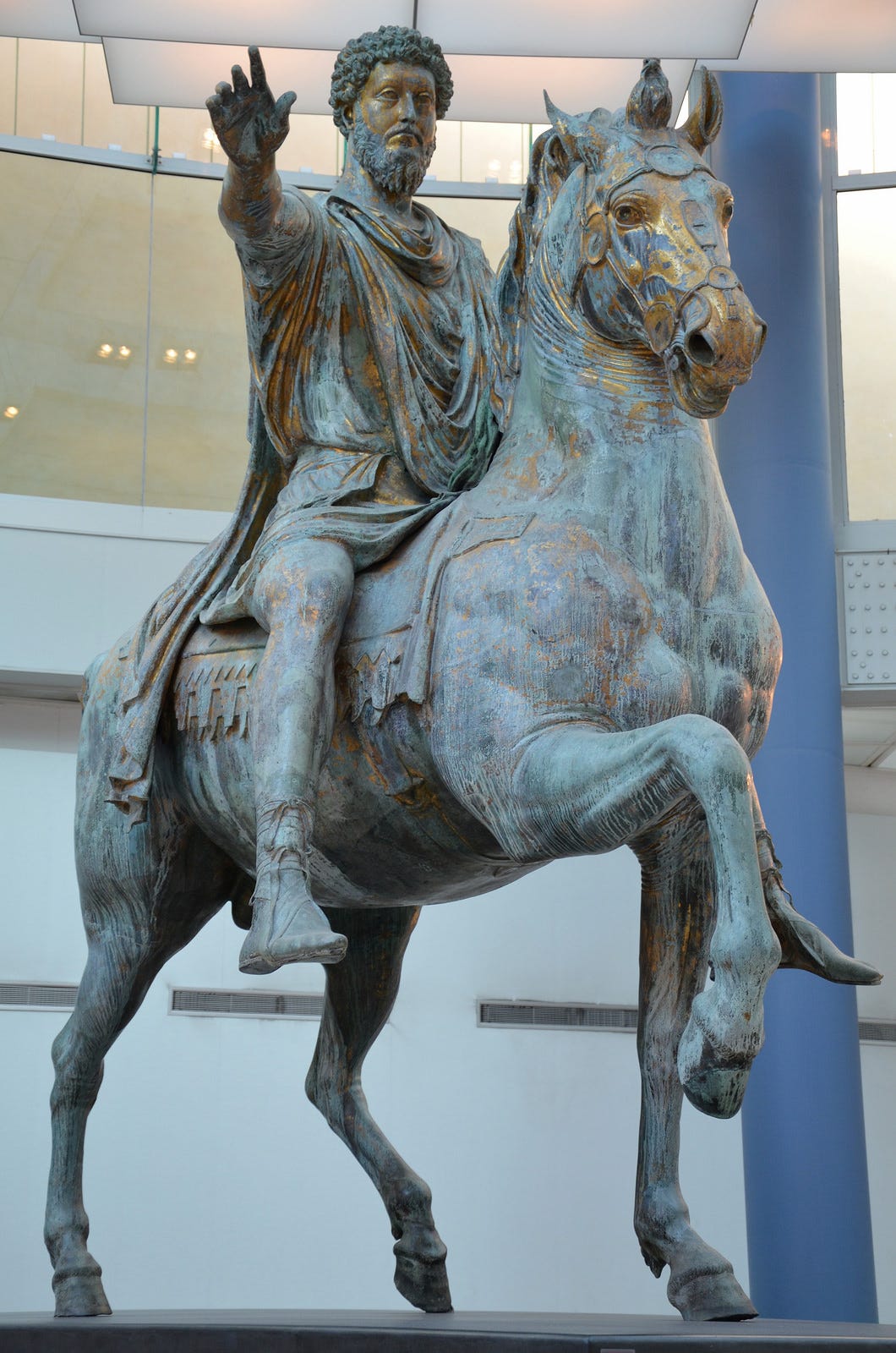
Marcus Aurelius wasn’t just an emperor with a way with words:
“You have power over your mind, not outside events. Realize this, and you will find strength.”
He was also a Stoic.
Stoicism states: separate what you control from what you don’t.
Gas prices, property taxes, whatever crap in the feed is upsetting you: none of it is yours to control. Your reaction is the only part you can affect.
The Roman emperor didn’t write philosophy from a comfortable villa on Palatine Hill.
In 165 AD, a plague devastated the Roman Empire, killing close to a quarter of the population: some estimates put it near five million people. Marcus Aurelius spent years commanding troops on the frontier while it burned through his own army and his own household.
He wrote the Meditations during those years, not as a self-help book for readers but as a personal survival guide for maintaining his sanity.
They were notes to himself, mostly penned at night, as he worked out how to stay focused while the world fell apart around him.
The emperor used those notes to carry the weight of an empire and mass death. You can use the same ones to manage a bad news cycle.

The plague didn’t end on schedule, and it didn’t spare anyone important. Marcus Aurelius probably died still fighting it, on campaign, before the empire fully recovered.
Stoicism never promised the crisis would be resolved on time. It promised something else: that you could stay yourself while it happened.
The empire eventually stabilized. His personal self-help book outlasted it by 2,000 years.
The Present Stinks. So Zoom Out.
Stoic philosophy doesn’t stop the present from sucking.
I had a bad week. A nutty driver almost killed me. My property taxes are $6,643.50 a year. Gas is $3.51 a gallon. A house that cost $200,000 in 2016 costs $400,000 today. Who wouldn’t be pissed?
But zoom out.
Step on a rusty nail in 1926, and infection could kill you: antibiotics were 20 years away. Fifteen hundred years ago, a crushed leg meant a saw and no anesthesia. Most people didn’t survive it.
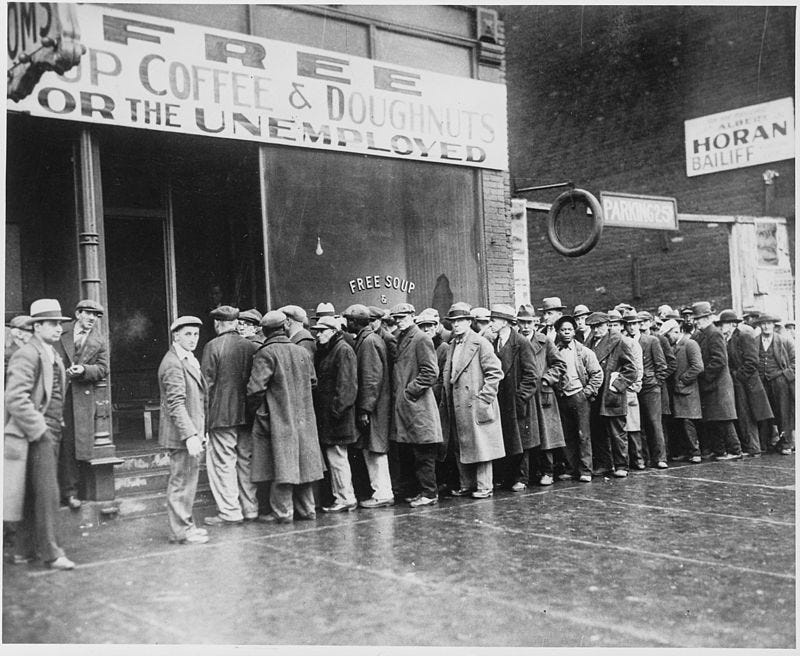
Depression-era unemployment hit 25%, with no welfare before 1934.
Everything we’re dealing with, someone’s already dealt with. And it was probably worse. This realization doesn’t offer comfort. It offers proof: people get through this and always have.
Our problems are still real, but visualizing them next to the worst ones doesn’t erase them. It just gives our problems appropriate size.
Marcus Aurelius Would Know How You Feel
Marcus Aurelius wouldn’t know what a smartphone is. He’d recognize the feeling behind one instantly.
That’s what Past Passport is about: people get through this. Two thousand years of history proves it.
It’s why we’re a community of history lovers optimistic about the future. We don’t ignore what’s bad. We’ve studied history closely enough to know how it’s gone before.
We publish essays like this one three times a week, free: history that argues for optimism.
We’re also offering something extra: this week and the next two, a free preview of the actual Stoic practices, how to stay calm in a sea of negativity.
After that, only 17 cents a day: history told through an optimistic lens, plus the tools to stay steady when the feed won’t let you.
We're not here to convince you that nothing's wrong. We're here to show you it's survivable. Join us three times per week.
An Optimist’s View of AI
I also write about AI on Past Passport, and it’s a source of negative news in the feed like anything. AI is killing creativity. AI is terrible, full stop.
I don’t buy it. AI isn’t perfect, and it comes with real challenges. But most of us wouldn’t give up the internet either, despite everything wrong with it.
What I’ve seen up close is creators getting better, not worse, because of these tools. I use AI for research and for editing my own writing. I’m not technical,, and learning to use it well has been its own education. Claude, specifically, has been genuinely useful to how I work.
I view AI with the same optimism as the future: something new shows up, the doom narrative forms around it instantly, and the people actually using it tend to have a more useful, less catastrophic view than the loudest voices online.
In future issues, I’ll keep writing about how I use AI, what non-technical creators should know about new developments, and how to put AI to work improving your own writing.
The future of AI is bright.
What do people think of maintaining historical perspective when dealing with life's nonsense? It's a strategy that works well for me.
On a related note, when my mom died in 2020, I discovered a similar line of thinking helps me: My parents, and their parents,and their parents, dealt with the death of Mom and Dad. But they all lived full, happy lives, anyway.
People have been here before.
The world is not necessarily getting worse. We are simply being shown everything bad, from everywhere, all at once. History gives the present its proper size.