

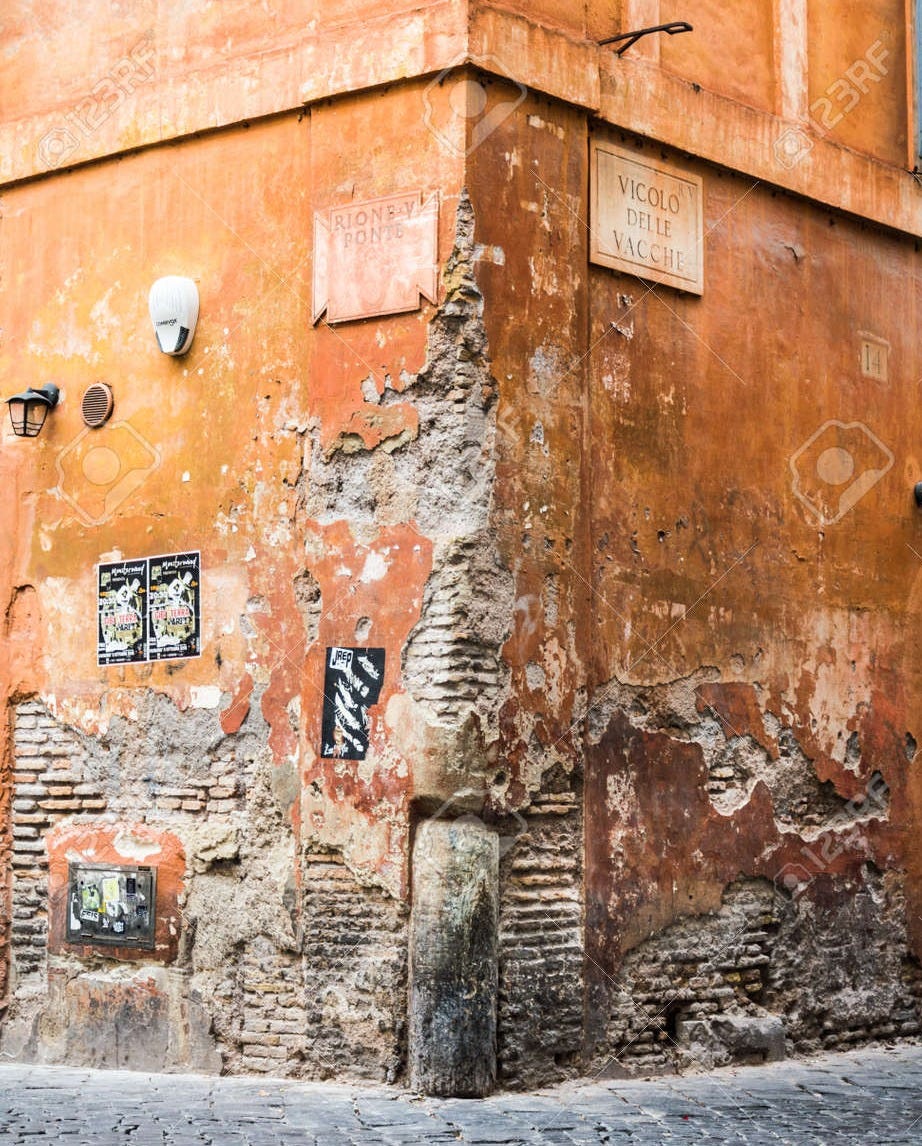
Meandering through the narrow streets around the Pantheon, the ground feels slightly off beneath your feet.
The dark stones tilt underfoot — worn smooth in the center, raised at the edges.
Your weight shifts with each uneven step, over stones shaped by centuries of passing feet, horses, and carts.
Rainwater still follows the same shallow grooves on the black stones underfoot.
A doorway on the next street leans just enough to stand out.
The frame pulls left. The wall beside it bows outward, then settles back.
Your hand touches the dark brick without thinking.
It isn’t decorative.
The bricks are set just behind the rest of the wall.
Darker. Longer. Thinner.
Laid in tighter rows.
Your fingers trace the edge where it drops back.
It doesn’t match the wall around it.
It belongs to an age far older.
You try to picture it —
Carts cutting across the space in front of the old walls.
Wooden wheels striking stone, iron rims catching in the grooves.
Animals pu…
