

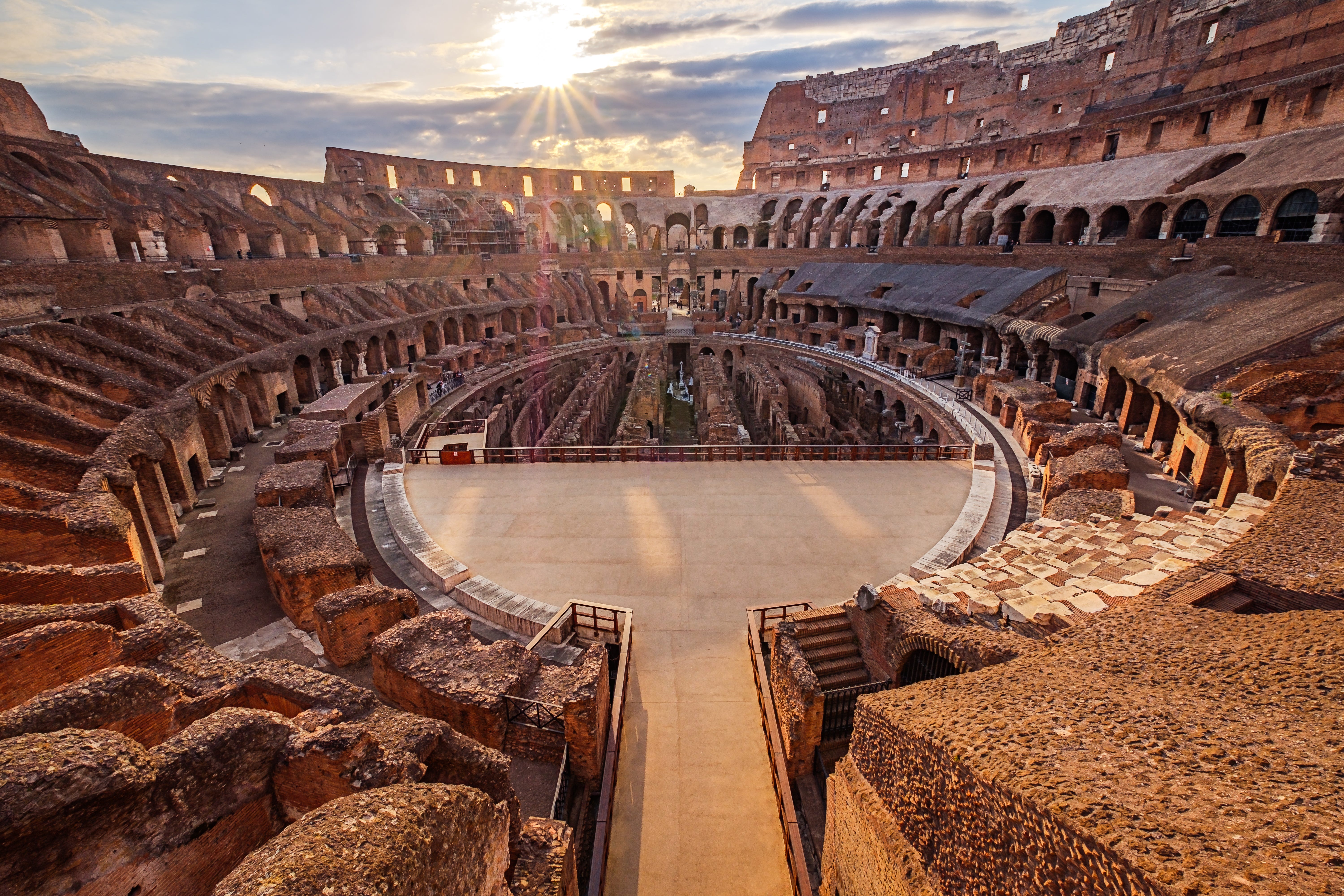
Two exhausted gladiators circled each other under Emperor Titus’s box, 80 AD.
Bronze helmets dented, sword grips slick in their hands, both warriors dripping blood in the arena sand.
Hours into the afternoon match, Priscus and Verus fought on.
Rome’s new Amphitheatrum Flavium’s stands rose to the sky. Fifty thousand delirious fans shouted hoarsely for their man. The late afternoon sun slanting low across the sand, already dried dark by hours of fighting.
Shields battered, breath ragged. The crowd chanting for missio, the release. Rome’s law required the fight to run until one man raised a finger.
Neither man yielded.
Titus watched two of his best gladiators refuse to quit. He rewarded them mid-fight with food and gifts, then let the fight continue far past what tradition allowed.
Waiting for a finger that never came.
Finally, Titus said enough. The match stopped.
Both men lowered their swords at the same moment. Equal in exhaustion. Equal in skill.
Titus presented both the rudis, the wooden sword marking freedom. The two warriors walked out of the Amphitheatrum Flavium as free citizens.
On the first day it opened.
We only know the gladiators’ names because a poet decided the moment should be written down.
Everything we’ve been taught, that every gladiator match in the Colosseum was a fight to the death….
Wrong.
This newsletter is reader-supported. Please consider a $5 subscription to support our work:
3 weekly history essays. Easy reading. No dull dissertations.
3 weekly quick summaries of how we use AI for creating every essay.
1 monthly extra newsletter, rotating between a full AI breakdown for writers and video, and a Stoic philosophy article.
Open DM sessions on the month’s top article.
The Gladiator Story Hollywood Sold You
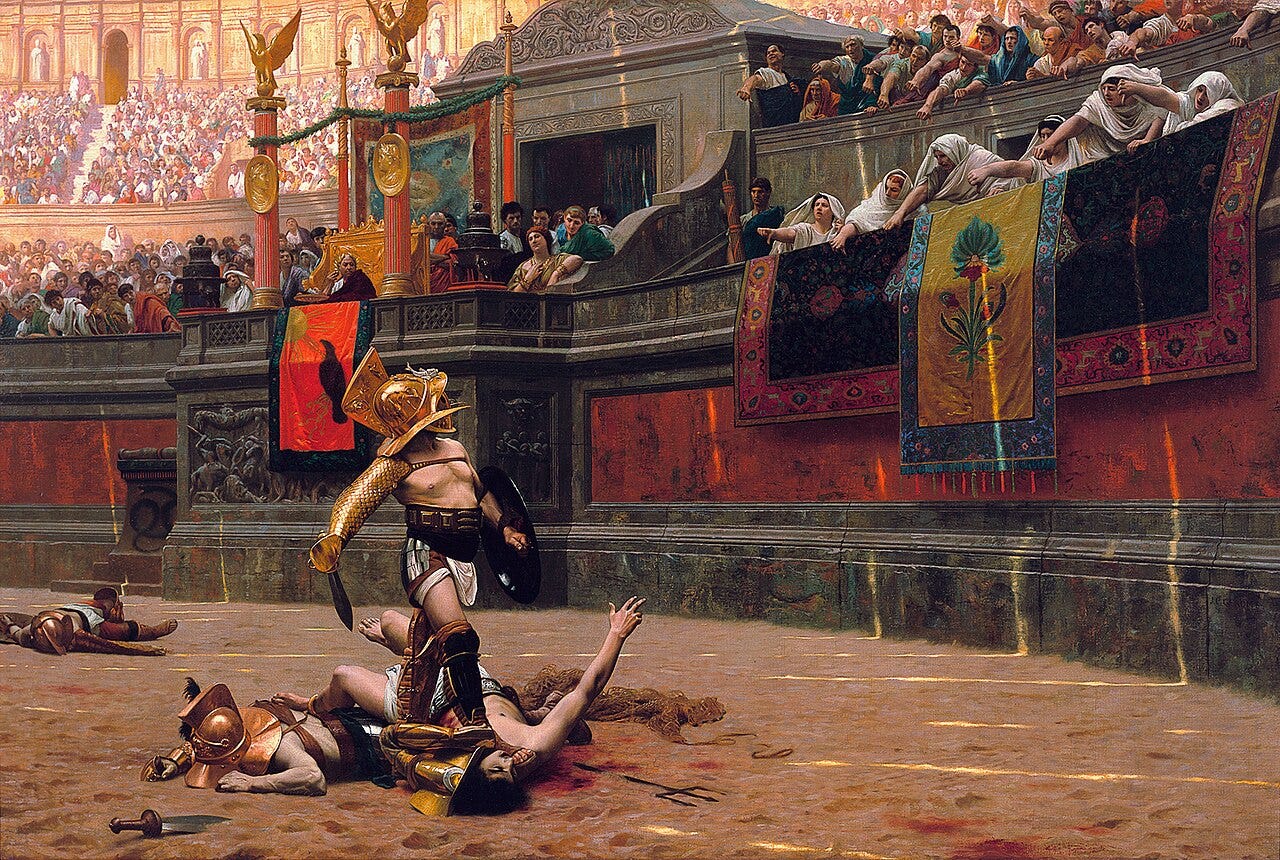
You know the Hollywood gladiator myth.
Two slave warriors. Sand soaked red by midday. Every match ending in a death blow. Dead warriors dragged out by the feet. Gladiators disposable, replaced without a thought.
A satisfying story for the modern audience.
Those savage barbarians in 80 AD.
Here we are two thousand years later, evolved, civilized, above all that bloody business.
The gladiator myth didn’t start with film, though.
Nineteenth-century writers sold ancient Rome as a savage spectacle, a useful contrast to Europe. They were above all that, too.
A few decades later, the same continent buried millions in trench warfare and gas attacks.
So much for civilized.
The gladiator death toll somehow became hundreds of thousands, a number nobody can source. That became the Colosseum story.
All 400 years of it collapsed into one continuous slaughter.
Nonsense.
Priscus and Verus break that template.
The real gladiator system had insured fighters, and an economy built around keeping the best warriors alive.
