


It was thick, black, stuffed with cash, a passport, a license, and credit cards.
Man’s whole life inside.
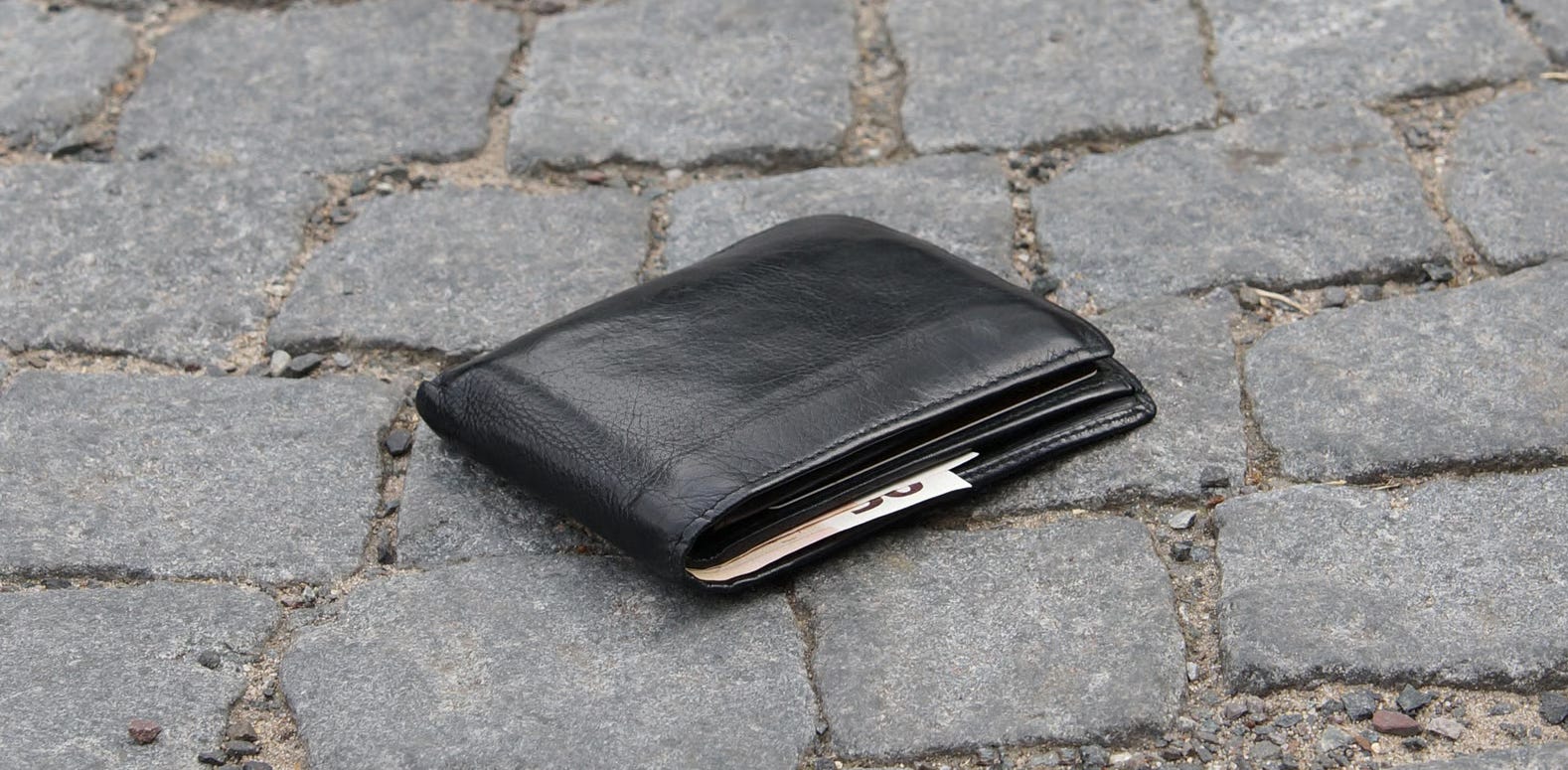
I brought it up the cruise ship gangway and handed it to the woman at guest services. Her eyebrows arched. She thanked me, said it was nice of me to bring it back.
“Of course,” I said, “that’s what people do.”
My auto response, but significant.
Somewhere, something wrote that tendency directly into us.
A study that dropped 17,000 wallets across 40 countries proves it wasn’t just me being polite on a pier.
This is a periodic free newsletter from our archive. Subscribe and get:
3 weekly history essays. Easy reading and no dull dissertations ever.
3 weekly quick summaries of how we use AI for creating every essay.
1 monthly extra newsletter, rotating between a full AI breakdown for writers and video, and a Stoic philosophy article.
Open DM sessions on the month’s top article.
All for just $5 a month.
Economists: Wrong Again
Alain Cohn and a team of researchers were into wallets. Really into them.
They spent three years dropping them in 355 cities across 40 countries. Some were empty. Some had $13. A follow-up round in the US, UK, and Poland pushed it to almost $100.
Economic experts knew what would happen: More cash, fewer returned wallets.
Wrong.
Economists usually are.
In 38 out of 40 countries, people returned wallets with money more often than empty ones.
Huh?
At $13, 61 percent of finders contacted the owner. At $100, that number soared to 72 percent.
Wallets with a house key inside, worthless to the finder and priceless to the owner, came back even more often than wallets with cash alone.
That detail floored me.
Denmark and Kenya. The US and Poland. Countries with nothing in common reached the same conclusion:
Money didn’t make people worse. It made them more likely to turn in the wallet.
If you ever found a wallet or credit card and felt pulled to return it, you understand the study. Cohn’s data proves the pull exists. It doesn’t explain where it came from.
C.S. Lewis Beat the Study by Almost 70 Years
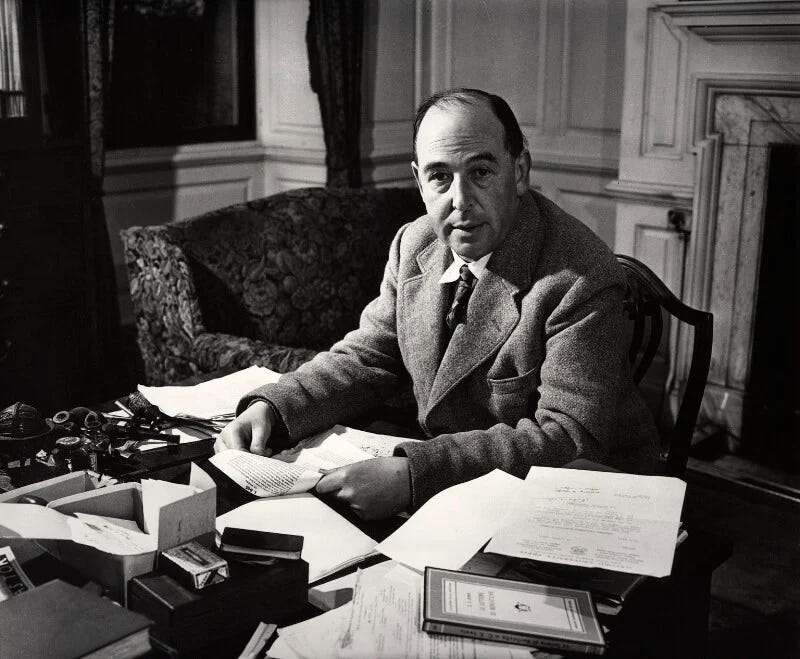
C.S. Lewis was an avowed atheist. Then changed his mind.
He wrote a book about it. Not Narnia. Mere Christianity.
He argued that every civilization has operated under the same underlying moral law, even where the specific rules differ from place to place.
Some things are right. Some things are wrong.
People seem to know the difference before anyone teaches them at the kitchen table or in a classroom.
Evolution explains cooperation inside a group.
It goes sideways when a stranger in Nairobi emails a guy in Oslo about a passport he will never benefit from returning.
Social conditioning explains local custom.
It doesn’t explain the same pull showing up in societies separated by oceans and centuries, cultures that never exchanged a word with each other.
Lewis believed something wrote that law into people.
Before any parent, priest, or culture got the chance to.
Cicero Argued the Same Thing in 44 BC
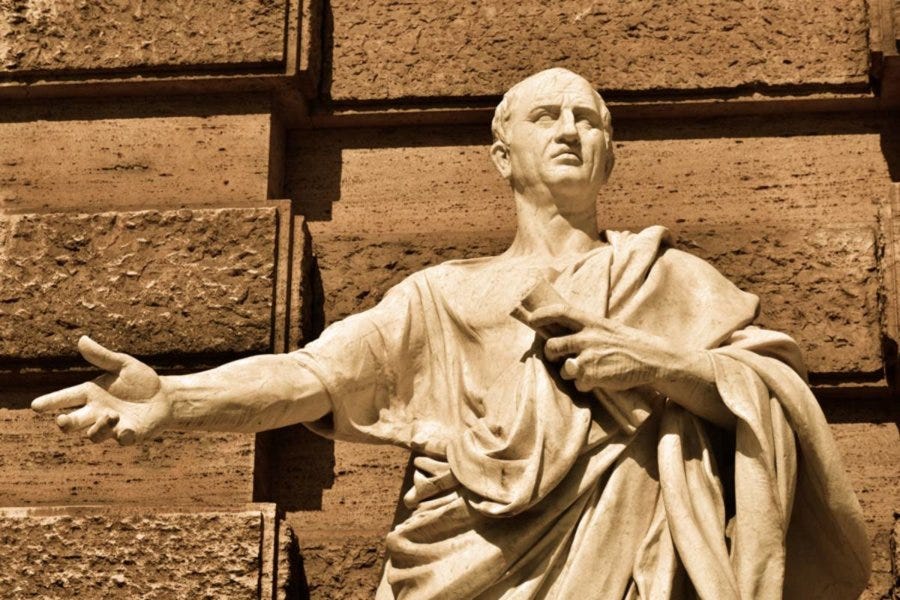
Cicero, two thousand years earlier. Before Christianity.
The year Caesar was murdered.
He wrote De Officiis, a treatise on moral duty addressed to his son.
The Republic he’d spent decades defending was disintegrating. Caesar was in his grave, and men were tearing its scraps apart between them, keeping whatever they could grab.
Makes it stranger that Cicero sat down to explain why they owed anything to each other.
Cicero called it the law of human fellowship, on which Roman law and the Senate's decrees were built. He didn't invent the instinct, though; he just named it.
Roman law eventually caught up to what people already sensed in their bones:
If you keep a stranger’s property once you know whose it is, that’s theft.
You’d probably give the wallet back too. And you feel it, even if you can’t explain why. Cicero would have recognized the arched eyebrows at guest services in Greece.
He might have said the surprise was the real story.
Not that I returned the wallet, but that anyone expected me not to.
72 Percent Would Have Done the Same
The woman at the desk was surprised I handed her a wallet full of cash.
She shouldn’t have been. 72 percent of people would have done the same, once the wallet had real money in it.
It sat there on a concrete pier in Greece, thick and brown in the sun, and I picked it up without thinking twice. So would you.
Past Passport is a community of historical optimists. We believe history predicts the future better than the news does, and every generation that thought it was living through the end turned out to be wrong.
We write clear history. No dull dissertations, no jargon, just the questions you’d actually ask and real answers to go with them.
Join us. Three essays a week, always readable, never boring. And only $5 a month.
A truly good news story! (And a cracking historical weave) 👏
Thanks yes good news!