Post a Photo of War & Peace on Social Media and Wait.
Everyone has an opinion. Most of them haven't read it
Post a photo of War and Peace on X and watch what happens.
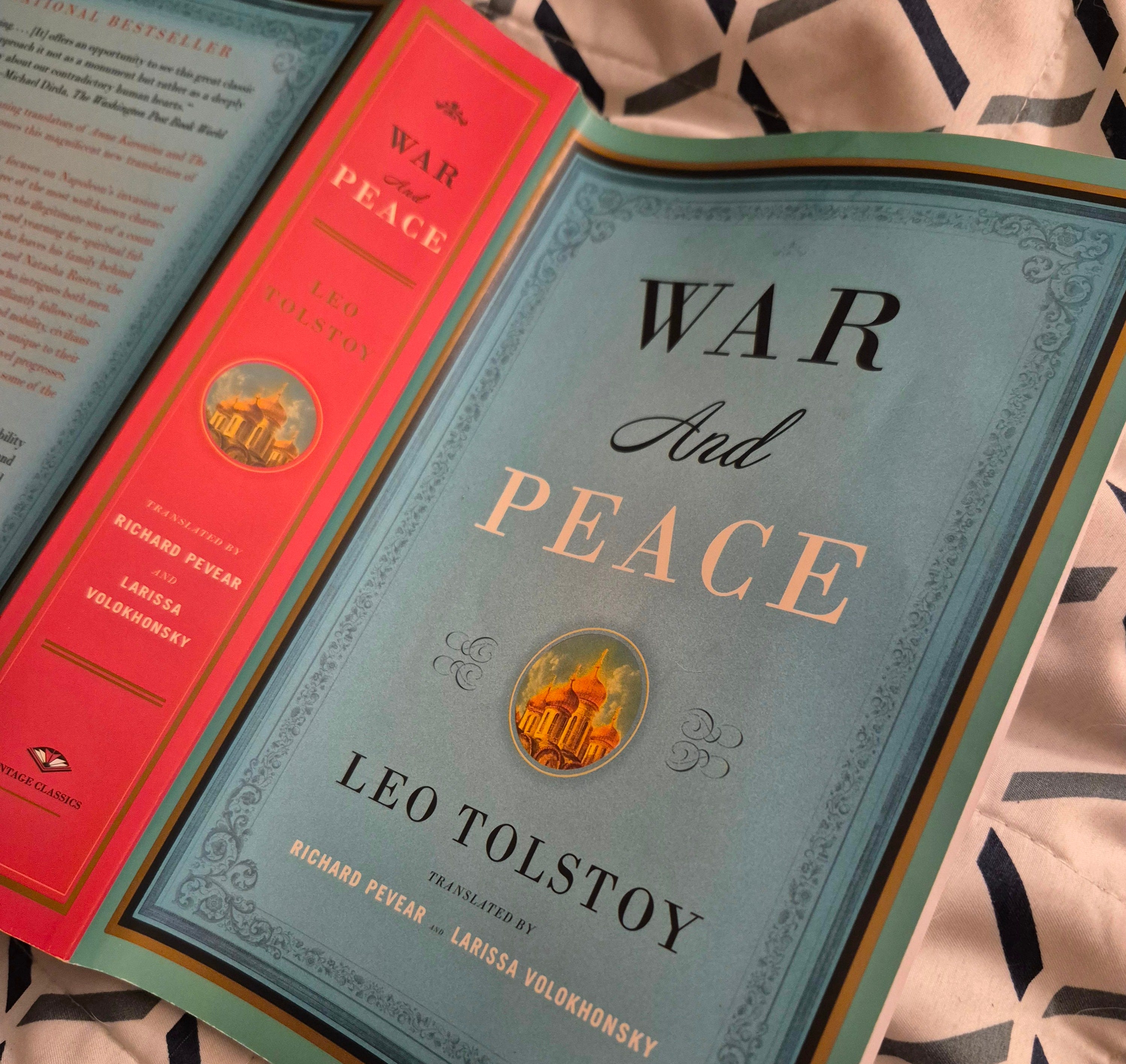
The comments are split every time. One-half treats it like a survivor support group. “Oh my God, that thing is torture.” “So long and boring, holy God.” The other half loves it and wants you to know you're a philistine for finding the first 150 pages slow.
I’ve posted the War & Peace photo several times now. Controversy every time. Which tells you something: This book has a reputation that arrives long before anyone opens it.
The Book Everyone Lies About Reading
Most people haven’t read it. War & Peace lands in the top four on every most-lied-about book list ever compiled. People start it somewhere in the salon scenes, lose the thread among fifty Russian characters with long names, put it down, and tell everyone they finished it.
I’m 600 pages in, and I don’t want to stop.
I Tried to Read War & Peace Four Times. Three Things Changed.
The first is the translation. I’m using the Pevear and Volokhonsky version from 2007. Some of the older translations made Tolstoy heavier and more Victorian than he actually was — formal, dense, nothing like what I’m reading now. Tolstoy wrote conversationally in Russian for his era.
What hardened into “tortuous” in English wasn’t always Tolstoy. A lot of it was a translation wearing its age. If you picked up an older version and put it down, that may be the whole story right there.
The second is a short guide on my phone. Character lists, key relationships, who connects to whom. In the first hundred pages, I referred to it constantly. By page 250, I didn’t need it anymore. The characters were cemented in my brain the way people do when you’ve been around them long enough.
The third is that I’m older. I’ve stopped needing to remember everything. I follow the ten or so characters who carry the story and let the rest drift into the background. Nobody is tracking all 580 of them. The people who say they are, aren’t.
What Nobody Tells You About The First 200 Pages
Here’s what the reputation doesn’t prepare you for. Tolstoy isn’t difficult. He’s just long. And the slow part — the drawing rooms, the French conversation, the endless arrivals — some people argue Tolstoy made it that way on purpose.
The peacetime tedium is the contrast he was building toward. Once you know that, the first 200 pages stop feeling like an obstacle and start feeling like architecture.
Getting through them this time felt like settling a $10,000 credit card debt. I’d failed this book before, more than once, and somewhere around page 200 it opened up, and I had this feeling of — oh. This book is good.
Tolstoy Went and Found Soliders Who Were There

The battle scenes are part of why I read late every night. They don’t read like historical reconstruction — confused, loud, terrifying, the way real things are terrifying rather than dramatic things.
There’s a reason for that. Tolstoy was writing fifty years after the events, and he went and he interviewed dozens of war veterans. Old men by then, sitting with their memories of what it actually felt like to stand in one of those battles.
Nobody was describing Napoleon’s genius to him. They were describing mud and noise, and not knowing what was happening twenty feet away.
My Russian wife — who grew up with this book — didn't know he'd interviewed the veterans. Neither did I, until this reading.
Everyone has an opinion about this book. Most of them haven’t read it. The ones who gave up probably used the wrong translation.
The 2007 translation. A character guide on your phone. That’s the whole barrier.
Thank you for reading. Did you learn anything new? If so, subscribe today. I write about history and what it tells us about today.


won't lie, never read it! But it's on the list