

Suitcases on the kitchen floor, passports and plane tickets in hand.
“Ok, we’re ready to go.”
“Time to sit down.”
An old Russian tradition: присесть на дорожку. Sit down for the road.
It means a moment of silence before a journey, to settle yourself. Maybe remember if you forgot the tickets, or those comfy shoes for walking around Rome.
Or what you’ll do if something goes wrong.
Seneca did something like this in his final years. He was one of Rome's leading Stoics — a philosophy built on a simple idea:
You can't control what happens to you, only how you respond to it.
Before a journey, Seneca imagined real catastrophe: the trip ruined, the money gone, the plan wrecked. He rehearsed it so he’d already have an answer if it happened.
Russia calls it присесть на дорожку, and Rome called their version premeditatio malorum. The premeditation of evils.
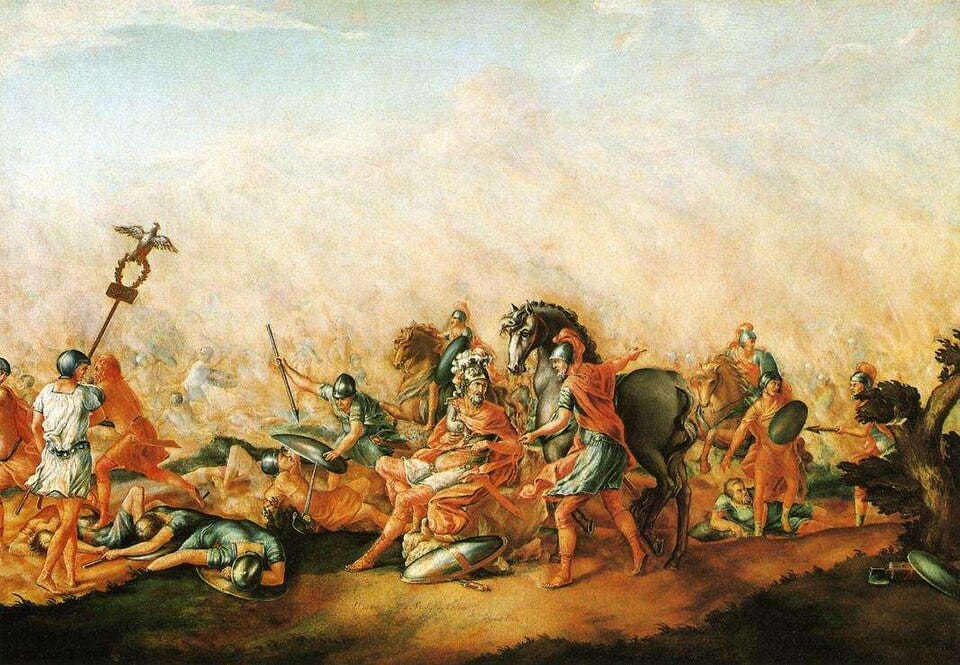
Ancient Rome would do the same on its worst day in history, at a scale no family trip could match.
This newsletter is reader-supported. Please consider a $5 subscription to support our work:
3 weekly history essays. Easy reading. No dull dissertations.
3 weekly quick summaries of how we use AI for creating every essay.
1 monthly extra newsletter, rotating between a full AI breakdown for writers and video, and a Stoic philosophy article.
Open DM sessions on the month’s top article.
What Premeditatio Malorum Asks of You
We don’t want to think about worst-case scenarios.
Newlyweds asked to estimate their own odds of divorce tend to say zero percent. Divorce lawyers, who see the real numbers every day, still underestimate their own.
Neuroscientist Tali Sharot calls it optimism bias.
We are wired to expect good things and discount bad ones, even when the evidence is right in front of us.
Understandable. It’s stressful and upsetting to imagine missing a flight, or losing five bags on the overnight to Stockholm.
Or something worse.
Seneca thought avoiding worst-case thinking was foolish. You suffer worse when the blow catches you unprepared than when you’ve already planned a response.
He wrote to his friend Lucilius:
“If an evil has been pondered beforehand, the blow is gentle when it comes.”
Harry Houdini spent his career testing that idea without knowing it.

Part of his magic act was taking hard punches to the stomach, braced and ready, muscles locked. In 1926, a college student asked to test the claim and swung before Houdini could tighten up. Houdini waved him off mid-punch, saying he hadn’t been ready.
He died nine days later from a ruptured appendix.
Doctors still debate whether the punch killed him. But Houdini spent a week blaming the pain on the blow instead of getting checked out. The one hit he hadn’t braced for was the one he couldn’t stop thinking about, and it may have hastened his death.
The shock is what wrecks people. Not always the loss itself.
Next: learn how Rome handled its worst day by using Stoic thinking….
