

Our daughter visited Scotland to study Hadrian’s Wall 15 years ago. International studies major. Before that trip, my Hadrian’s Wall knowledge boiled down to:
The Romans came, the Romans conquered, and at some point they slapped up a wall to keep the barbarians out.
Yeah, had it all wrong.
Hadrian’s Wall wasn’t built out of fear, or because Rome had hit some limit it couldn’t push past.
It was about where Rome decided to call it quits, for good reason.
If you learned Rome the way most people did in high school, this part seems out of the empire’s character.
By the time Trajan died in 117 AD, Rome had maxed out what it could control.
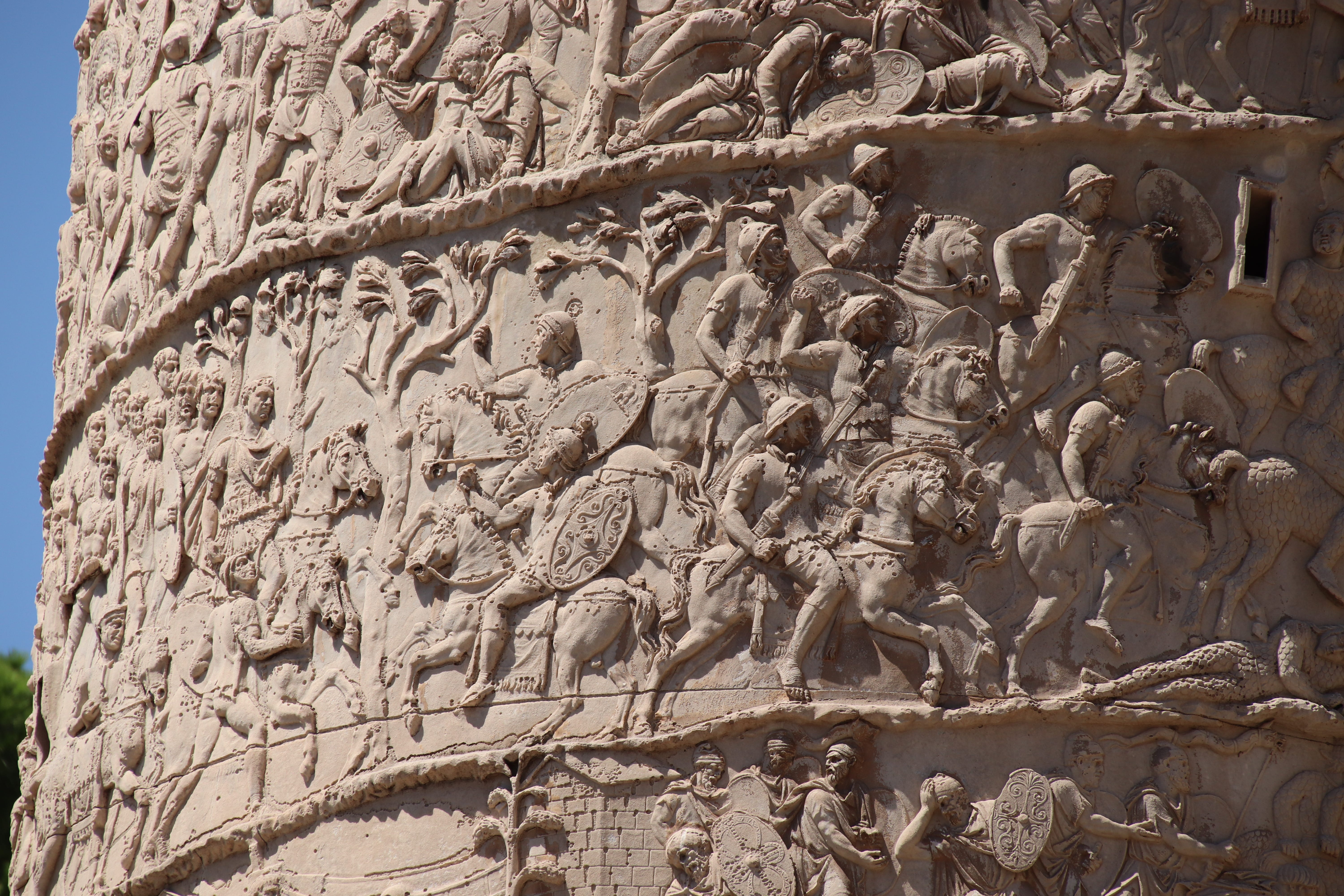
His legions crossed the Danube twice to take Dacia, roughly Romania today.
The first war, 101 AD, ended in a forced treaty. The second, in 105, broke that peace for good.
Roman legions sieged the Dacian capital, cut off its water, and drove King Decebalus to kill himself rather than be captured alive.
Rome came home with vast piles of his treasure and threw a four-month victory party.
Conquest was the empire's entire personality.
More territory meant more glory, and more glory was the point of being emperor.
Then Hadrian took over. And he changed everything.
This newsletter is reader-supported. Please consider a $5 subscription:
3 weekly history essays. Easy reading. No dull dissertations around here.
3 weekly quick summaries of how we use AI for writing every essay.
1 monthly extra newsletter, rotating between a full AI breakdown for writers and video, and a Stoic article.
Open DM sessions on the month’s top article.
“Here’s Your Land Back.”
Trajan had spent three years and thousands of lives taking Mesopotamia. Legions crossed the Euphrates, sacked the Parthian capital at Ctesiphon. Pushing all the way to the Persian Gulf, farther east than any Roman army had ever gone.
Then the land grab fell apart.
Revolts broke out across the conquered territory, Roman garrisons got run out of their own new cities, and Trajan died before he could finish what he started.
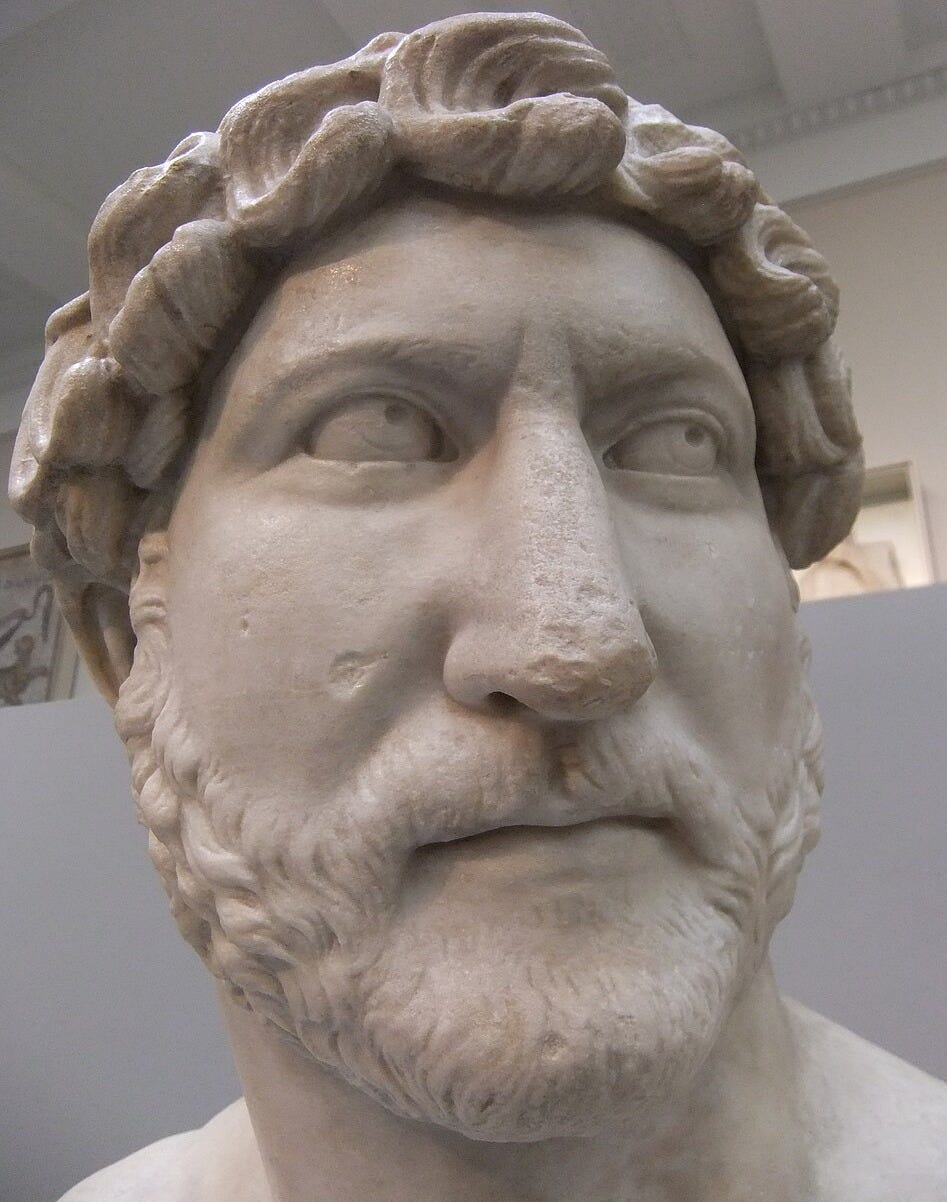
Hadrian sat down on the sella curulis, the plain folding chair Roman emperors used instead of a throne. He looked at the mess and said “enough.”
His reasoning survived the centuries, recorded in an old Roman biography, one of the only firsthand accounts we have.
Any territory Rome couldn’t realistically hold and defend, Hadrian reasoned, should be let go rather than bled dry trying to keep it.
Not out of weakness or fear. Just a practical read of what Rome could sustain.
Not everyone in Rome bought that view at the time. Some of Trajan’s old generals saw Hadrian’s reversal as a betrayal of everything they’d just bled for.
He looked at what Rome had and decided the job wasn’t to take more. It was to hold what it already had, not expand it.
Nowhere did he make that decision more permanent than in Britain….
