

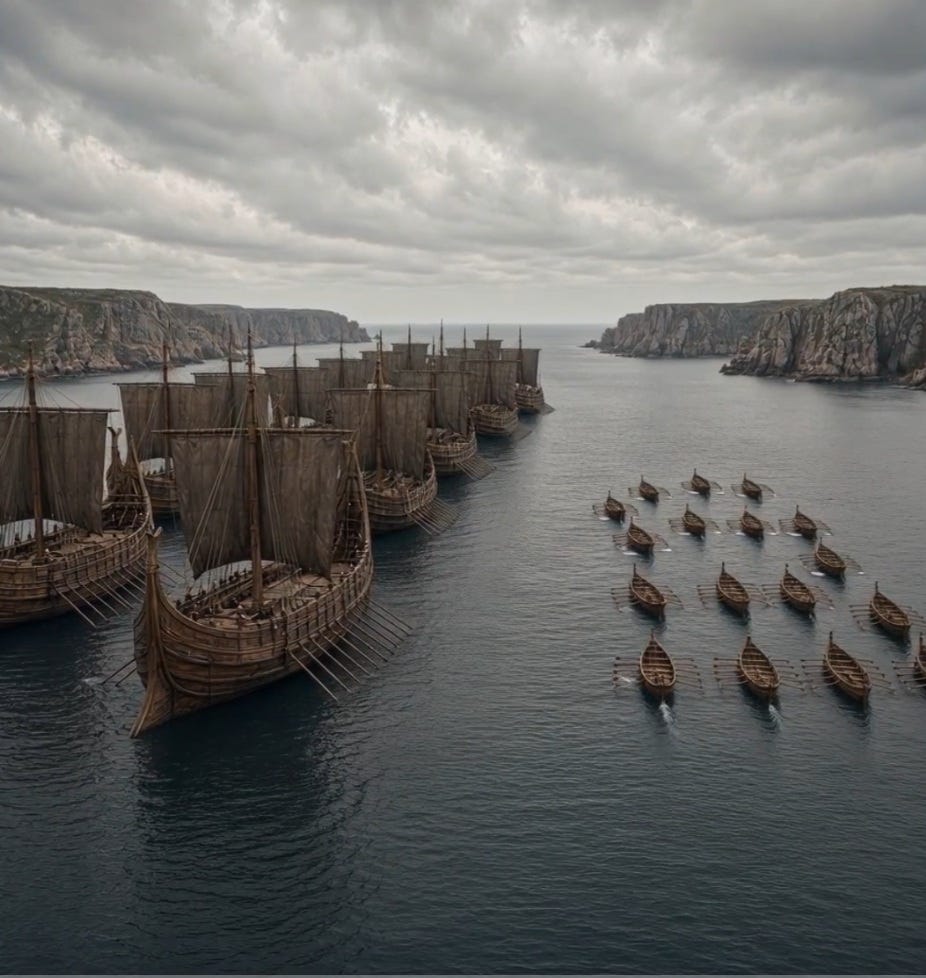
Caesar’s navy shouldn’t have had a chance in hell at the Battle of Morbihan in 56 BC.
The Veneti tribe of Brittany boasted a fearsome navy. It was bigger and tougher than anything Rome had built.
220 warships built for the open Atlantic against Rome’s 60 lighter galleys. The warships towered over the tiny Roman fleet.
By sunset, the Veneti’s leadership was dead. Their fleet was destroyed or captured, their people sold into slavery. Naval resistance in Gaul was over.
A year later, Caesar reused that same fleet to cross the Channel and invade Britain, a campaign no Roman had ever attempted before.
To understand how Rome pulled this off, imagine what Caesar was up against.
The Veneti had more ships, better built for the water they were fighting on, and generations of experience Rome’s navy lacked.
On paper, there was no way to win this.
Thank you for reading! Your support makes Past Passport possible. You get:
3 weekly history essays. Easy reading. No dull dissertations.
3 weekly quick summaries of how we use AI to create every essay.
1 monthly extra newsletter, rotating between a full AI breakdown for writers and video, and a Stoic philosophy article.
Open DM sessions on the month’s top article.
Oak, Iron, and Leather
The Veneti weren’t some podunk AA farm team Caesar was trifling with. The Veneti were bruisers.
Their territory sat on the coast of Gaul, in what’s now the Brittany peninsula of France.
Brittany, not Britainy, easy to mix up, but the Veneti were French, not British, though they traded heavily with the island across the water.
They owned the sea trade along that coast. Tin, metal, and shipments to Britain all ran through their harbors, and almost nowhere else’s.
Neighboring tribes ponied up cash to the Veneti just to move goods by water at all. The Veneti taxed the coastline the way a turnpike charges for using a freeway today.
If you wanted tin or metal moved here, you dealt with the Veneti on their terms, and they’d been building ships for exactly those conditions for generations.
The tribe’s reputation and influence were built into the ships themselves. They were the Rolls-Royces of the ancient Atlantic. Expensive, overbuilt, and unmistakable the moment they came into view.
You got out of the way or got killed.
Flat-bottomed hulls let them ride out the tides without running aground.
High prows and sterns were built to take the punishment of Atlantic storms the calmer Mediterranean never produced.
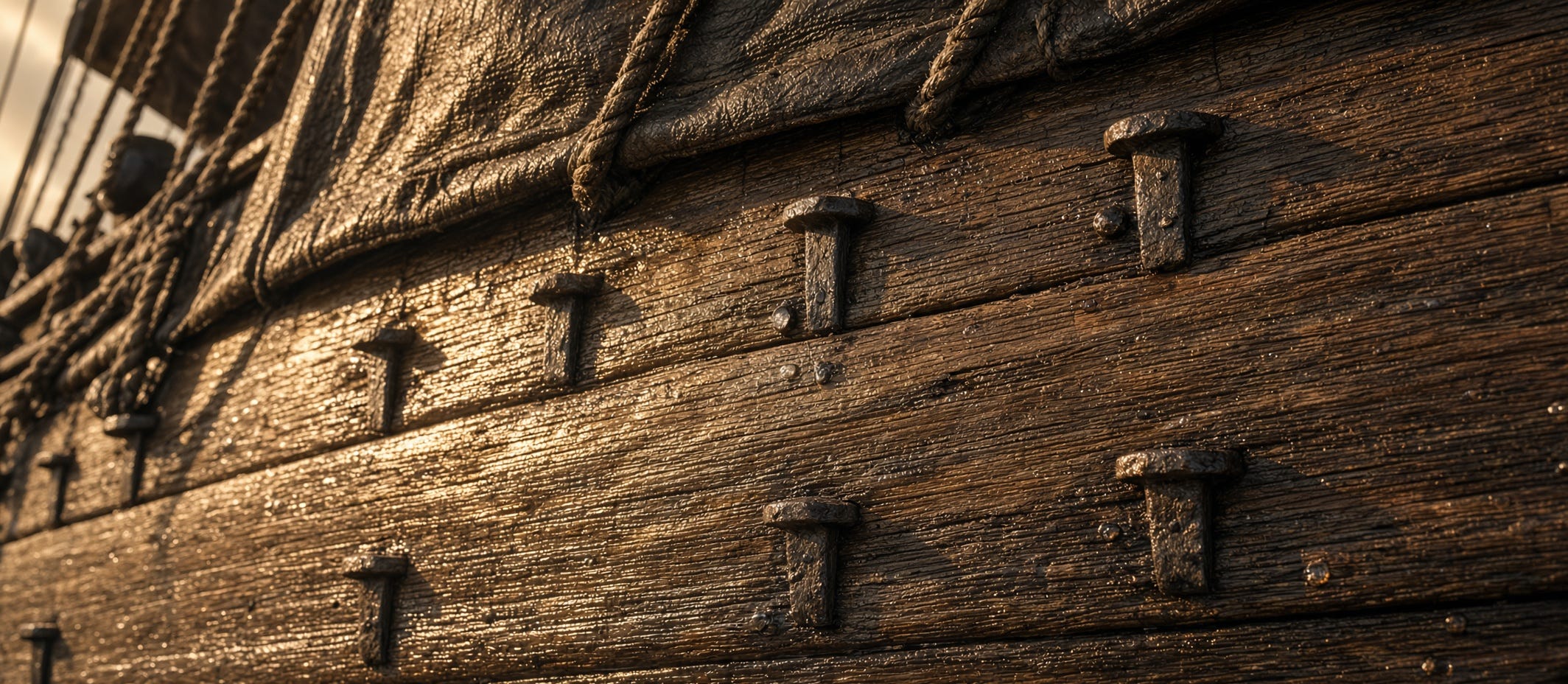
The hulls were tough oak, fastened with iron nails as thick as a man’s thumb, strong enough to shrug off a Roman ram without damage.
Even the sails were made of leather rather than flax canvas. Tougher, better suited to gale-force winds than anything cloth could hold.
Rome, to this point, was a land-fighting juggernaut. Its navy was another matter.
Every small galley in Caesar’s fleet had been built for the Mediterranean: calm water, predictable weather, hulls light enough to ram and board. None of that experience applied here.
On paper, this match should have been a blowout for the Veneti.
It didn’t turn out that way.
