

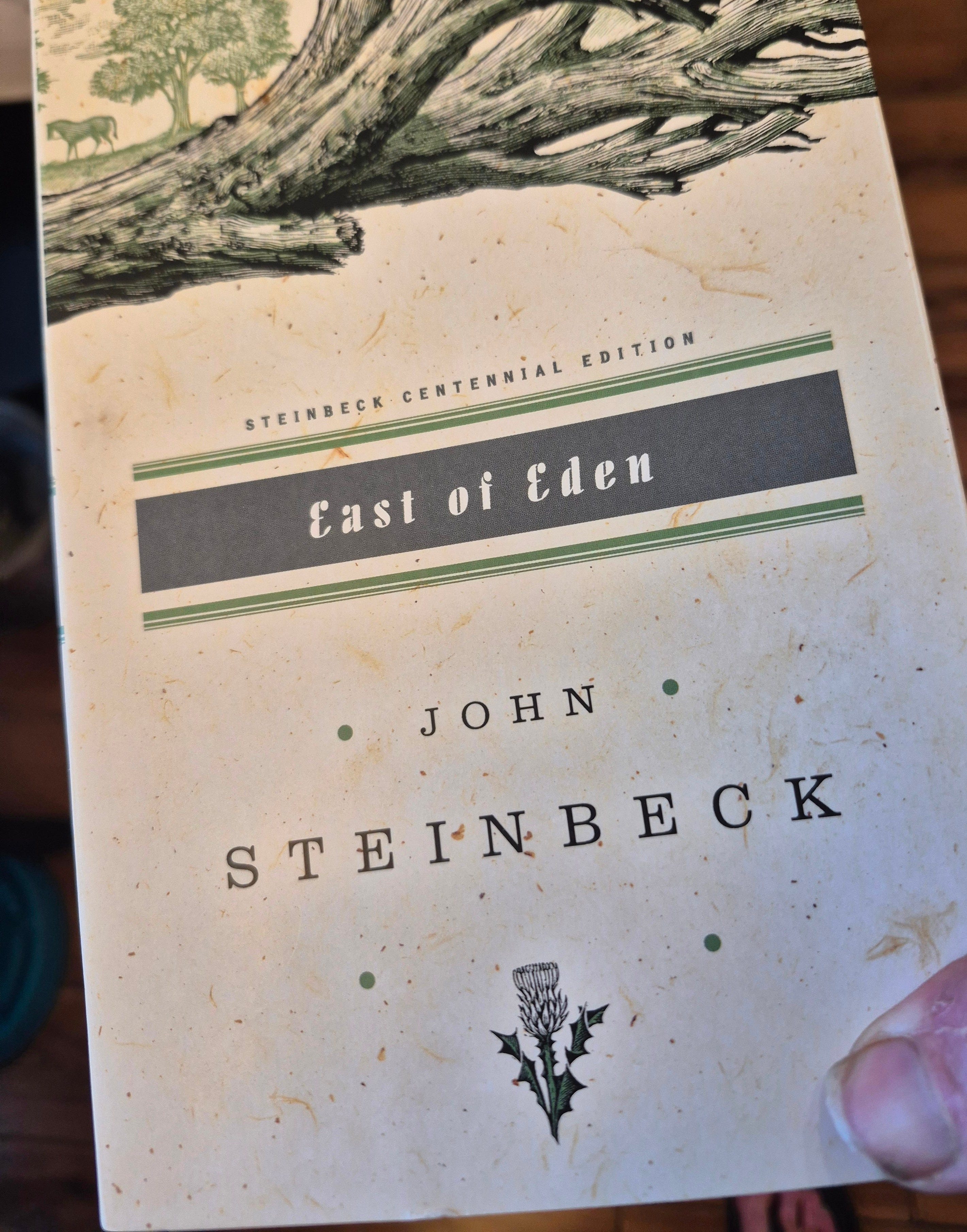
East of Eden might be Steinbeck’s best book. Oh? Who says?
Steinbeck:
“I think everything else I have written has been, in a sense, practice for this.”
— John Steinbeck on East of Eden
You probably know the gist.
Cain and Abel hanging in the Salinas Valley... one good son, one rotten son, and a mom so vile you see the family resemblance.
The bad son was born that way, and that’s The Way It Is.
About that... Steinbeck didn’t write East of Eden about a son born bad. Blame Hollywood for the confusion.
First, Elia Kazan’s 1955 film made James Dean a star... and cut Lee, the cook who explains the book’s Big Idea.
ExCUSE me?
Second, Netflix's entertaining show kept Lee (whew), but Florence Pugh steals every scene. Props to the talented Pugh, but Lee’s big idea gets lost in the haze.
Shame, because Steinbeck wrote the book’s Big Idea for his two little boys after the worst year of his life.
He hung all 600 pages on one Hebrew word, the word God speaks to Cain right before Cain kills his brother.
The word that says nobody is born doomed. Not Cal Trask, not you, and not me.
To understand the book Hollywood keeps missing, start with the year Steinbeck hated most.
Social Media, Inc. promotes negativity and argument. At Past Passport, we disarm the doomscroll with history, art, and beauty. A daily shot of optimism. Join us:
3 history essays a week. No dull dissertations.
1 extra issue a month: an AI breakdown or a Stoic essay.
An open DM session on the month’s top article.
A brighter outlook and a creative streak that comes back. (Mine did.)
First week free, then $5 a month.
Grief Needs Busy Hands
Steinbeck opened his 1949 journal with a line plenty of us have muttered on December 31:
“I don’t think anyone ever so hated a year as I hated 1948… Wife, children, best friend, gone.”
The friend. Ed Ricketts ran a little marine biology lab on Cannery Row in Monterey. If you’ve read Cannery Row, you’ve met him... he’s Doc.
On Saturday evening, May 8, 1948, Ed finished a day’s work in the lab and pointed his old 1936 Buick toward dinner. He was nearly 51.
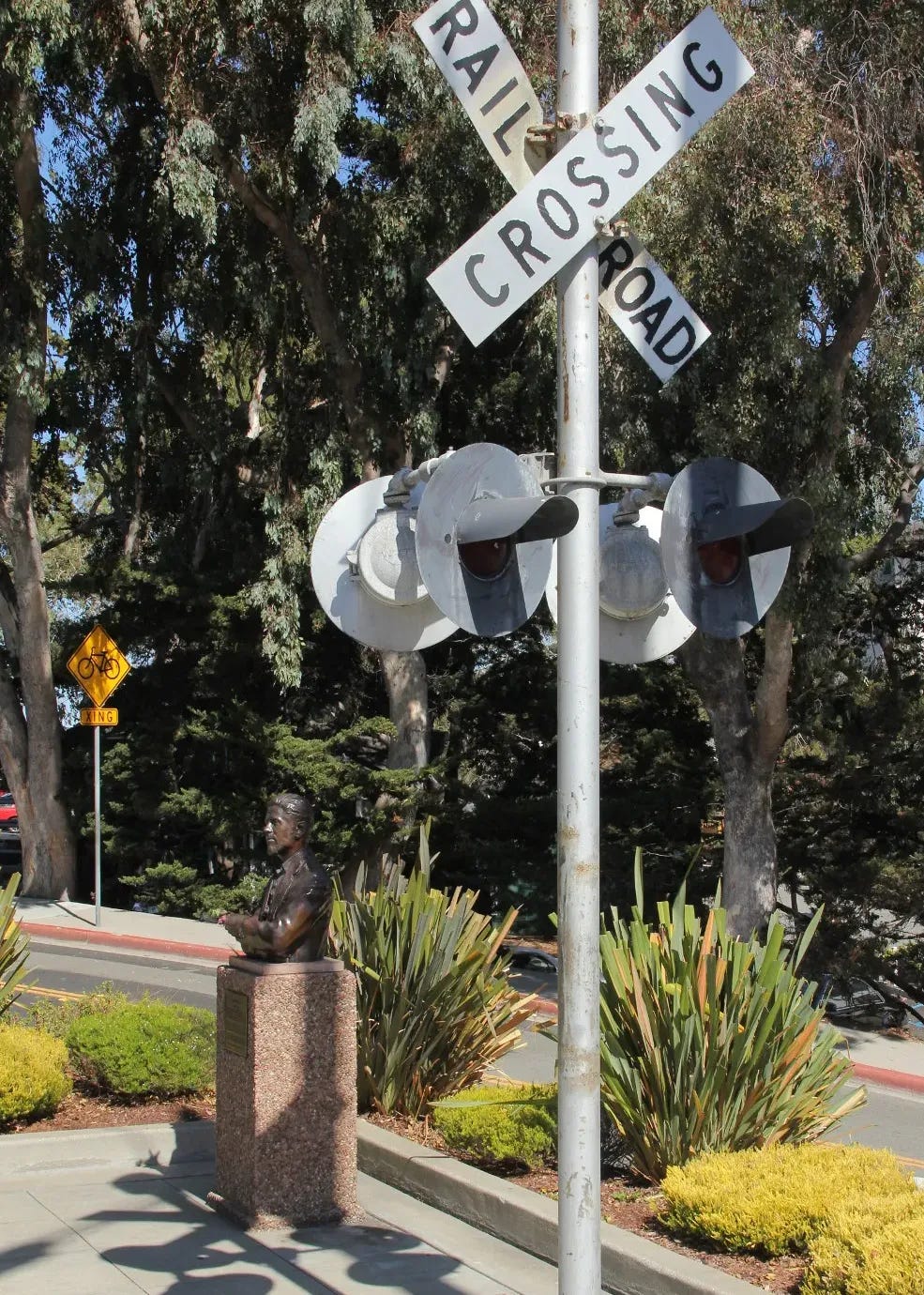
At the railroad crossing at Drake Avenue, the Del Monte Express came through on its way to San Francisco. The train T-boned the Buick and shoved it several hundred feet down the track.
Ed was a tough customer. He lived three days, awake some of the time, but died May 11. Steinbeck rushed west from New York but arrived too late.
“There died the greatest man I have known and the best teacher.”
And 1948 wasn’t done with Steinbeck yet.
After the funeral, Steinbeck went home to New York. There, his wife, Gwyn, told him she was leaving and taking their two sons, both under 4.
Steinbeck was wrecked. But his response was smart.
He holed up in his family’s old cottage in Pacific Grove and kept his hands busy... sawing the low limbs off the pines to let light into the garden, then planting red geraniums.
Old-school Stoic stuff. Around AD 43, Seneca told a Roman official mourning his brother to bury his grief in his work.
Steinbeck did so, but with a saw in his hands.
The next January, he drafted a letter to his boys. Someone stumbled on it decades later, tucked in his journal:
“You are funny little boys now, and I miss you so. I feel cheated sometimes that I cannot see you growing and be a part of it...”
Wife, children, best friend all gone. Most of us would call that DOOM and pull the covers over our heads until 1955.
Steinbeck finished the journal entry differently: “But perhaps it toughened me.”
Perhaps.
Two years later, his editor handed him a fat blank notebook... and Steinbeck started writing a new book for his boys…..
