

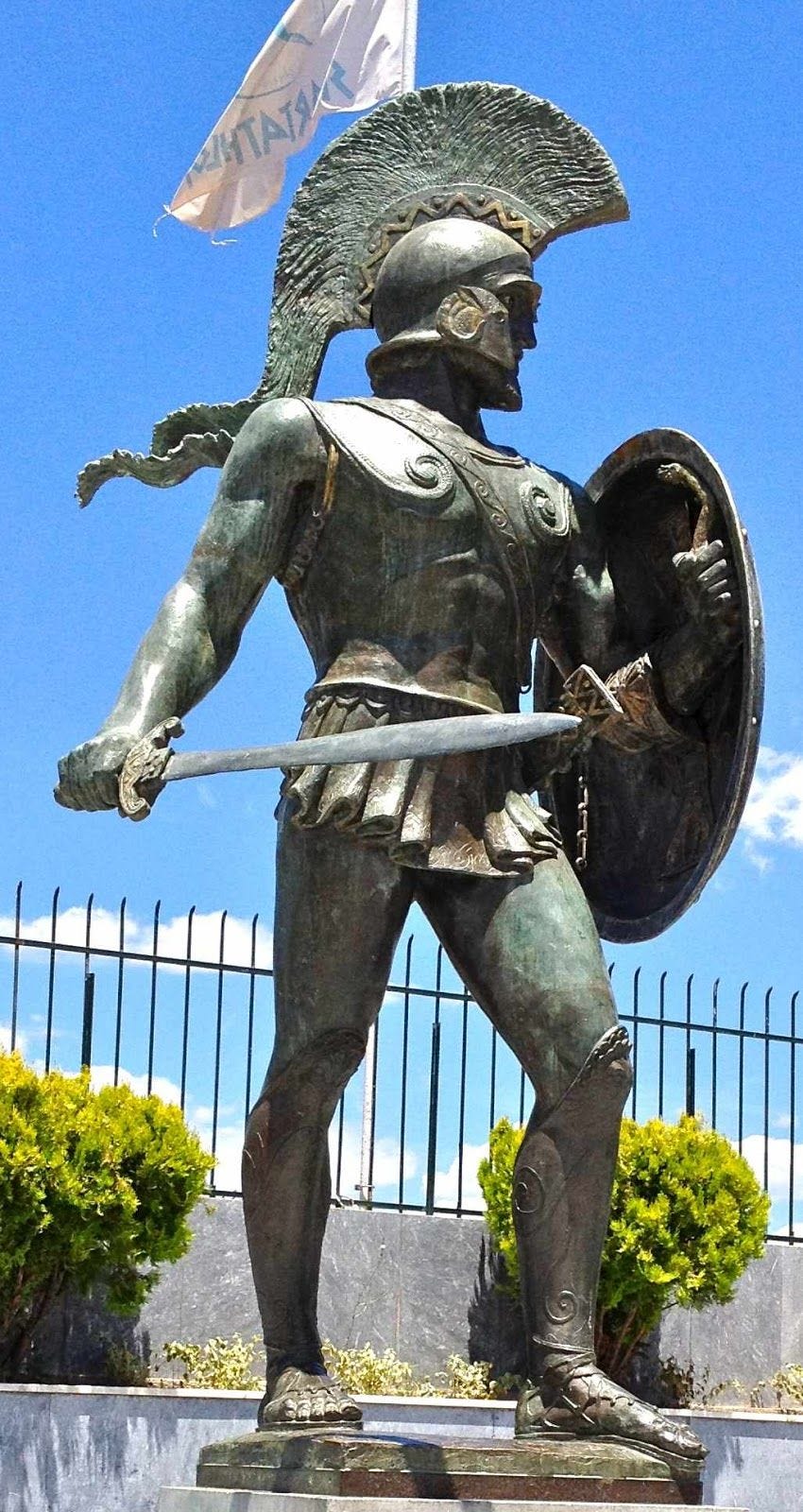
Three hundred elite Spartans at Thermopylae vs a million barbaric Persians. Glistening abs and more abs in slow motion.
The 2007 film, about the doomed final stand in 480 BC, was loved by many, and I enjoyed it.
Past Passport isn’t Rotten Tomatoes, though.
Herodotus gives us the real Greek numbers just 50 years after the battle. It’s the oldest surviving account we have.
What “The Father of History” detailed is stranger and more thrilling than anything in the movie.
We loved the 300 film because we want heroes, and always have. Men who chose to stand and fight when retreat was an option.
“The bravest are surely those who have the clearest vision of what is before them, glory and danger alike, and yet notwithstanding, go out to meet it.”
That’s Pericles talking about different men and a different war, decades later. It applies to Thermopylae too.
The Spartan 300 earned their glory in history, but they got the statues, the movie, the whole story to themselves.
A large cast of other heroes populated this last stand who history deleted.
We return them to the credits today.
This newsletter is reader-supported. Paid subscribers get:
3 weekly history essays. Easy reading and no dull dissertations ever.
3 weekly quick summaries of how we use AI for creating every essay.
1 monthly extra newsletter, rotating between a full AI breakdown for writers and video, and a Stoic philosophy article.
Open DM sessions on the month’s top article.
This is the week’s free article for all subscribers, but please consider supporting us for $5.
Herodotus’s Score Sheet
The 300 film nailed it. Leonidas did march 300 Spartans to the Hot Gates pass. He also brought a few thousand more.
Herodotus breaks it down in his Histories: 300 Spartans. About 3,100 more Peloponnesians. 700 Thespians. 400 Thebans. A thousand Phocians. Locrians on top of that.
About 7,000 men.
Historians generally buy these numbers. They’re specific, broken down by city, and they match how Greek city-states actually mobilized for something like this.
The Persian side is a train wreck.
Herodotus claims over two and a half million fighting men, plus support staff that would nearly double it.
Nonsense, but Herodotus was in good company.
Ancient writers inflated enemy numbers on purpose. A bigger victory and less humiliating loss.
Herodotus was writing decades later, off secondhand accounts and Greek pride, and it shows: historians today estimate 100,000-300,000 Persians, not the million he claimed.
And the real line wasn't 300, it was closer to 7,000 Greeks. The movie just kept the number that made a better poster
Xerxes’ Numbers Neutralized
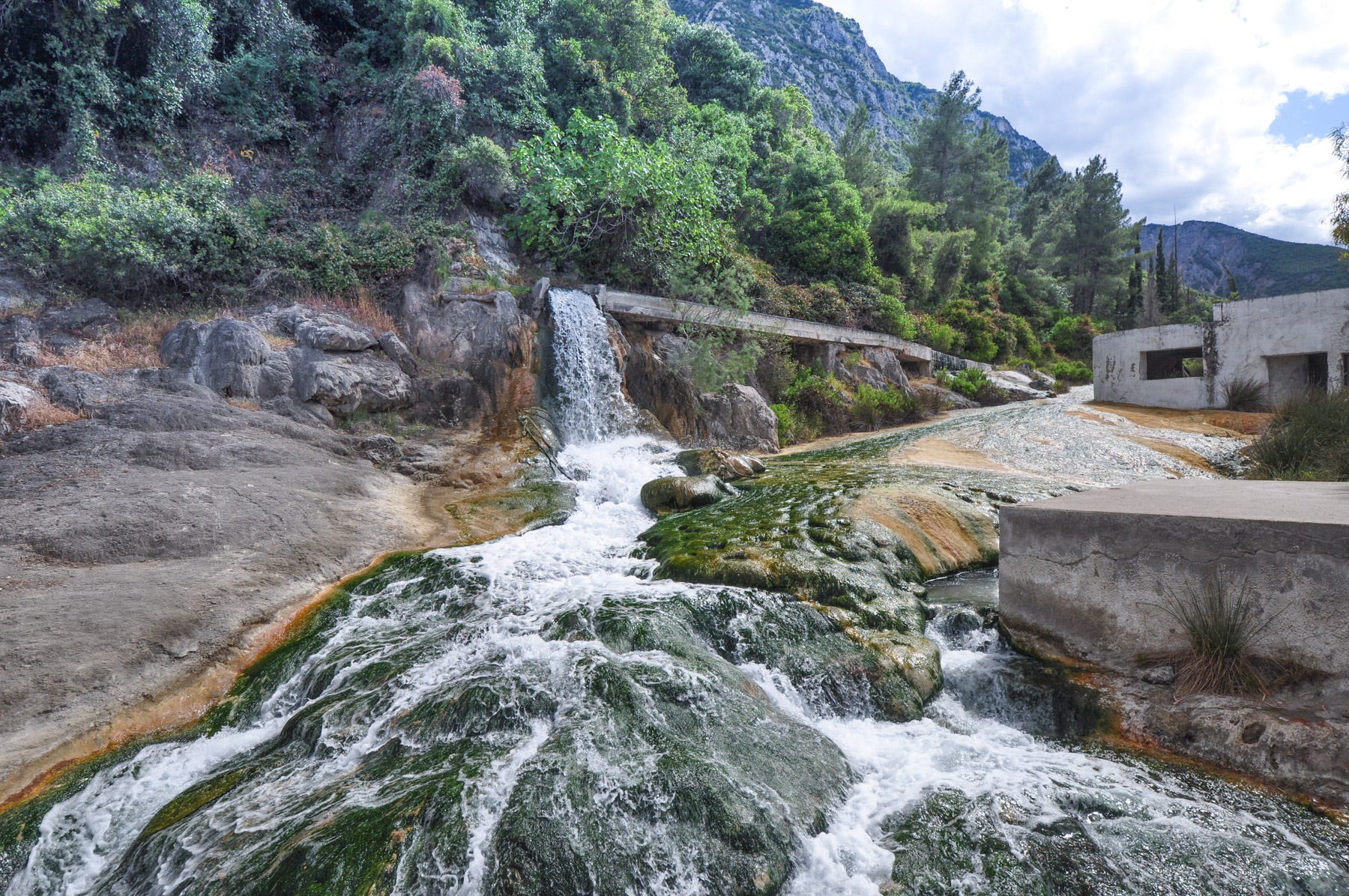
Thermopylae means Hot Gates, named for sulfur springs nearby. Herodotus describes the terrain in detail, and archaeologists have since confirmed most of it.
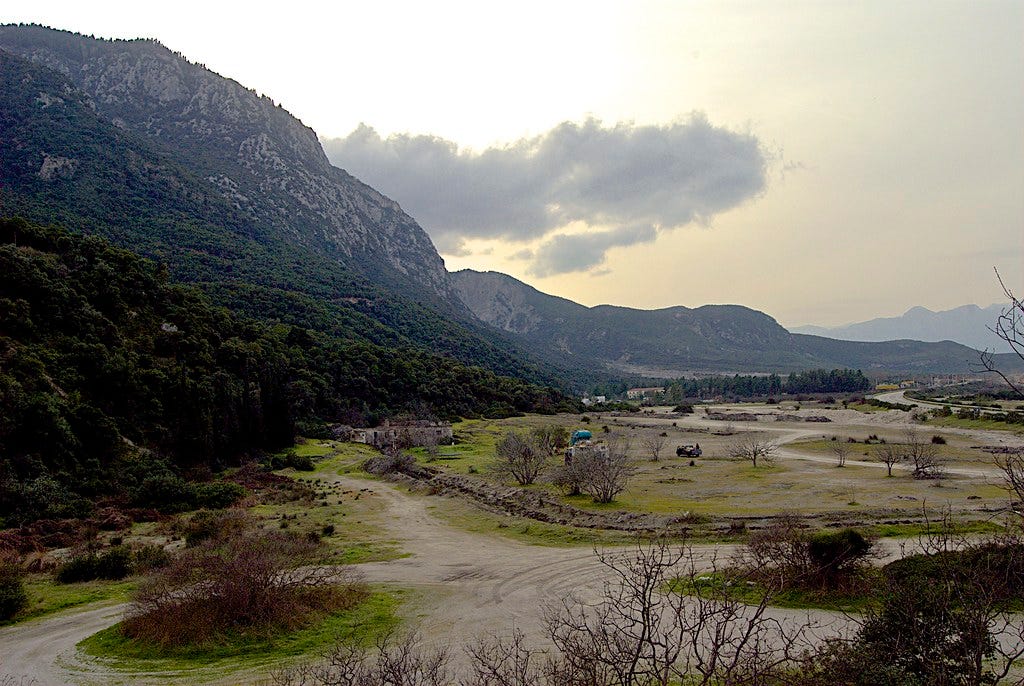
The pass itself was narrow. In places, the fighting front was tight, under 50 meters wide. Mountains on one side, the Malian Gulf on the other.
Xerxes having 150,000 men or a million was irrelevant here. The terrain only let a few dozen of them fight at once.
Greek hoplites fought in a phalanx. Shields overlapping, spears forward, built to hold a line shoulder to shoulder.
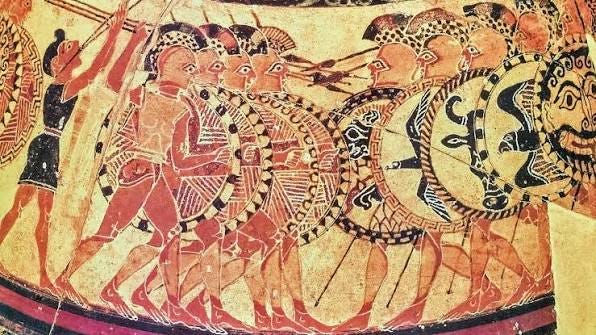
Front rank braced, spear arm cocked back, then driven forward into whatever was in range... the man behind pushing on your back the second you hesitated.
Not a formation built for open ground against a much bigger force. The Hot Gates was perfect for the Greeks.
Herodotus records that Xerxes threw his Immortals at the gap first, his own elite guard, the crack Persian infantry. They couldn’t budge the phalanx in front of them. The narrow pass didn’t care if the Persians were 100,000 or a million.
The Spartans and others held on at the Hot Gates pictured below for two days.
The 480 BC Benedict Arnold
Nothing broke at the front, Herodotus emphasizes.
A Greek named Ephialtes snitched to Xerxes about a mountain trail that skirted the pass. The Anopaia path.
Herodotus records why: Ephialtes came to Xerxes “supposing that he would win a very great reward from the king.”
He never collected his money.
Ephialtes fled to Thessaly. Years later, a man named Athenades killed him anyway, for reasons that had nothing to do with the bounty
Later Greek writers ensured his name remained attached to the word “traitor” for posterity.
Once Leonidas knew Persian troops were already moving through that path, the position was futile. It didn’t matter that the men at the front hadn’t budged.
Who Remained
Herodotus records that Leonidas sent most of his army home. Why lose 7,000 men holding ground that was already gone?
He kept the 300 Spartans. Spartan law reportedly required him to choose men who already had living sons, so a family line wouldn’t end with the father.
Leonidas also kept about 700 Thespians. They were regular citizen-soldiers from a small town in Boeotia. Nobody’s elite guard and nobody’s legend. They weren’t ordered to stay. They chose to, knowing exactly what staying meant.
Most forget that part.
Ask yourself which one is the harder decision: training your whole life for this moment, or waking up a farmer and remaining, anyway.
The Thebans are murkier.
Herodotus suggests they were held back rather than choosing to stay. The sources we rely on weren’t fans of Thebes to begin with.
What’s clear across every ancient account: Spartans and Thespians made the last stand shoulder to shoulder. Surrounded front and back on a small hill, finished off by archers once it was clear they wouldn’t break.
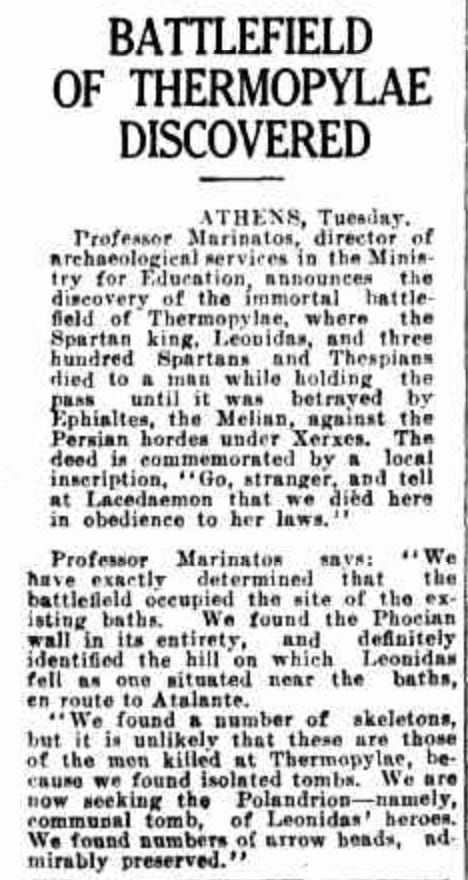
The proof was found in 1939. Archaeologist Spyridon Marinatos dug up roughly 100 bronze and iron arrowheads, still on that hill, exactly where Herodotus said the last of them died.
The Ancient Story That Endured 2,500 Years
We remember 300 today. The movie does, too. It’s also wholly Spartan.
That’s how memory works. Our brains hold onto a small cast far better than a large one.
Homer understood this memory quirk centuries before Thermopylae happened. The Iliad features tens of thousands of Greeks camped outside Troy for ten years. The poem remembers maybe a dozen of them by name.
Sparta also had the fearsome reputation going into the Hot Gates.
Centuries later, writers were happy to play along with Spartans acting solo. Starting with Simonides, whose epitaph for the dead still gets quoted more than anything else about this battle.
“Go tell the Spartans, stranger passing by, that here, obedient to their laws, we lie.”
Somewhere in the retelling, 700 men from a small town in Boeotia got written out of the Hot Gates last stand.
Herodotus wrote all 7,000 down. History did the erasing, one retelling at a time. The names were never lost. Nobody went looking for 2,500 years.
Somebody just did.
Herodotus wrote down all 7,000 names 2,500 years ago. Nobody went looking until now.
That's the job here at Past Passport: read the primary source instead of the movie poster, and hand back the people history cut. This week, there were 700 farmers from Boeotia. Every week, it's someone.
Past Passport’s View on Claude Update and AI Watermarks
News recently reported that Claude is adding a watermark to AI-generated text.
Some people are worried about it.
I'm not.
The original Claude draft of this essay barely resembles what you just read. I combed through every word for about two and a half hours, revising and rewriting.
What's left is me, not AI.
This article couldn't exist the way it does without my input, so a watermark meant to flag 'AI wrote this' doesn'tconcern me.
For you, reader: definitely use AI to help with researching and drafting.
Just know you need to spend the time editing and making the essay yours, or it'll read like the mediocre AI content everyone's griping about.
The line about history doing the erasing, one retelling at a time, is the part that landed for me.
😆 you might even persuade me!