

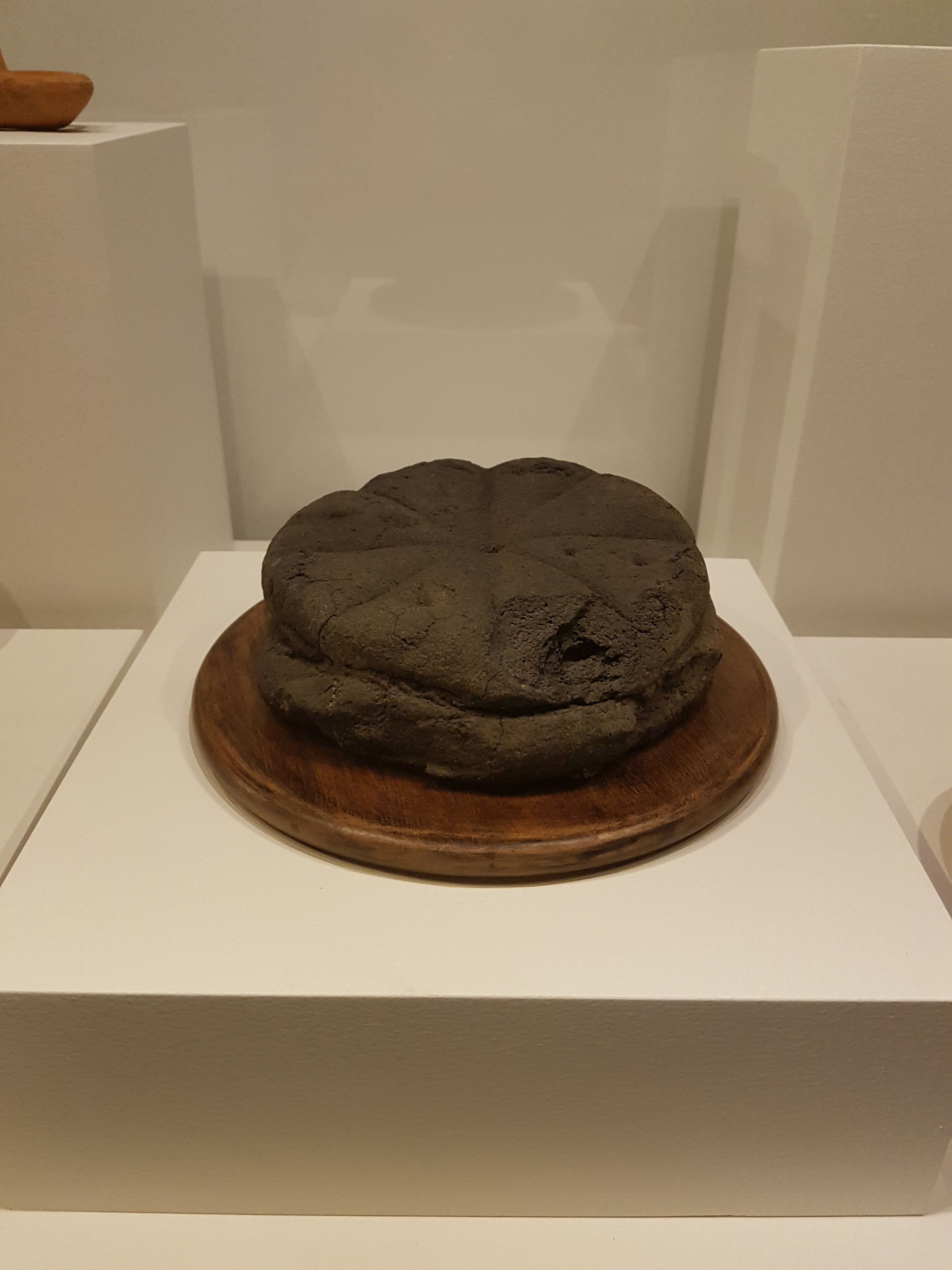
Walking the cobblestone streets of Pompeii today, it might be hard to imagine the smell of fresh bread floating through the streets of this ghost town.
Two thousand years ago, the mouth-watering fragrance of wood smoke and warm bread likely drifted through the narrow alleys and streets of this ancient community.
Clouds of ground wheat flour probably hung in the air as well.
Bakeries were scattered throughout Pompeii. Archaeologists have identified at least 30 bakeries in the city — a remarkable number for a town with roughly 10,000–12,000 residents.
Bread was a daily staple for the rich, the poor, and everyone in between.
What Bread in Pompeii Cost
Prices varied, but historians believe a common loaf cost one or two asses. The as was a small Roman bronze coin used for everyday purchases.
These coins were heavy and substantial in a rough, callused Roman hand — heavier than most modern coins…
