The Dying Villages the Economy Leaves Behind
Factories in Russia, terraces in Croatia, same story: when the money moves on, people do too.
The economy in remote Russian villages in the 1990s didn’t decline. It broke.
When the USSR fell and the ruble collapsed, mines and factories across Russia began to fail. Kadykchan. Vorkuta. Pikalyovo. Men who’d walked the same route to work for decades suddenly had nowhere to go. Snow crunched under their boots as they passed dead smokestacks, ice crusting eyebrows and mustaches, breath hanging in subzero air.
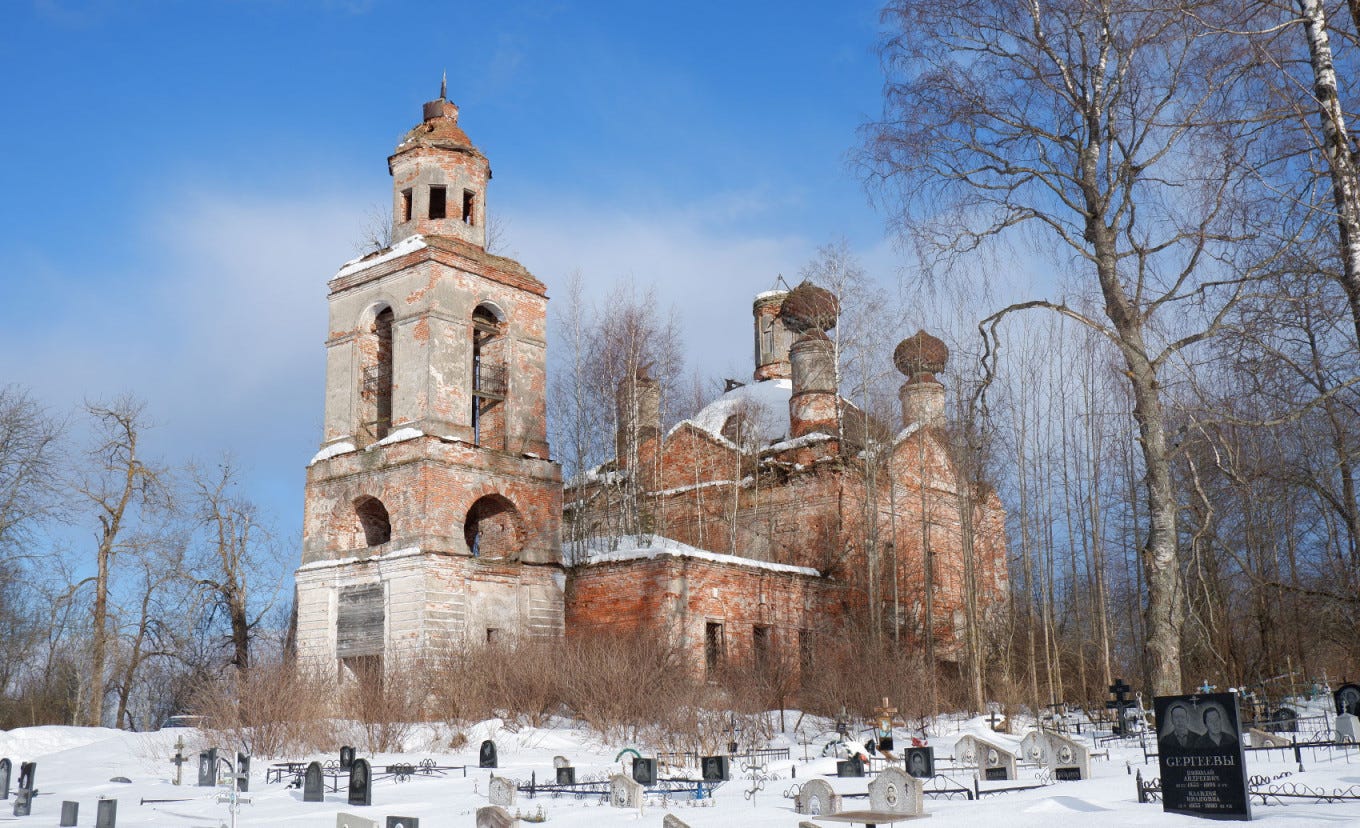
On the long Siberian nights, copper wire began to vanish from those same communities—anything of value often disappeared—from factory yards, warehouses, and the power lines that once lit the towns.
It wasn’t vandalism. It was survival: wire turned into dark, bitter bread, fur hats, potatoes, a few more days of vodka-softened numbness. The buildings became shells, all the metal veins pulled out.
That image stayed with me for years.
I didn’t expect the memory to surface again on a hot hillside in Croatia in 2023.
On Hvar Island, I was climbing through a different kind of ruin. The sun was high and unkind, pressing down on my shoulders. Every step sent gravel crunching and sliding under my boots. Dry thistles and scrubby sage scraped against my ankles and calves, leaving faint red streaks; somewhere in the heat, there was a resinous whiff of wild rosemary.
These terraces have been feeding someone’s empire for two thousand years. Long before anyone called this Hvar, these same slopes were worked for Rome—grapes and olives coaxed out of thin soil and limestone, part of the vast empire’s wine and oil supply line. The hills were a dull brown and gray, stitched with stone terraces and low walls that looked as old as the land itself.
Sweat trickled down my spine, and my fingers turned chalky from catching myself on rough rock when the path shifted. We weren’t on a marked trail, just a hint of one—a faint track worn into the hillside.
For a long stretch, it was only the sound of our footsteps, the rasp of insects in the dry grass, and the occasional gust of hot wind. Then the landscape shifted: a wall too straight to be natural, a rusted car frame half-buried in dust, a narrow path edged with stones, leading nowhere.
The ghost town Malo Grablje appeared as we crested a rise.
At first, it was just a few rooflines jutting from the slope, then the outline of a window, then a cluster of stone houses clinging to the hillside.
As we stepped closer, the village resolved into streets and open windows and doorways, a church, businesses long gone, houses with shutters open to a sky no one lived under anymore.
In one dark room in a vacant shop, two massive stone wheels still hugged a rusted basin — the old olive mill, waiting for a harvest that would never come.
The stonework in town was still solid, thick walls holding their shape against gravity and time. It felt less like a ruin and more like a place that had been paused.
Inside some houses, chairs and tables were still there, as if someone had just stood up and never returned. Old plaster peeled from gray walls; you could see the pale rectangles where a picture or a cross once hung, the ghost-outline of a domestic life cut short.
Dust lay thick on the floors, but all the rooms we saw were recognizably human — spaces meant for cooking, sleeping, arguing, laughing. I stepped carefully, feeling like an intruder in someone else’s absence.
Out on a narrow ledge between two houses, I pulled out my phone and hunted for a signal in the heat haze. One bar flickered. I typed the name from a weathered sign: Malo Grablje. A few lines of text popped onto the black screen.
An old hillside village on Hvar, emptied since the late 1960s. Disease in the vineyards and olives. Economic changes that pulled life down toward the coast—toward Milna and Hvar Town, toward tourism, ports, and all the places where money still moved. The hills stayed behind. Malo Grablje thinned out and then went quiet. Doors and windows left open.
Standing there, with the sun beating down and dust on my tongue, I thought of those Russian villages I’d passed through. Different maps, different languages, different empires — but the pattern held.
Most communities exist because they have a reason: a factory, a mine, a railway, a harbor, a crop that still sells. When that reason vanishes, so does the logic of the place.
In Russia, the collapse was sudden and chaotic, tied to the fall of the Soviet Union and the violent birth of a market economy. People cannibalized the landscape to stay alive a little longer. The infrastructure died, so the people wouldn’t, at least not immediately.
On Hvar, the story was slower, stretching over decades of agricultural disease and shifting economic tides along the Dalatian coast. Here, the abandonment moved faster. Families moved the mainland. Graves were exhumed and reburied.
Houses were locked, or left open to the mild weather. No one needed to strip copper to survive; instead, the village itself was stripped of purpose. No work, no services, no reason for the next generation to stay.
That difference matters, but so does the echo between them. Both places are what happens when economic logic decides a community no longer justifies its existence. It doesn’t matter whether the language for that logic is communist or capitalist, imperial or post-imperial. Somewhere, someone decides the cost of keeping a place alive now exceeds its value. After that, the rest is just time and weather.
On the way back down from Malo Grablje, the crunch of gravel under my boots sounded different. The weeds brushed my legs like they were trying to hold on, insisting this had once been a lived-in landscape, not a backdrop. The village shrank behind us until it slid into the late-afternoon shadow of the hill.
But in my head it remained alongside those Russian towns with their dead factories and darkened apartment blocks, part of the same quiet archive of places the modern world has decided it can discard.
Empires rise and fall, currencies inflate and collapse, borders move. The rhetoric changes. The outcome for small places on the wrong side of “progress” rarely does. People drink, or steal, or leave. Copper wire disappears in the night. Villages empty out and wait in sun or snow, long after the last rational reason to live there is gone.
More of this: Russia, Rome, Croatia, Greece—small towns, side streets, and ruins with the dust still on them. This is a reader‑supported project; subscribe to get the next essay in your inbox, such as this week’s feature: Beneath Split: Sewers, Secret Tunnels, and an Emperor’s Last Fortress.


