

Stepping through the towering bronze doors of the Pantheon on a chilly December morning.
My temptation: hurry inside one of the world’s oldest, fully intact buildings. Snap a few cell-phone photos and leave.
Instead, I stop and study the immense doorway. My gaze falls on a deep gouge in the bronze doorframe. I run my fingers over the rough edge of the damaged metal.
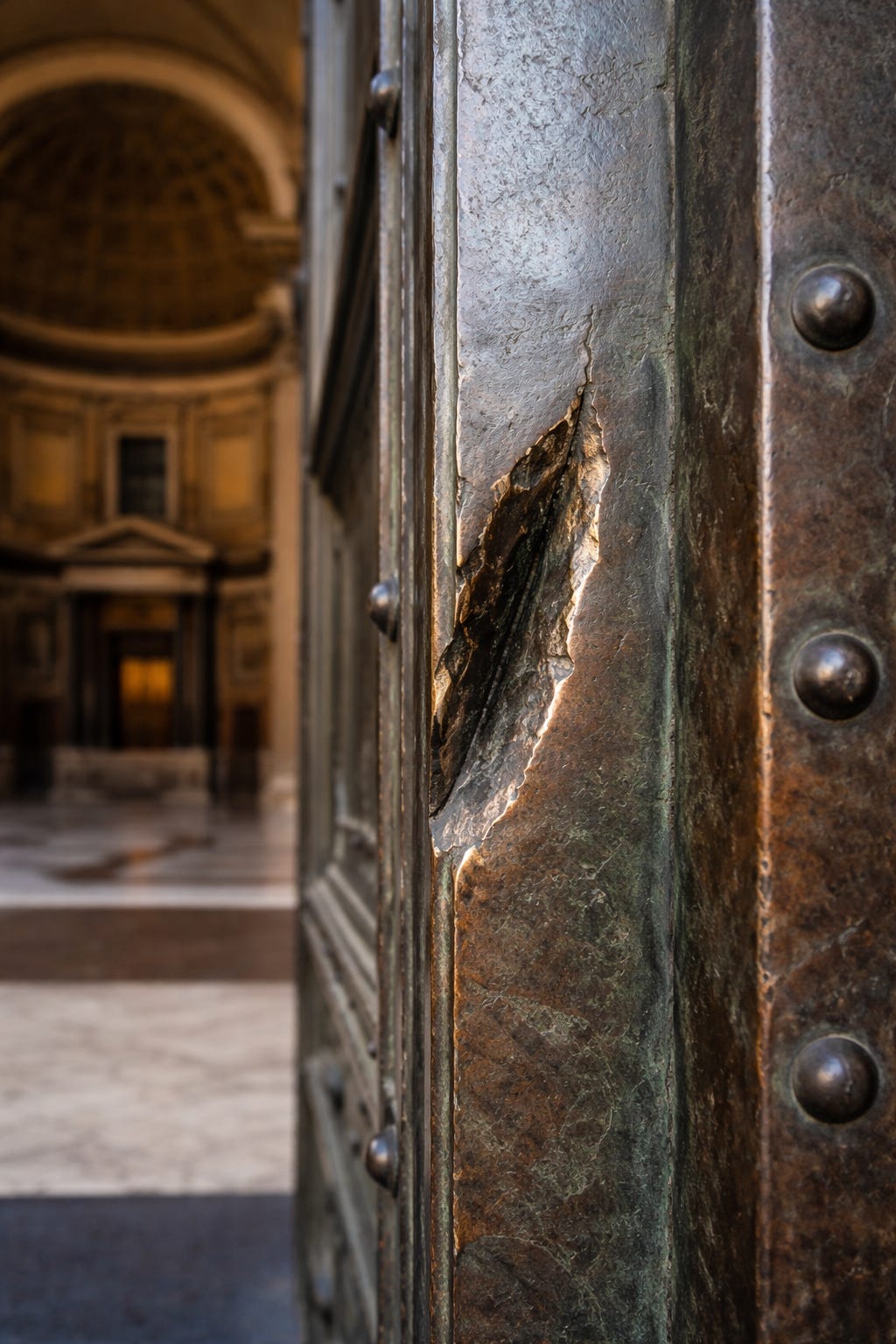
These bronze doors have stood here for nearly two thousand years, long enough to watch empires rise and fall around them.
The damage likely stems from attempts to pry bronze from the doors, probably sometime after the fall of the Western Roman Empire in 476 AD.
In the centuries that followed, invaders and scavengers often stripped Roman buildings for valuable materials. Bronze was one of the most prized metals of the ancient and medieval worlds.
The Pantheon and its magnificent oculus itself survived largely because it was converted into a Christian church in 609 AD. Buildings that remained in use were far less likely to be dism…
