

My wife was raised in Siberia on kilometers, kilos, and meters. She argues the mile is the most ridiculous unit of measure ever invented.
“A kilometer is 1,000 meters. Easy. A mile is... 5,280 feet. What?!”
She has lived stateside for 25 years and still can’t sense what a mile is. A Texas highway sign says the next exit is 1.5 miles away.
‘How far is that?’
She’s not alone. To metric fans worldwide, 5,280 looks like a joke made into law.
For years, she had me.
But history claps back. The mile makes more sense than its 5,280 feet suggest.
The measurement began as a Roman count of footsteps, a clean round thousand. The strange number came 1,900 years later from an English Parliament, and its reason had nothing to do with distance.
You’ve already picked a side. Metric people roll their eyes at the mile, and mile people point out that nobody ever sang about walking 804.672 kilometers. I found something that scores a point for each side.
The mile’s story starts with the word itself.
“Mile” began as a number, not a length.
Try Past Passport free for 7 days. Paid subscribers get:
3 weekly history essays. Easy reading. No dull dissertations.
3 weekly quick summaries of how we use AI to create every essay.
1 monthly extra newsletter, rotating between a full AI breakdown for writers and video, and a Stoic philosophy article.
Open DM sessions on the month’s top article.
1-week free trial, then just $5 per month.
The first mile was almost metric
“Mile” derives from the Latin mille, a thousand. The Romans said mille passus, a thousand paces.
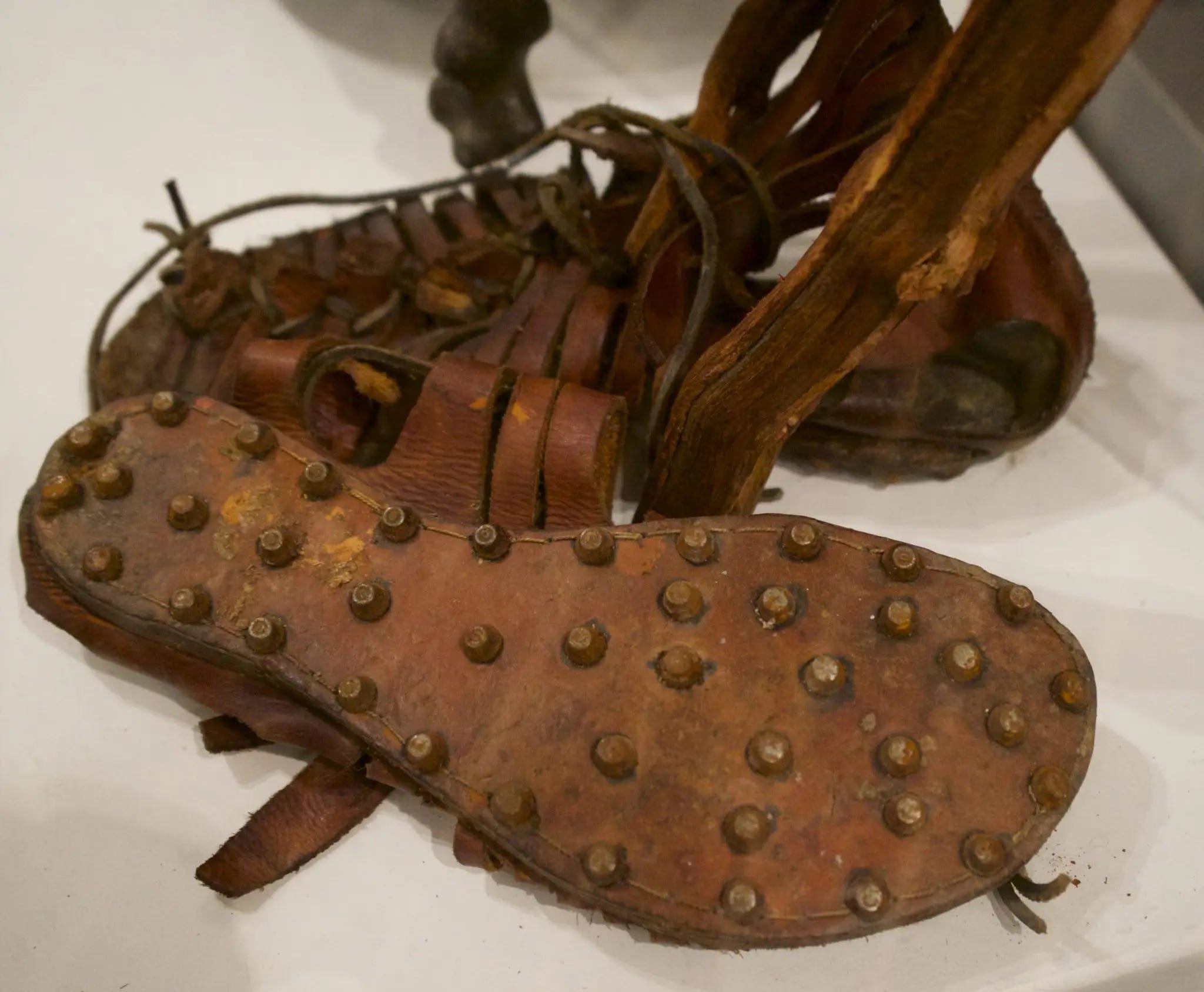
A legionary’s hobnailed sandal struck the stone, left, then right. Only the left counted. That was one pace, about 5 Roman feet, and a thousand of them made a mile... 5,000 Roman feet.
The legions trained by the mile. Around AD 400, the military writer Vegetius set the bar for recruits: 20 miles in 5 summer hours... 24 if the drill officer wanted the fast step.
That’s 20,000 left footfalls before lunch. Your step counter would read 40,000.
Each of those Roman miles ran about 1,480 meters.
That’s almost exactly 1.5 kilometers. My wife and a legionary would have agreed on the distance to within about 20 meters, no bickering or conversion charts involved.
Point to my wife. The first mile counted in thousands, same as her kilometer.
Ancient Rome carved every mile into stone
A thousand paces only helps if somebody writes the number down. Ancient Rome carved it in stone, starting on its most famous road.
In 312 BC, Appius Claudius Caecus, the censor overseeing public contracts, began a road south from Rome to Capua. Later extensions lengthened it to Brundisium, modern Brindisi, on Italy’s heel. Rome named it after him: the Via Appia, the Appian Way.
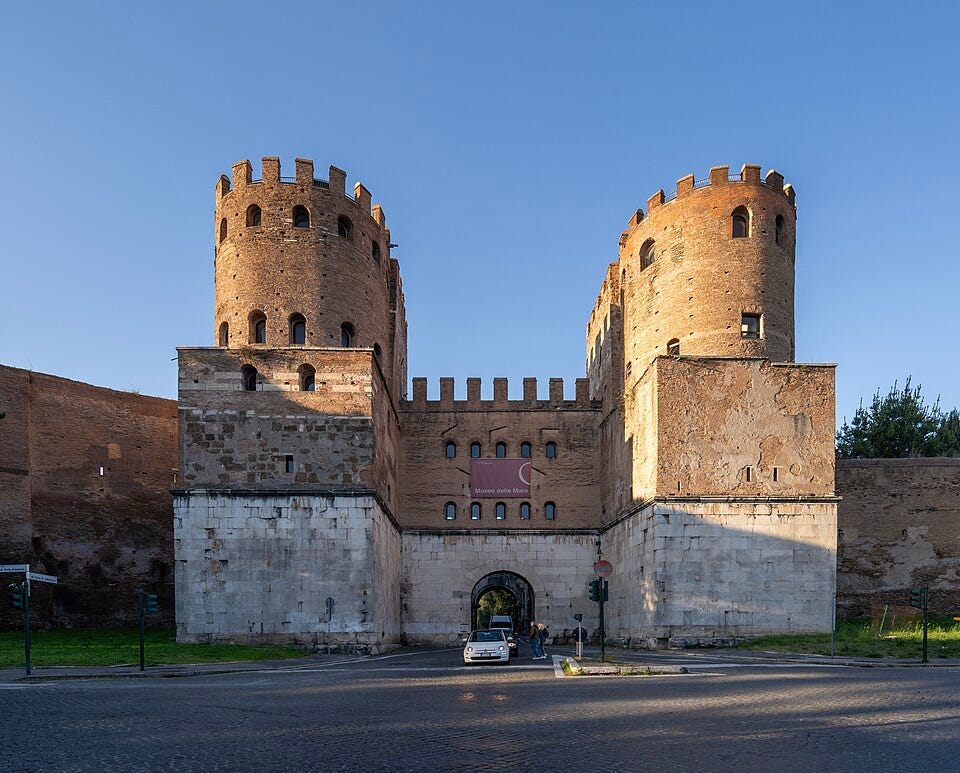
The ancient city counted distances outward from the Porta Capena, a gate in the city’s old Servian Wall. Every Roman mile was marked by a stone column with its number cut into the face.
Those columns came long after the road was laid. Plutarch, writing two centuries later, credits the reformer Gaius Gracchus with measuring the roads by the mile around 123 BC and marking each one with a stone pillar.
Say you’re on a mule cart heading south. You read your trip off the roadside, one numbered stone at a time.
The Appian Way’s first milestone survives.
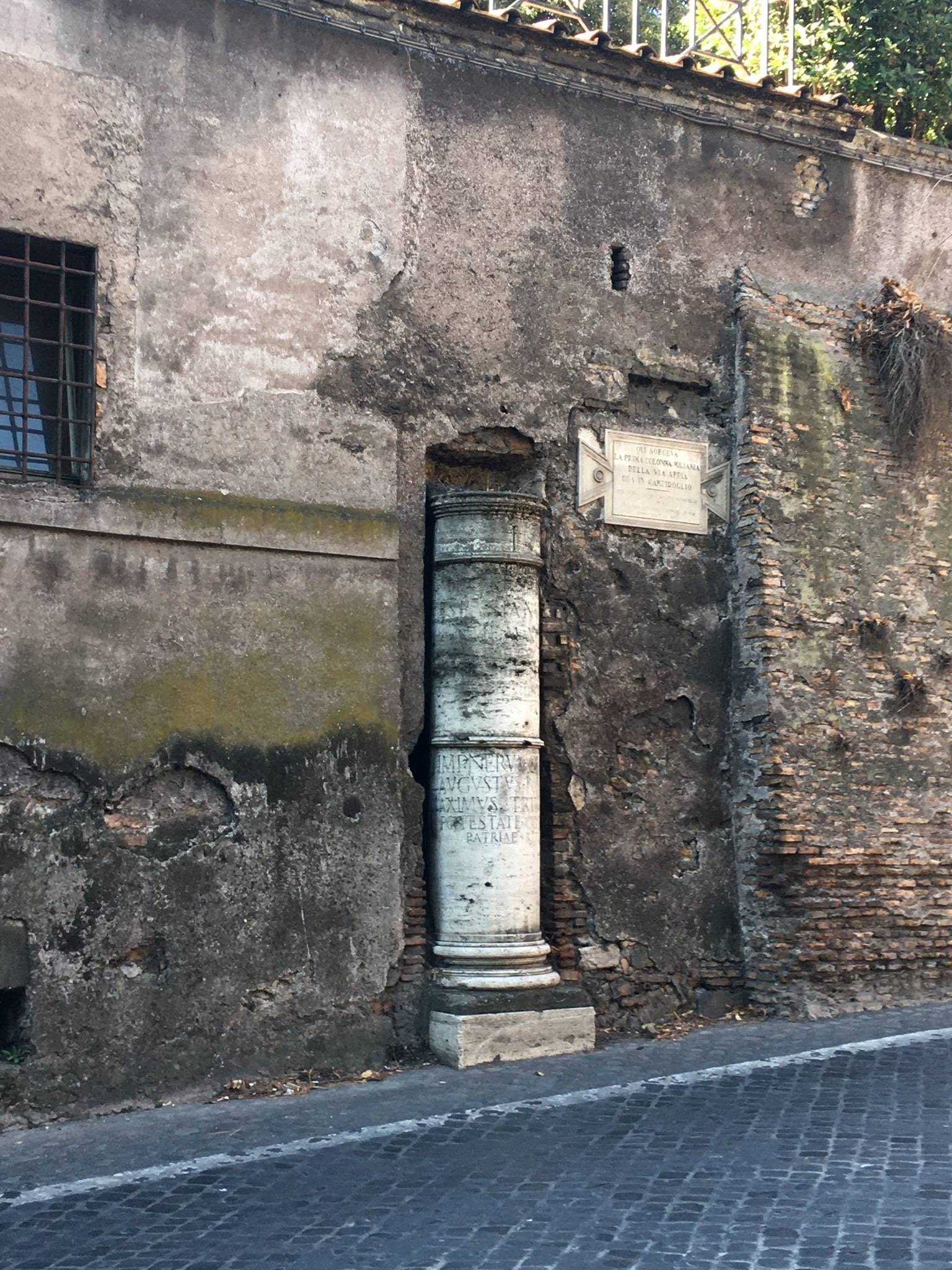
A copy stands about 100 meters outside the Porta San Sebastiano. It has a big Roman numeral I near the top and an inscription honoring repairs by the emperors Vespasian in AD 76 and Nerva in AD 97.
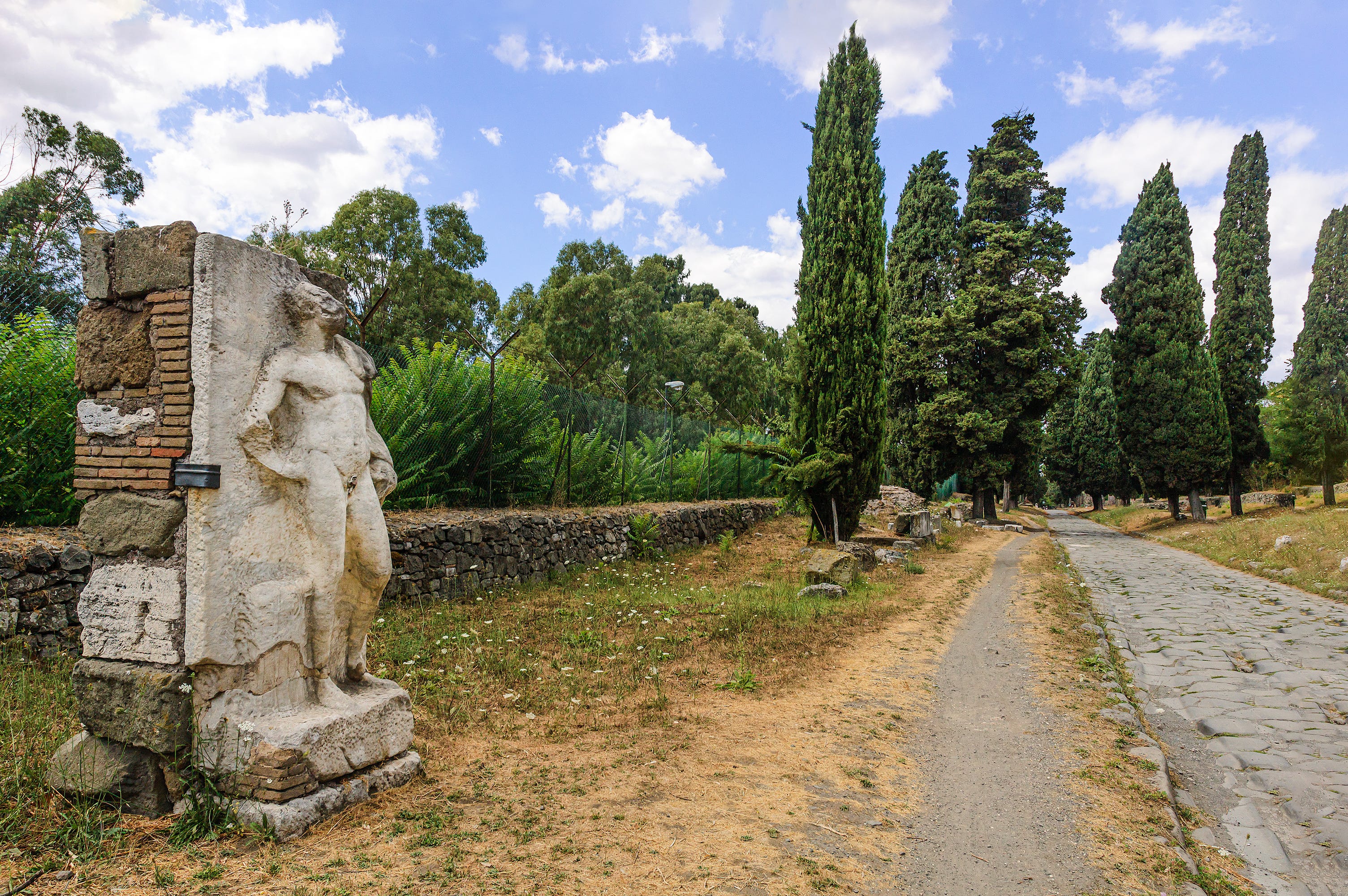
Walk south from that copy today, and you cross the same black basalt paving peasants walked 2,000 years ago, cart ruts still cut into the stones.
The original stone was hauled up the Capitoline Hill in the 1580s and set into the balustrade of the piazza Michelangelo designed. It’s still there, and tourists saunter past without knowing what they missed.
Within a decade of that stone going up the Capitoline, Parliament in London had to decide how long a mile was.
