

Modern concrete often begins cracking within decades.
Roman concrete doesn’t.
It still holds up harbors, domes, and seawalls across the Mediterranean—
two thousand years later.
Rome’s greatness does not lie in its marble.
It lies in what’s beneath it.
Concrete.
You walk past the Temple of Saturn toward the Curia Julia.
Loose stones crunch under your shoes.
The air is warm. Dust rises from the ground.
The walls around you don’t look like much—
rough, gray, almost unfinished.
But they’re still here.
Two thousand years ago, Roman senators walked these same stones —
men like Julius Caesar and Cicero.
And much of what held their world together
is still holding.
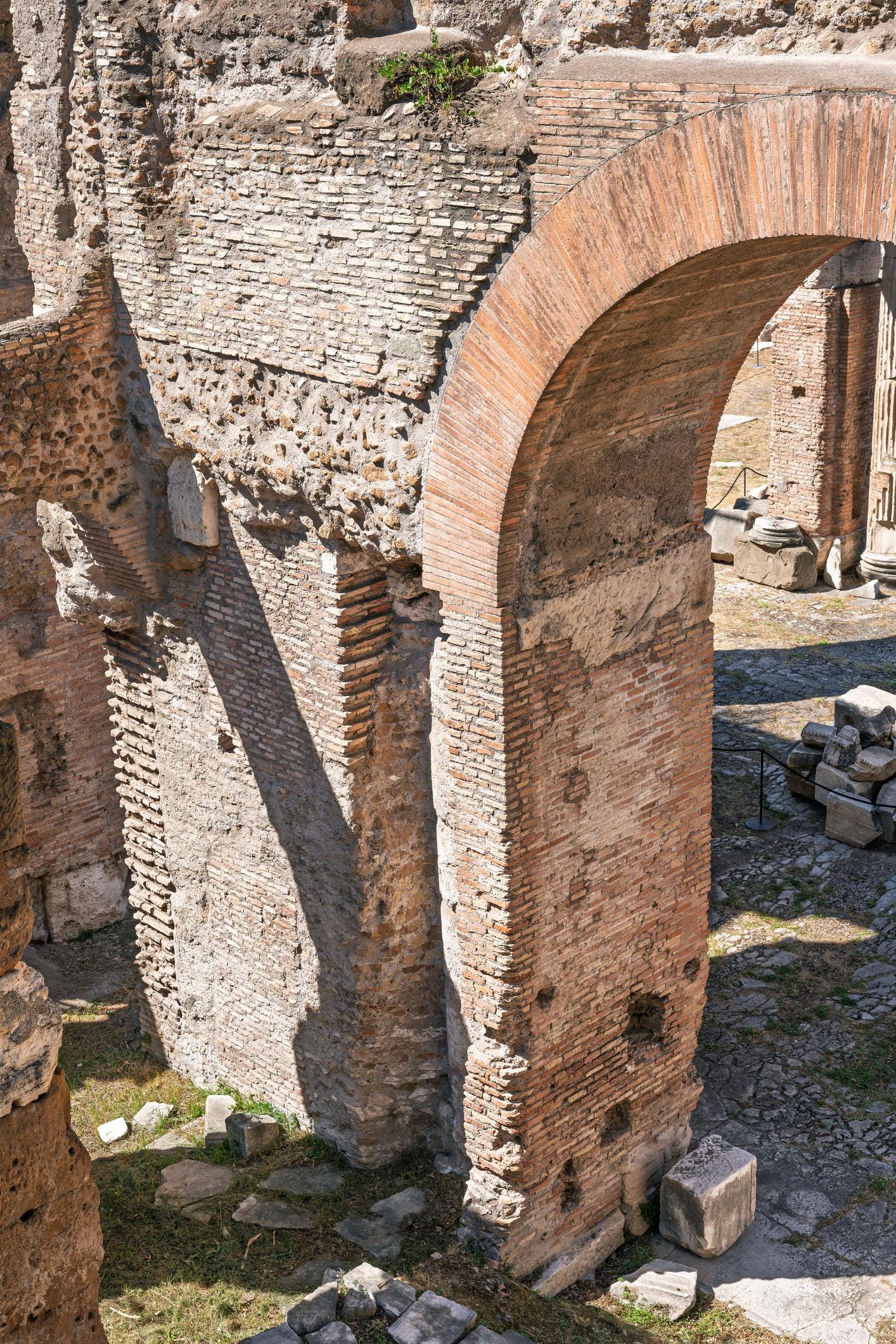
The surface is jagged. Broken bricks jut out at odd angles, their edges sharp. Small stones are locked in place like gravel frozen in old ice, some rough, others worn smooth.
It does not look impressive.
Yet this …
