

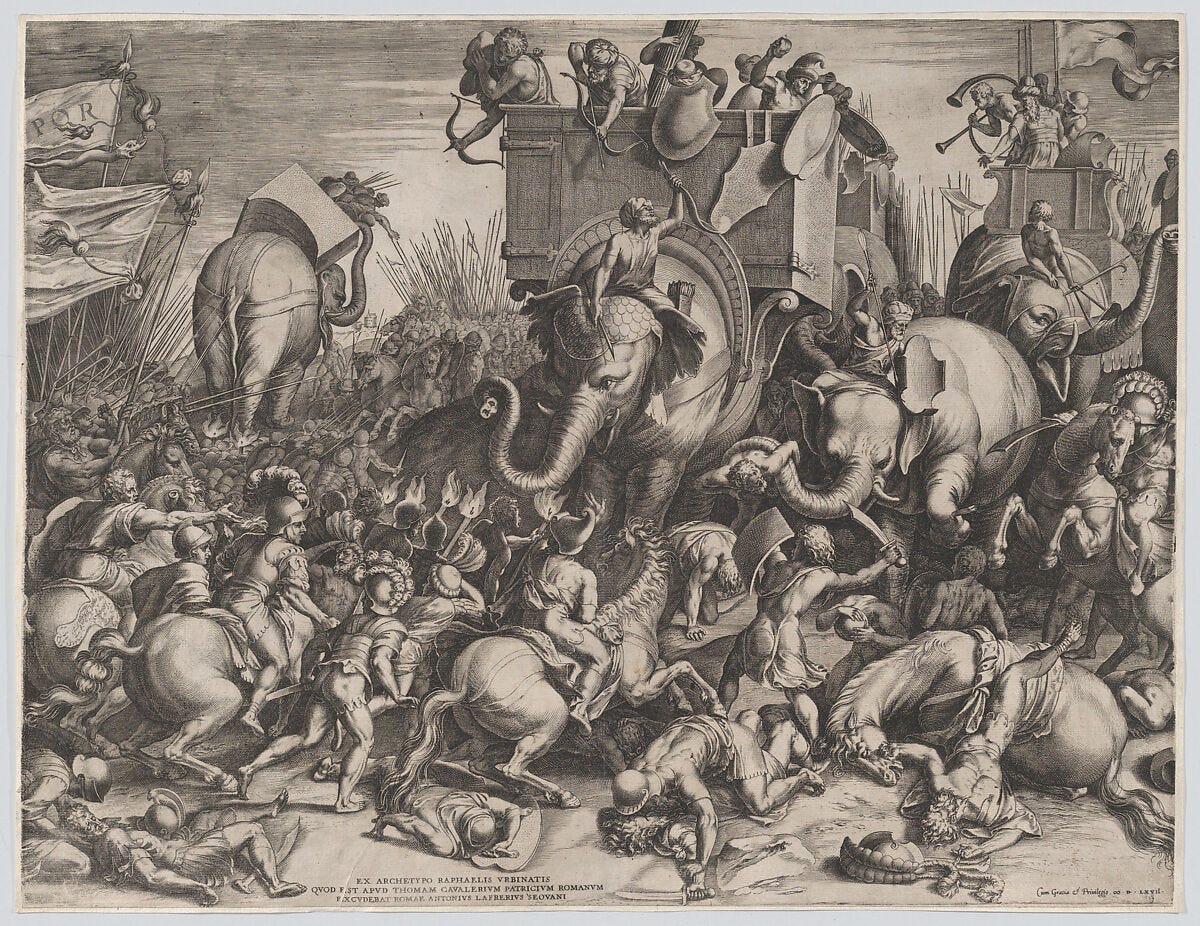
Hannibal didn’t just beat the Romans at Cannae on Aug. 2, 216 BC. He surrounded and annihilated them.
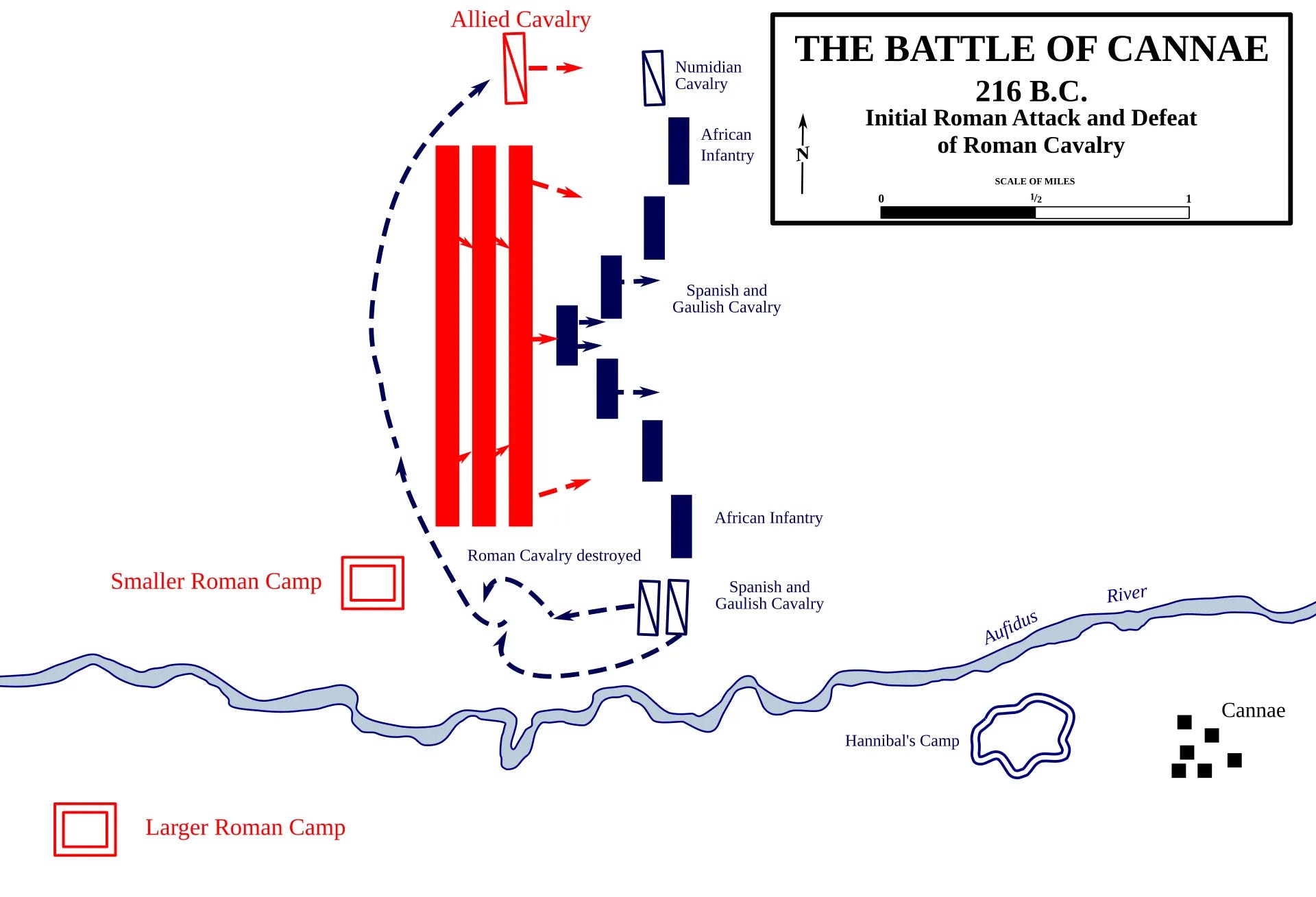
His cavalry outnumbered Rome's two to one. They swept around behind the legions and slammed the trap shut.
The legions found themselves boxed in on every side. Packed too tight to raise a sword arm. Thousands were crushed or suffocated in the crowd before a blade ever reached them.
Scipio barely survived the Cannae massacre.
He’d spend the rest of the Second Punic War doing something no Roman before him had bothered to try:
Studying how Hannibal won, instead of just trying to out-slug him.
The Kid Who Wouldn’t Let Rome Quit
Rome took Cannae hard.
So hard the Senate buried four people alive in the Forum as a sacrifice to the gods, Gauls and Greeks, a ritual Romans themselves called foreign to their own religion.
They hadn't done it in generations. They didn't know how to deal with such a huge loss.
The survivors didn’t march back to Rome. They regrouped at Canusium, dust and dried blood caked into torn tunics, some men still missing their shields, weapons, anything they’d dropped just to get out alive.
It was the tattered remnant of an army that had lost up to 70,000 men in one bloody day, on a field in southern Italy. The worst one-day defeat in Roman history.
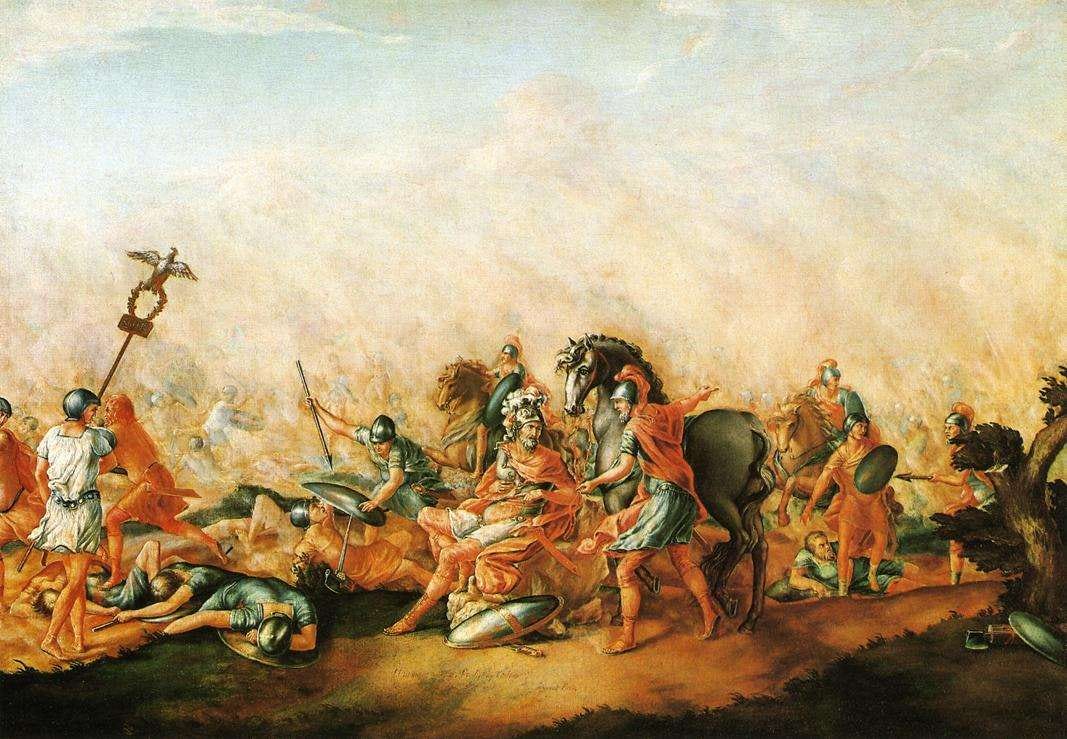
While Rome tore itself apart looking for anything that might save it, one twenty-year-old tribune wasn’t asking the gods for help.
Scipio was at Canusium, barely 20, a military tribune, one of the few senior officers who made it out with his life.
He overheard a group of young nobles among the survivors deciding Rome was history.
Their plan: abandon Italy, sell their military service to a foreign king, and let the Republic collapse without them.
He was outraged.
As Livy tells it, Scipio walked into the room where they were meeting. He drew his sword and held it over their heads.
He warned that he’d treat as an enemy “everyone who would not swear what he dictated.” Every man in the room swore: they would never abandon Rome.
The plot dissolved.
Five years later, Scipio’s father was dead too, ambushed by Hasdrubal’s forces in Spain in 211 BC. The following year, the Senate offered the command to more experienced generals first.
No one wanted anything to do with it. Except one.
The S - - - Job Nobody Wanted
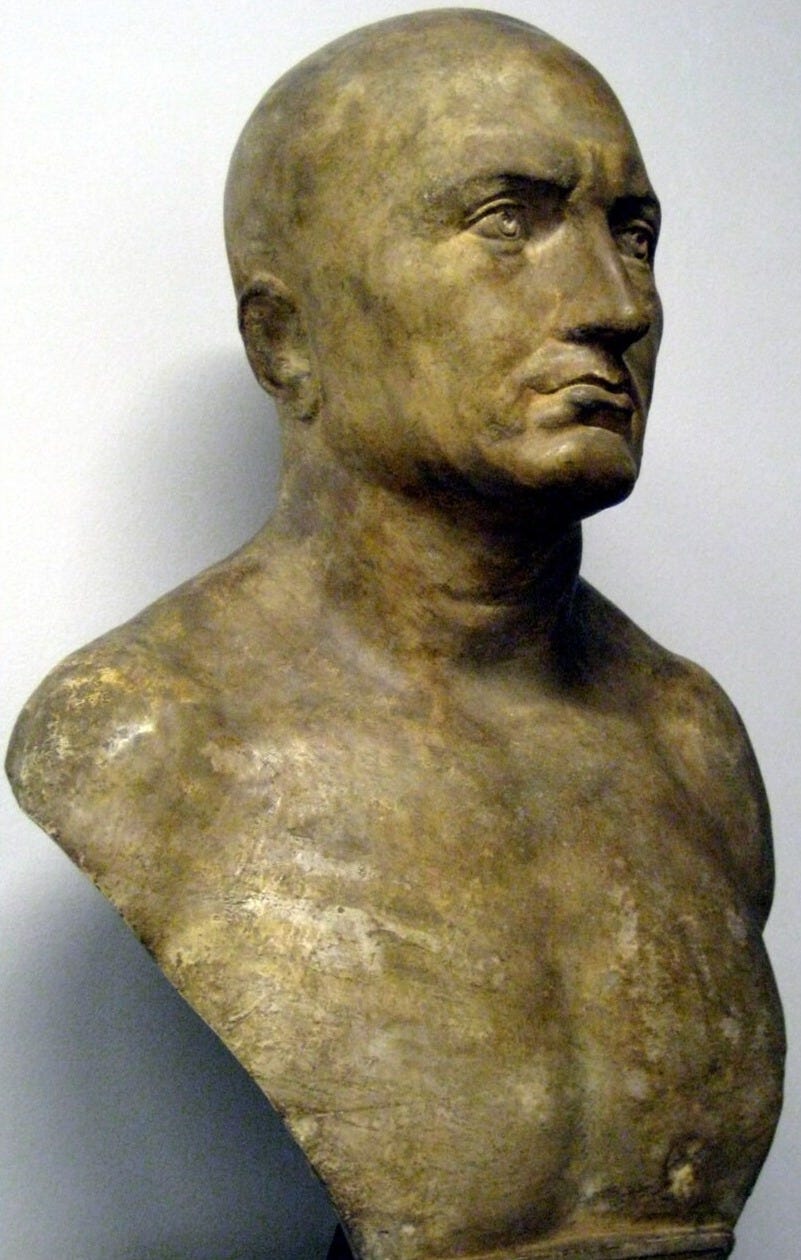
You’ve probably had an ugly job before. Scipio grabbed his, to avenge his father: command in Spain, the same province that had already killed him and his uncle.
No purple cloak, no army of his own yet. Just a 20-year-old tribune and a job no senior general would touch.
Scipio fought Carthaginian armies for five years in Spain. The Roman student honed his craft for a future meeting with the Carthaginian teacher.
At Baecula in 208 BC, he broke from standard Roman formation to hit Hasdrubal Barca’s flanks at once. It was his first real test against the family that had killed his father.
Two years later at Ilipa, he spent days lulling the Carthaginian commanders into routine, predictable formations. Then he flipped his own lineup at dawn and surrounded their army on both sides.
The same double envelopment Hannibal had used to annihilate Rome at Cannae. Scipio just hadn’t turned it on Hannibal yet.
By the time he returned to Rome, he wasn’t guessing at how Hannibal thought.
He knew in his bones.
Then the Senate sent him for a rematch.
Not in Italy, where Hannibal still had an army in the field. Scipio loaded roughly 400 transport ships, escorted by 40 warships, and sailed the whole fleet across the Mediterranean to North Africa instead.
Roughly 30,000 men crossed with him, some of them Cannae survivors looking to redeem the defeat they’d walked away from years earlier.
The move forced Hannibal to flee Italy and defend home turf.
Fabius Maximus called the plan reckless.
Pulling troops out of Italy while Hannibal still had an army on Roman soil looked like a gamble Rome couldn’t survive twice.
Scipio got his invasion anyway, threatening to bypass the Senate and put it to the people directly. He sailed with volunteers only: no extra soldiers, no extra money.
It worked.
Student Outmaneuvers Teacher at Zama
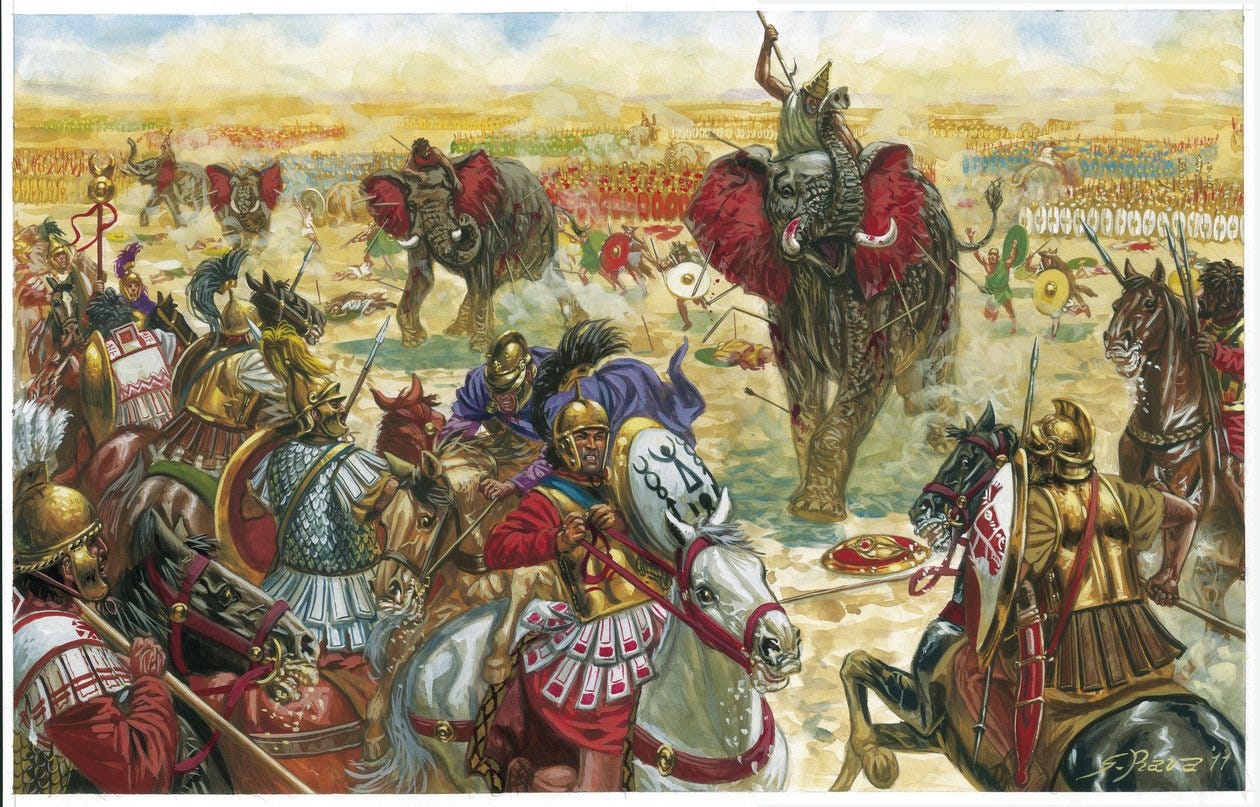
Hannibal’s opening move was one that never failed him: 80 war elephants sent charging straight at the Roman line to shatter it before any fighting started.
Scipio was ready.
Roman legions normally fought in a checkerboard: three lines of small units called maniples, staggered so no gap ran straight through the whole formation...a potent defense against exactly the kind of frontal charge that could break a line in one blow.
Scipio broke his own doctrine.
He lined up those gaps front to back instead of staggering them, opening straight corridors through the entire Roman formation. Plenty wide enough for a panicked elephant to run straight through without injuring a single man.
Then Scipio’s cavalry, reinforced by fierce Numidian horsemen who had defected from Carthage, shattered Hannibal’s cavalry and chased it off the battlefield.
That ended the advantage either army had for the moment. Next came a brutal infantry fight: man against man, for hours.
Then Scipio’s cavalry charged back onto the field. They slammed into Hannibal’s army from behind.
It was the same double envelopment Hannibal himself had used to crush Rome at Cannae fourteen years earlier, now turned back on the man who had invented it.
Hannibal’s army was surrounded on every side. It broke. Carthage suffered 20,000 dead.
Rome gave him a new name for it: Scipio Africanus. Conqueror of Africa, at 33 years old.
No Roman had ever earned a title like that from a single battle.
The Ring Hannibal Always Carried
Hannibal survived Zama. He didn’t survive what came after.
You’ve probably kept something around “just in case,” insurance, an exit plan, a number you never called. Hannibal kept his for years too, a dose of poison hidden in his ring, waiting for the day he’d need it.
Rome hunted him for nineteen years, through three foreign courts, until a king finally agreed to hand him over. Hannibal opened the ring instead. He died at Libyssa in 183 BC.
Carthage paid for Zama in full. Ten ships left of its navy, and an indemnity of 10,000 silver talents due over the next fifty years, roughly half a billion dollars in raw silver at today’s prices.
The Battle Move That Lives On Today
Ever met a former adversary years later? It happened in 193 BC to Scipio and Hannibal.
Years after Zama, in the city of Ephesus, Scipio and Hannibal met face to face. Two men in their forties, on opposite sides of a war neither controlled anymore.
Scipio asked him a question: who did Hannibal consider the greatest general who ever lived?
Hannibal named Alexander first. Pyrrhus second. Himself, third.
Scipio, half-joking, asked what Hannibal would have said if he’d actually won at Zama.
Hannibal’s answer: then he’d have ranked himself above all of them.
He never ranked Scipio at all. He didn’t have to.
Every double-envelopment that’s broken an army since is still called a Cannae, named for the battle where Hannibal invented it.
Scipio is the reason it also belongs to Zama, the day the student turned the teacher’s own move back on him and won.
Every generation thinks the world is ending. It never is. I ask the questions you'd ask and write the answers clearly. No dissertations. Historical optimists subscribe.
If you like our work, subscribe today for only 17 cents per day.
Love these ‘Stacks!
Encyclopedic knowledge, superb analysis and inspired story-telling.
This was wonderful. Thank you.