

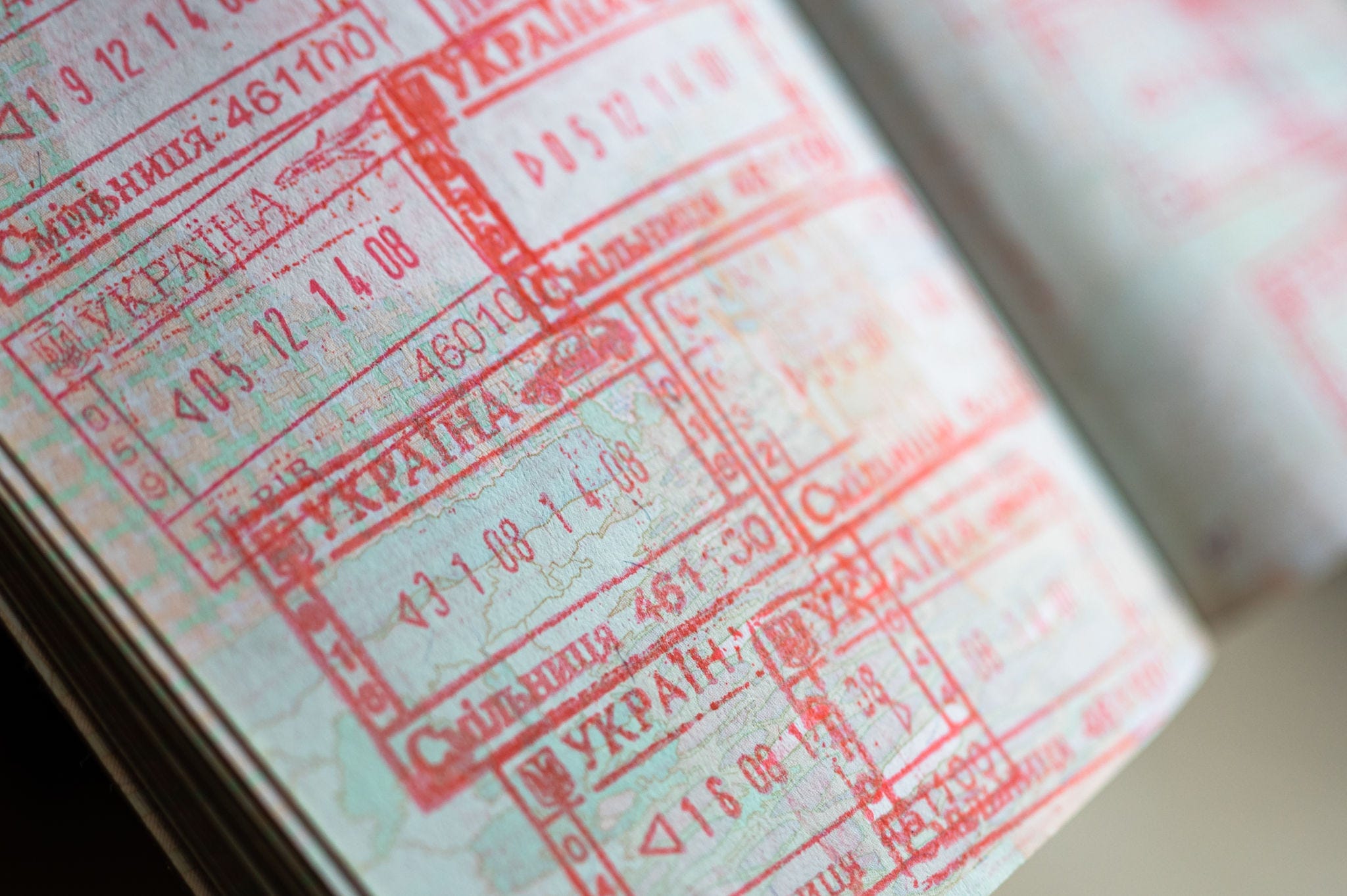
The train creaked to a stop near Kharkov, just before turning south toward Crimea.
Two men in green uniforms slid open the compartment door and held out their hands for our passports.
“Friend,” one said in perfect English. “Where is your visa?”
Visa? My fiancée and I glanced at each other.
The guard flipped through my passport again and pursed his lips. “You’re an American,” he said. “You need a visa to enter Ukraine.”
I was teaching English in Perm in the late 1990s, only a few years after the collapse of the Soviet Union. Ukraine was already independent, but the trains, routes, and habits still felt Soviet. It never occurred to me that crossing into Ukraine might require more than a ticket.
“I don’t have a visa.”
The guard shook his head firmly. “Then you both need to exit the train now.”
I looked at my fiancée. It was 7 a.m. The next train back to Perm wasn’t for twelve hours.
I really wanted to go to Ukraine.
I’d been in Russia long enough to know that “no” was not always the final answer. …
