

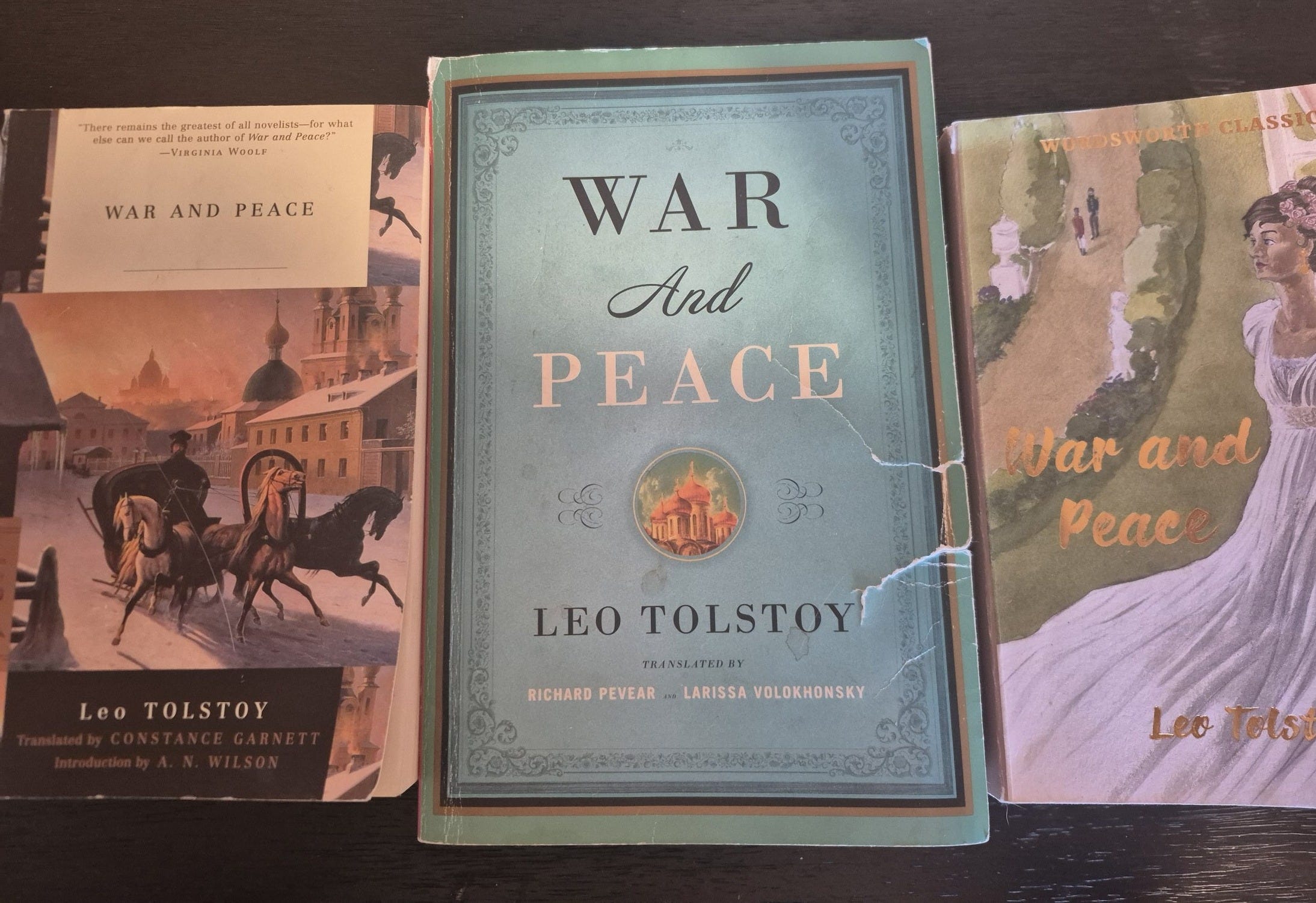
Napoleon was marching on Moscow... and Russia’s top general’s nose is in a French romance novel. Not too worried about the French army tramping his way.
You know how the story ends: Napoleon lost.
The end of the world always looks worse on day one. Tolstoy figured that out about 160 years ago, in War and Peace.
I’m a ’70s kid, and I’ve heard the world is DOOMED for years. The Soviet bomb, Y2K, 9/11, the housing crash, Covid.
Some of those were huge tragedies. People died. The world still didn’t end, though.
They changed the Coke recipe, too. New Coke was downright doomy... Coca-Cola caved in 79 days.
Tolstoy was writing about 1812, when Napoleon was rude enough to march a 600,000-man hodgepodge of Frenchmen and allies smack into Russia.
Moscow burned for days that September. Most citizens got out of Dodge, but the holy city went up in smoke.
Napoleon watched from the Kremlin, and an aide heard him gasp, “What a frightful spectacle!”
If you lived there, you’d think the world was ending.
Half a century later, Tolstoy spent six years turning that hellish year into 1,267 pages.
He left us three rules for surviving the apocalypse. The first one starts at Borodino, with a man in a white hat wandering onto the bloodiest battlefield of 1812.
Social Media, Inc. wants you mad and scrolling. At Past Passport, we nuke the doomscroll with history, art, and beauty, and give you a daily shot of optimism. Join us:
3 history essays a week. No dull dissertations.
3 weekly notes on how we use AI to create more and consume less.
1 extra issue a month: an AI breakdown or a Stoic essay.
An open DM session on the month’s top article.
First week free, then $5 a month.
Napoleon Won the Day. His Army Starved.
Pierre Bezukhov... a rich, chubby civvie with no business being within 10 klicks of a battlefield.
Naturally, Pierre rides his trusty horse out to Borodino to take in the fun, wearing a dashing white hat and a green swallow-tail coat.
The soldiers marching past gawk at his hat. Pierre stares back and thinks, “Twenty thousand are doomed to die, and they wonder at my hat!”
Pierre lowballed it.
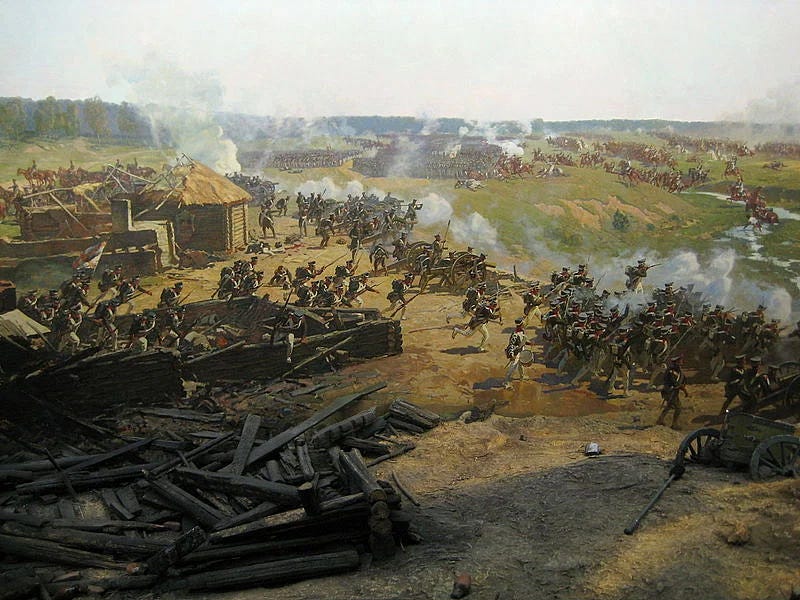
On September 7, 1812, 75 miles west of Moscow, a quarter of a million men crashed into each other with musket and cannon.
By nightfall, at least 70,000 lay dead or wounded in the dust... without a single machine gun, no less.
The bloodiest single day of the godawful Napoleonic Wars.
Pierre watches the whole mess unfold from the big gun battery in the middle of the line. Smoke, screaming, cannonballs... a shell knocks him to the ground.
Napoleon is beating the ever-loving tar out of the Russians. At sundown, he holds the field, and the Russians pull back. A week later they hand him Moscow.
DOOM for Mother Russia, right?
Tolstoy steps out of his own story to say:
Nyet. Russia had em right where they wanted em.
Napoleon lost some 30,000 men and about 50 generals that day, deep in Russia. No way to replace them. The Russians were whipped, but their army walked away intact to eat its borscht and black bread.
Tolstoy compares the French to a charging animal that has taken a mortal wound and can feel itself dying, but can’t stop charging.
Five weeks after he marched into Moscow, Napoleon marched out, and his army starved on the road home... freezing, and eating their own horses.
Tolstoy’s Rule No. 1 for the apocalypse: don’t trust the scoreboard at sundown.
Turn from Tolstoy’s Russia to today.
Your headlines show you the score at halftime (so does your boss)... your team’s down three touchdowns, the clock’s running, and the feed says DOOM, game over.
Yeah, but Napoleon looked like a winner at sundown too.
And the general who “lost” Borodino had already told a friend exactly how he’d win the war….
