

The Black Death tore through Venice and the rest of Europe in the 14th century. No one understood what it was or how it spread so fast.
By the time it passed, somewhere between 50,000 and 100,000 people in Venice were gone—nearly half the city.
What to do with all the bodies? They were marked by dark swellings and blackened skin, changing quickly in the damp air.
They believed the disease moved through bad air, and the bodies reeked of it.
So the city’s leaders pushed the dead outward.
Out of the narrow streets. Away from the living.
Into the surrounding lagoon.
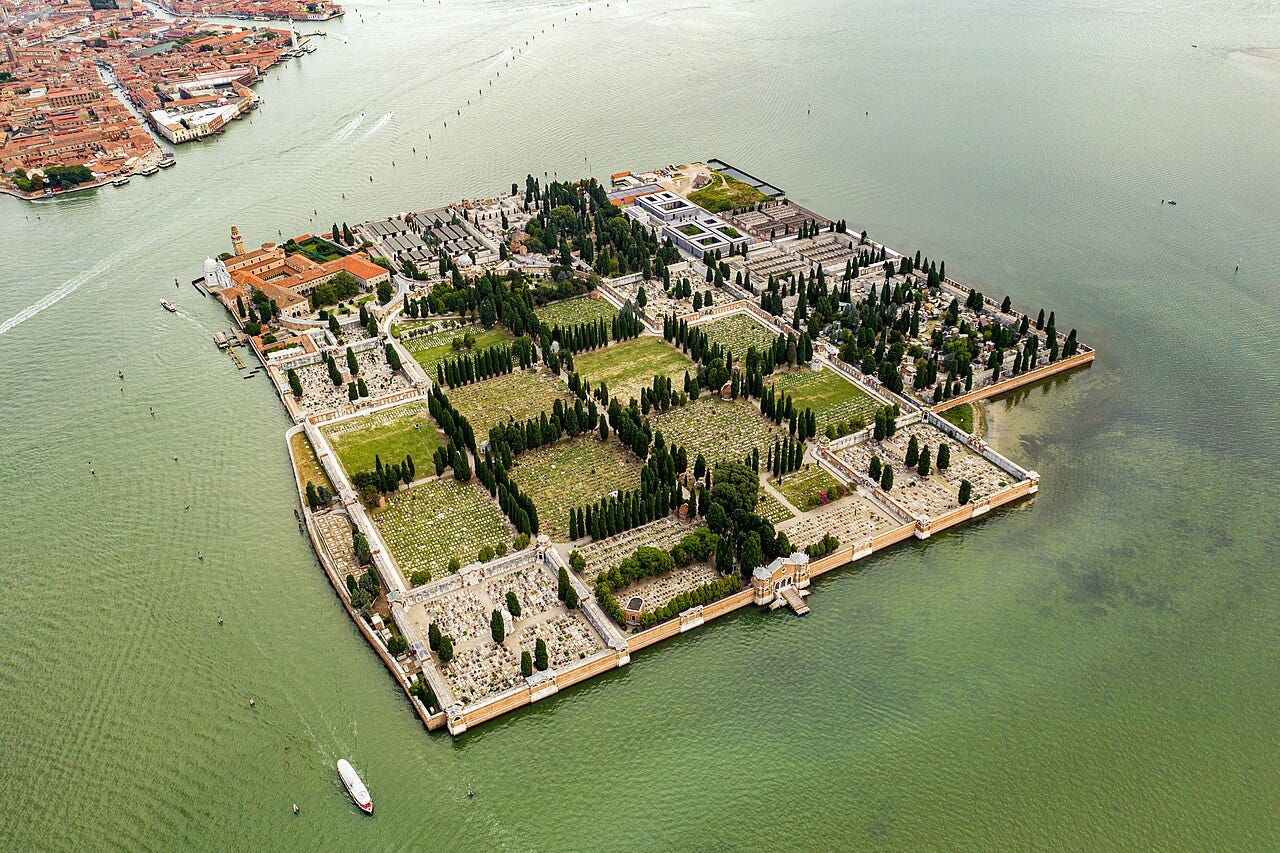
Across the Venetian lagoon, entire islands became burial grounds. Not cemeteries with markers.
They were mass graves.
Thousands of black corpses dropped into the ground and covered as quickly as possible.
Bodies stacked on top of bodies.
