

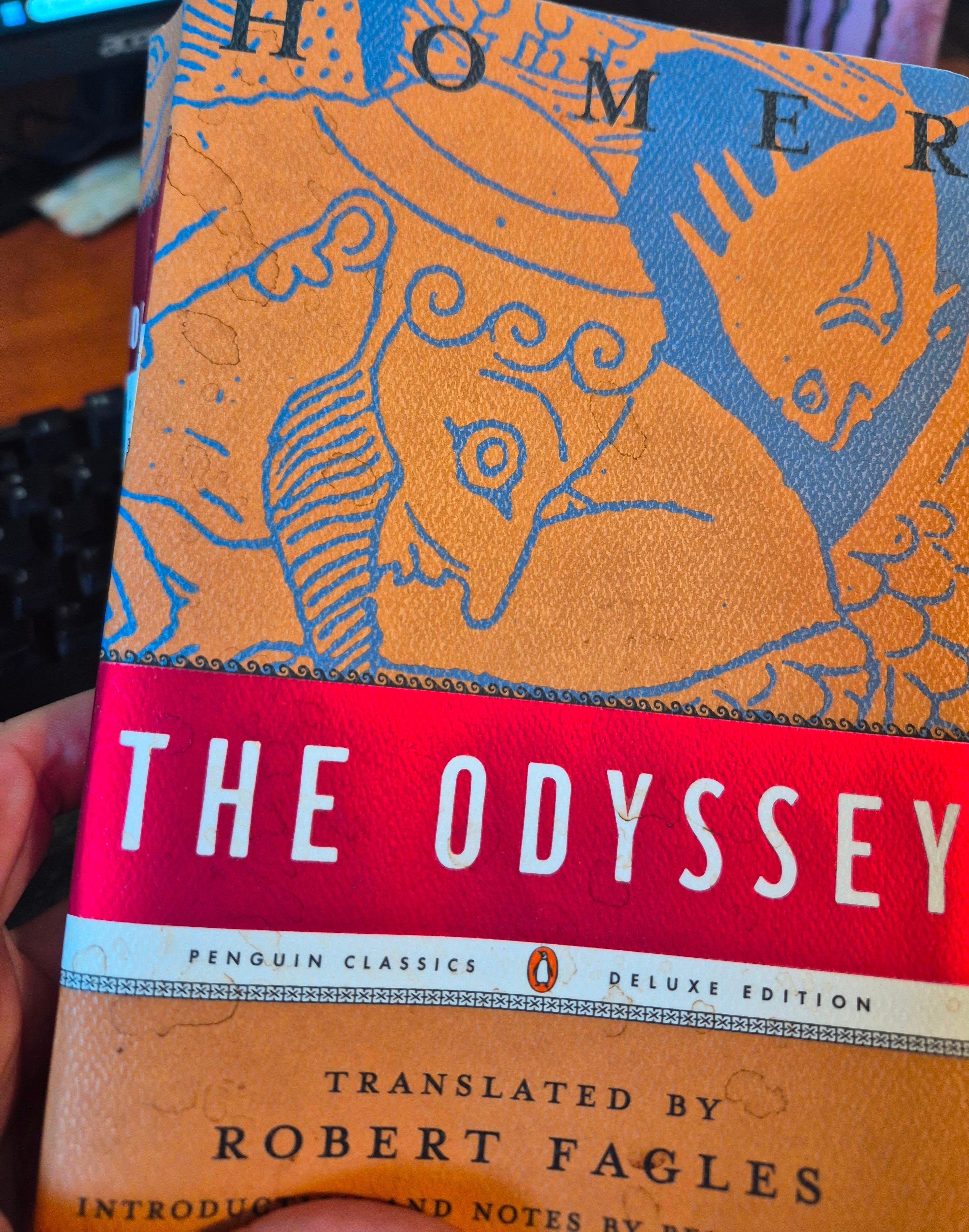
I cracked The Odyssey last month for the first time since Ronald Reagan was in the White House.
What I remembered most vividly: the ending. Odysseus walks into his house and slaughters the suitors where they stand.
Forgot how far Homer goes. Athena stands beside Odysseus while he does it.
The poem doesn’t flinch, and neither did the ancient Greek audience it was written for.
Unlikely that a 2026 Hollywood adaptation would leave the abattoir ending untouched. Modern American storytelling doesn’t do endings that refuse remorse.
That’s what director Christopher Nolan went with. Suitors surrender rather than die. The household slaves Homer executes are spared. Odysseus is exiled, not restored to his throne.
These are problematic updates.
They rewrite the moral of one of the foundational texts of Western culture.
Homer’s ending was the verdict generations of Greek audiences had already agreed this story should have. The Odyssey existed as oral performance for centuries before it was fixed in writing around the 8th century BC.
It was sung at festivals and reworked by bard after bard. It got tested against a live crowd every single time.
Bomb the Odyssey’s ending, and you’re not getting hired for the next festival.
Replacing it with something gentler tells those audiences they misunderstood the story written for them.
Here’s why anything less would have felt like a cheat.
Homer’s Audience Didn’t Want Mercy. They Wanted Justice Paid in Full.
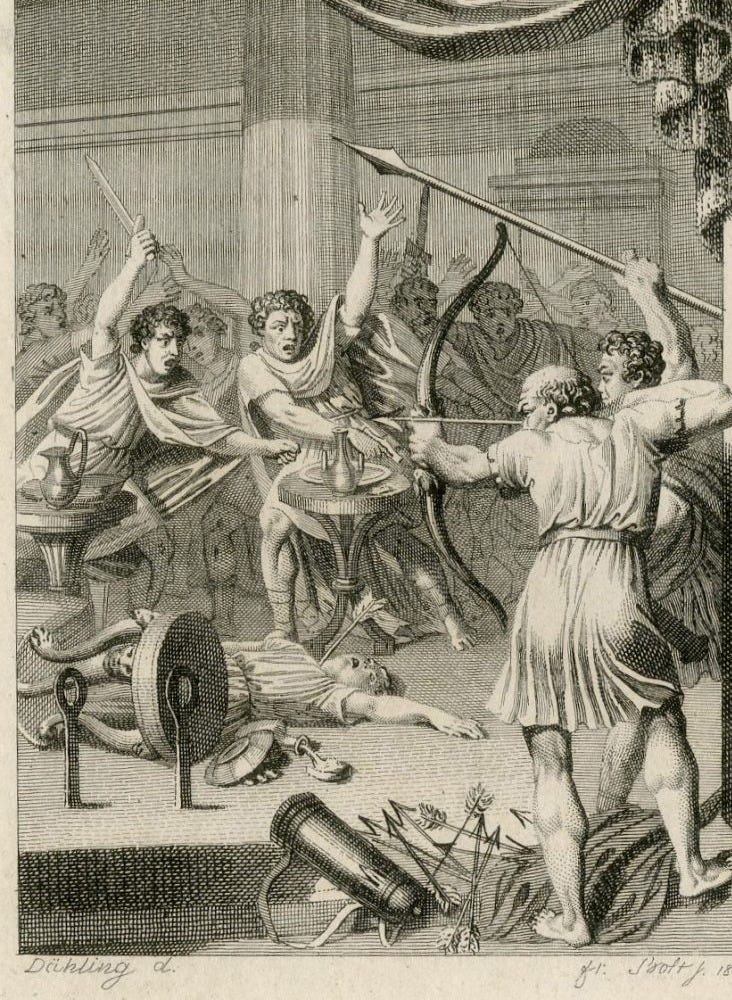
The Ithaca suitors weren’t dinner guests overstaying their welcome by an hour. For years, they occupied Odysseus’s hall, ate through his livestock, and pressured his wife to remarry while his son watched, powerless, in his own home.
To a Greek audience, that was a frontal assault on xenia, the sacred law of host and guest that held their entire social world together.
So when Odysseus finally kills them, the poem doesn’t treat it as a tragedy or a line he crosses. Athena stands beside him doing it. The gods sanction it.
They were meant to feel a debt finally get paid, the way a story that had spent twenty-four books building toward this is supposed to end.
Homer signals it the instant Odysseus casts off his disguise:
“You dogs! You never imagined I’d return from Troy.”
Odysseus announces that judgment day has arrived on schedule. There's no crisis in it at all.
Nolan Swaps Justice for a 2026 Guilty Conscience
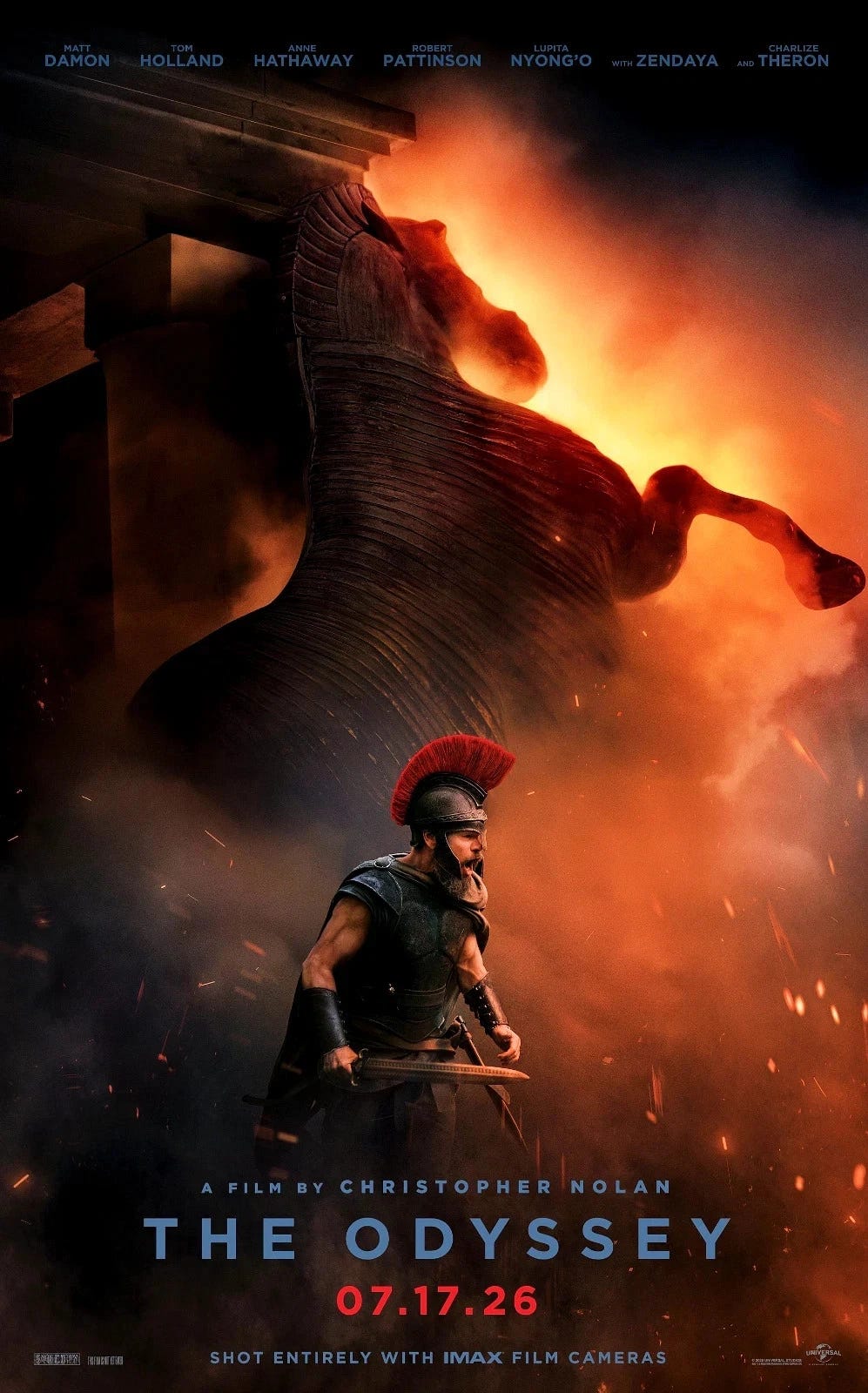
Nolan’s film scuttles the ending.
Suitors surrender rather than die. The slave women Homer executes are spared. Odysseus is haunted less by the war than by guilt over the Trojan Horse itself, and instead of reclaiming his throne, he’s exiled from it, sailing away while his son is crowned in his place.
Every change points in the same direction: consequence as something to apologize for, not something earned.
We soften it because our instincts aren’t the Greeks’. Collective punishment feels unfair now, so sparing the slave women reads as a correction, not loss. We’ve grown suspicious of clean victories, trained by decades of stories where triumph without guilt feels shallow.
Our culture trusts a man who gives something up. It's suspicious of a man who gets it all back.
Exile feels earned to us. Handing a man his throne back, untouched, feels like he got away with something.
Enjoying this essay? This is a reader-supported publication. You can support our thrice-weekly essays today for only $5 per month.
Homer’s audience only asked whether the outcome was fair. Our culture asks if the process was defensible.
You’ve probably watched this happen. A dress code that held an office together for twenty years gets called outdated, right after the person who never had to run the place shows up and says so.
Homer’s Odysseus never agonizes over the Horse, because his culture never asked him to. Cunning was the virtue that won the war.
When he confronts the suitors, he doesn’t search for absolution. He tells them plainly there’s nowhere left to run. Grafting our 2026 discomfort with unambiguous justice onto a Bronze Age hero erases him and puts our face on the mask.
Homer’s Odysseus Would Be Baffled by His Own Guilt
There’s a word for what the Odyssey promises: nostos, homecoming. It’s the root of our word nostalgia, and it’s the entire architecture of the poem. It means every choice across ten years and twenty-four books points at one outcome: get home, stay there, restored.
Nolan’s ending has him sail away again, permanently. Twenty-four books of buildup, and the story never delivers the one thing it exists to deliver.
Metis was cleverness, trickery in the service of victory. The Greeks celebrated it without complication.
Burdening a Bronze Age hero with our discomfort about victory itself makes him a stranger, one that Homer wouldn’t recognize.
The Greeks had a complete moral world, with its own working logic for guilt and justice. Mistaking that for a rough draft of ours is how you lose what made it worth telling.
This is what Past Passport is about: not defending old rules for their own sake, but taking the trouble to understand what they were actually built to do before deciding they failed.
If that’s the kind of history that interests you, that’s exactly what our community of historical optimists focuses on weekly.
The Poem Was Already Finished. Then It Kept Going.
Homer doesn’t stop at the bodies on the floor. Word gets to the suitors’ families. They pick up arms and march on the house, and Ithaca stands on the edge of a blood feud that could have consumed a generation.
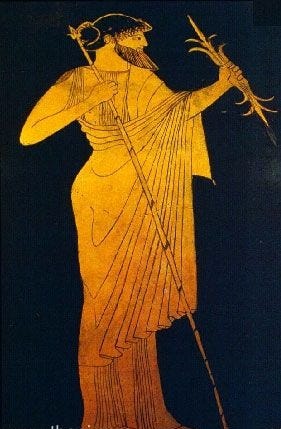
Zeus needs to throw a thunderbolt, and Athena physically forces a truce to end it. University of Iowa classics scholar Celsiana Warwick argues a tidy reunion would have felt unsatisfying to an ancient audience; they needed the feud itself resolved before the story could truly end.
The same poem that delivers the harshest justice in ancient literature also spends a hundred lines ensuring the killing doesn’t spiral into a feud.
Homer’s audience didn’t need the slaughter softened to get their reconciliation. They trusted the story to earn both.
We don’t owe an old story an apology for what it once believed. The more interesting move is trusting people three thousand years dead to have known exactly what they were doing.
We built this newsletter on a bet: that the people who came before us usually knew exactly what they were doing. Join our community of historical optimists and get three essays like this one every week.
We also write about AI for non-technical creators every week. Learn how to use AI more effectively with our weekly tips and lessons learned.
How to Make AI Sound Like a Person
I use Claude to do a very rough initial draft based on my essay outline. Even with instructions about my writing voice, the draft is filled with AI-sounding words. Land. Sit with. Quiet.
It also uses mirrored sentence structures, the ‘it’s not X, it’s Y’ rule, rule-of-three lists, and hedgy phrases like ‘reports suggest.’
Claude also drafted a line implying we are more enlightened than the Greeks, which I don’t believe, and which isn’t what my essay argues.
I spent a couple of hours editing the draft to sound like me, including the line about cracking the Odyssey again for the first time since Reagan was in office. That detail doesn’t come from a machine.
If you want your writing to sound real, drop real details in every few paragraphs that AI couldn’t come up with. AI doesn’t know the details of real life because it isn’t real. The more specific you make your writing, the less machine-made it sounds.
The thing that drives me nuts about this tendency of western civilization is it elides so much learning opportunity. That we don’t share the values of ancestor civilizations is an opportunity to learn what our values really mean. If we pre-sanitize that, we hide the evidence for the why behind our discomfort with how things used to be. We let ourselves forget it when we just go with that. To me that seems not just foolish—but dangerously so.
Not to mention it gives one small group of people with the author’s pen the power to decide what our civilization should think for us in lieu of putting the question to us. I’d rather make my own moral observations than have them pre-selected for me. But that’s just me. ¯\_(ツ)_/¯
Hollywood and its apologists: “bUt iT wAs reWriTteN foR a mOdeRn auDieNcE.”