

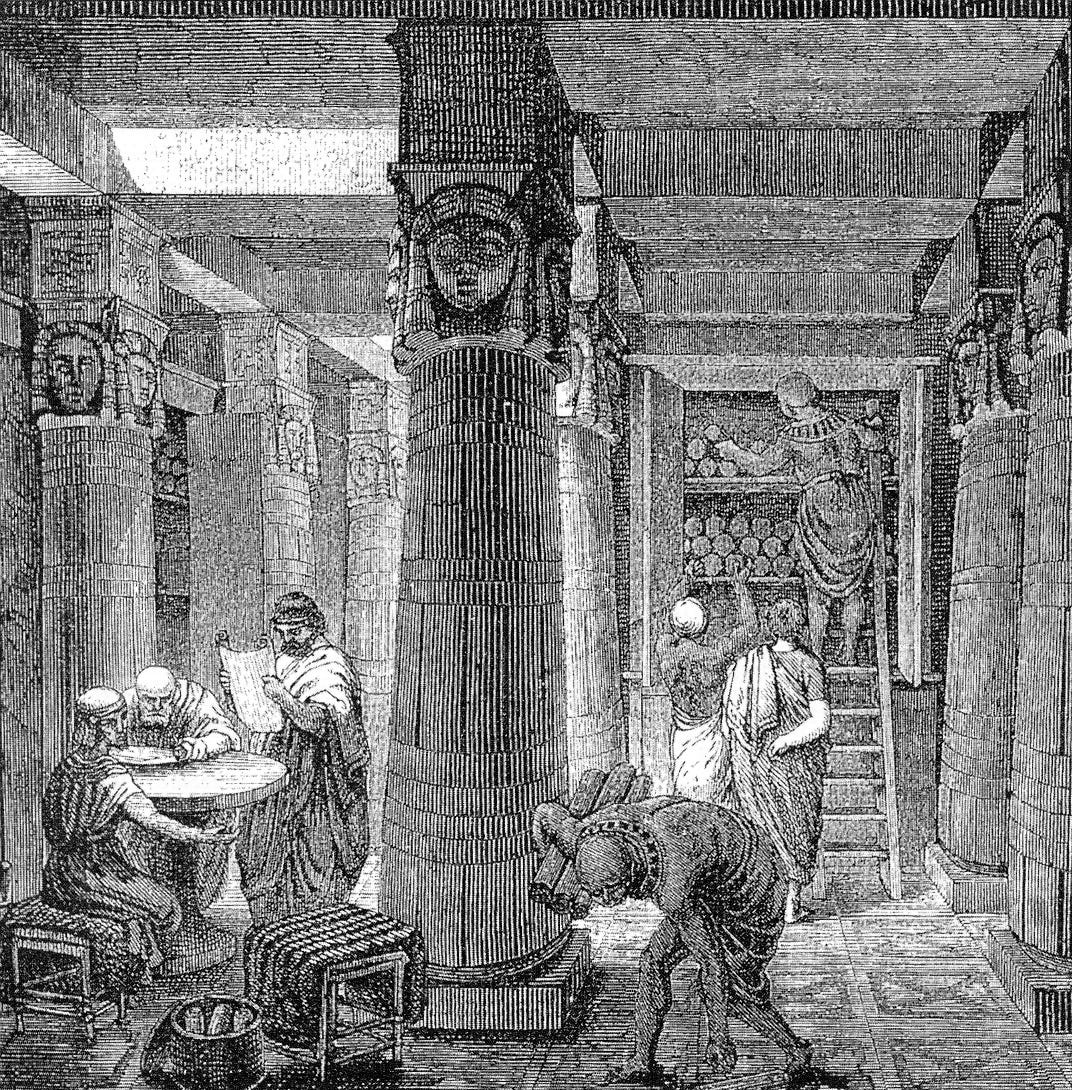
Julius Caesar burned down the Library of Alexandria. One fire and one night. Centuries of human knowledge, gone. I heard that on a documentary years ago and didn’t question it.
Neither did most people. Carl Sagan said something like it on Cosmos in 1980, standing in a recreation of the Library of Alexandria, mourning everything humanity had lost in that single catastrophe. If Sagan said it, millions heard it.
I looked into it later. What I found was messier, slower, and in some ways more interesting than any fire.
The Library of Alexandria died the way most institutions die: one budget cut, one political crisis, one unfilled position at a time.
What people actually believe
The version I’ve heard repeated in conversations says the Library of Alexandria held the collected wisdom of the ancient world, in the form of somewhere between 400,000 and 700,000 scrolls. Caesar accidentally torched it in 48 BC. The ancient world’s knowledge died with it. We lost centuries of scientific progress.
I’ve run across that story in classrooms, at dinner parties, and in casual conversation.
It’s clean and dramatic. It’s also mostly wrong.
What Caesar really did
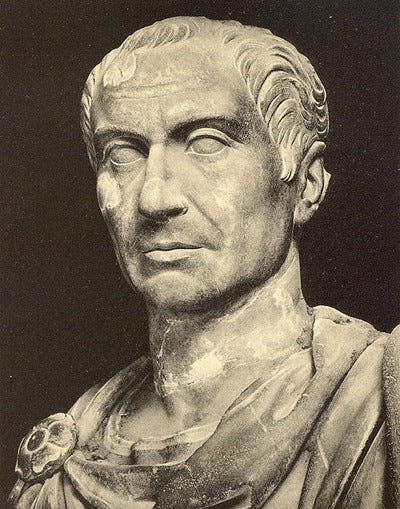
In 48 BC, Caesar was in Alexandria backing Cleopatra against her brother Ptolemy XIII. Outnumbered in the harbor, he set fire to his own ships to prevent them from being captured.
The fire spread to the docks.
Seneca, quoting the historian Livy, says that about 40,000 scrolls were destroyed. That’s real. But those were almost certainly warehouse stock near the waterfront, books waiting to be cataloged or shipped, not the library itself. Caesar doesn’t mention books at all in his own account of the battle. Plutarch mentions a “great library” but his account is vague and written more than a century after the fact.
The institution itself kept going. The library and Mouseion sat in the royal quarter, some distance from the harbor where the fire started. Strabo visited around 20 BC and found the Mouseion still operating, the broader research institution that housed the library, with its lecture halls, scholars, and dining facilities.
What happened to the book collection is less clear. The scholar Didymus Chalcenterus, nicknamed “Bronze Gut” for how much he wrote, was producing work in Alexandria after Caesar’s visit.
Something survived. How much, nobody knows. We know that Caesar damaged Alexandria. He didn’t erase civilization.
The real story is slower and less dramatic
The Library of Alexandria didn’t die in a fire. It faded. Papyrus has an expiration date. Civilizations do too.
It started declining well before Caesar ever visited Egypt. Around 145 BC, Ptolemy VIII Physcon purged foreign scholars during a dynastic dispute. Aristarchus of Samothrace, one of the great librarians, fled. Others followed. Royal funding that had drawn the best minds in the Mediterranean dried up as the Ptolemaic dynasty weakened.
Then, Rome absorbed Egypt in 30 BC, and Alexandria stopped being the center of anything. The political will to fund a massive research institution disappeared. Neglect set in. Scrolls faded and rotted. Positions went unfilled.
Over the following centuries, more damage accumulated. A Palmyrene invasion in the 270s AD devastated the royal quarter where the library likely sat. Aurelian recaptured the city and made it worse. Diocletian besieged it in 297. An earthquake and tsunami hit in 365.
The Serapeum, which housed a daughter library and possibly whatever remained of the main collection by then, was destroyed by a Christian mob in 391 AD under Bishop Theophilus. No contemporary source describes a significant book-burning there. The books were probably already few, scattered, or gone.
By the time the Arab conquest reached Alexandria in 642 AD, there was no functioning great library to destroy. The story that Caliph Omar ordered the books burned to heat the city’s bathhouses for six months is a good story. It doesn’t appear in any reliable source until the 13th century, roughly 600 years after Omar supposedly gave the order. The historian Bernard Lewis called it completely unfounded. No early chronicle, Christian or otherwise, mentions it.
One scholar did the math: keeping Alexandria’s bathhouses running for six months would have required 14 million books. Most ancient texts were written on vellum. Vellum doesn’t burn well.
What we lost
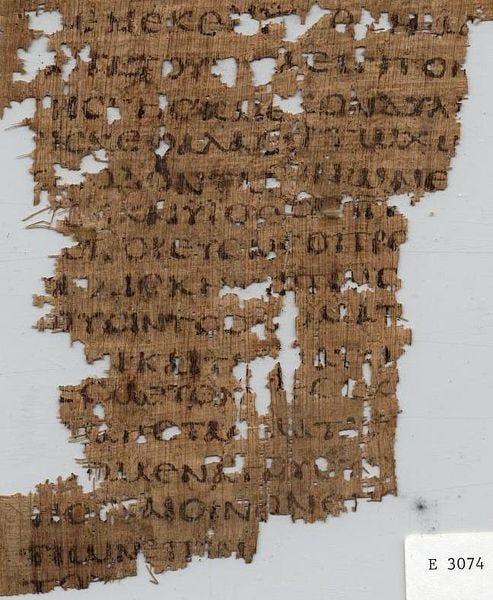
The losses that sting most aren’t the famous works. Those survived because they were already everywhere. What’s gone is everything that existed in only a few copies.
Sappho wrote around 10,000 lines of poetry. We have about 650. Aeschylus wrote somewhere between 70 and 90 plays. Seven survive. Most of what Chrysippus wrote on Stoic philosophy exists only in fragments and secondhand accounts. Hipparchus’s detailed astronomical models, Herophilus’s anatomical work from actual human dissection, the full depth of Hellenistic mechanics and engineering: most of it is gone.
The famous works survived because everyone copied them. The tragedy is everything nobody thought to copy twice.
Why the fire myth stuck
H.L. Mencken once wrote that for every complex problem there is an answer that is clear, simple, and wrong. The Library of Alexandria is a 2,000-year-old example. A villain fits inside a sentence. Institutional decline requires paragraphs.
The story kept finding new tellers because it kept being useful to someone. Plutarch, writing about 150 years after Caesar, mentioned a great library burning in his Life of Caesar, ancient authority that gave the story legs.
Edward Gibbon’s Decline and Fall of the Roman Empire pointed to the Christian destruction of the Serapeum, which suited Enlightenment writers who were happy to have a villain in the church. The Omar bathhouse story circulated through the 19th century before anyone seriously traced it back to a 13th-century source.
Then Carl Sagan stood in a recreation of the library on Cosmos in 1980 and told viewers that if he could travel back in time, it would be there, because “all the knowledge in the ancient world was within those marble walls.” Its destruction, he said, was a warning: “We must never let it happen again.” More than 500 million people in 60 countries heard it.
Sagan never said the word fire. He didn’t have to. The recreation, the mourning, the warning: the image did the work. Five hundred million people filled in the blank themselves.
What every one of those tellers had in common: an axe to grind. Plutarch wrote during Rome’s height, when Caesar’s legacy was contested. Gibbon was a deist who saw Christianity as civilization’s great corrupter. The bishop who invented the Omar story spent his career documenting Muslim atrocities. Each generation inherited the myth and handed it to the next, slightly reshaped for whoever needed a villain that week.
A single dramatic fire is easier to hold in your head than 600 years of neglect, political instability, and the ordinary entropy of papyrus. The real story doesn’t offer a villain or a moment. What it offers instead is something more familiar: a great institution that was the best in the world, then slowly became less important, less funded, less staffed, and then gone.
We’ve watched that happen to things in our own time. Newspapers didn’t die in a fire either. They lost readers, advertisers, staff, relevance, and eventually the assumption that they would always exist.
Alexandria, 2002

There is a Library of Alexandria today. The Bibliotheca Alexandrina opened in 2002 near the ancient site, a massive circular building with a tilted roof meant to evoke the sun rising from the sea. It holds millions of items and runs active cultural and digital preservation programs.
It’s not a resurrection. The ancient library’s contents are still gone. But humans keep trying to rebuild the same thing in the same place.
The Library of Alexandria survived fires, invasions, earthquakes, emperors, bishops, and conquerors. What it couldn’t survive was becoming less important.
History shows that every generation thinks it’s over. It never is. History changes, but man always stays the same. Subscribe today for three articles per week like this one. I also write about using AI as a non-technical creator.
A note on my AI workflow
Most writers talk about AI helping with words. In my process, the more valuable tool, and the more dangerous one, is research. Grok can surface a claim in seconds that would take an hour to find. It can also state that claim with complete confidence when the truth is more complicated.
I use Grok for initial research pulls. It saves hours. But it requires verification, and this article is a good example of why.
Grok told me Gibbon blamed Christians for the destruction of the library. Strong claim. I dug into it. What Gibbon actually wrote was more specific: he focused on the Christian destruction of the Serapeum, not the main library. His broader argument blamed Christianity for Rome’s decline, but pinning the library’s destruction on Christians directly isn’t accurate. Small distinction. The kind a PhD reader catches immediately.
The more useful thing Grok helped confirm was why the one-fire story kept finding new tellers across centuries. The answer wasn’t complicated: each generation found the legend useful. Plutarch, Gibbon, a 13th-century bishop, Carl Sagan — different eras, different agendas, same myth.
History changes. Man stays the same.
People love the idea of a single catastrophe because it lets everyone else off the hook. Slow decline is much more damning.
If we know one thing, it's that history is a story written by the winner... or more accurately, people with an axe to grind. Great article, Joseph. I didn't know this.