

Caesar was a big deal. In 59 BC, he was consul, the Republic’s top job.
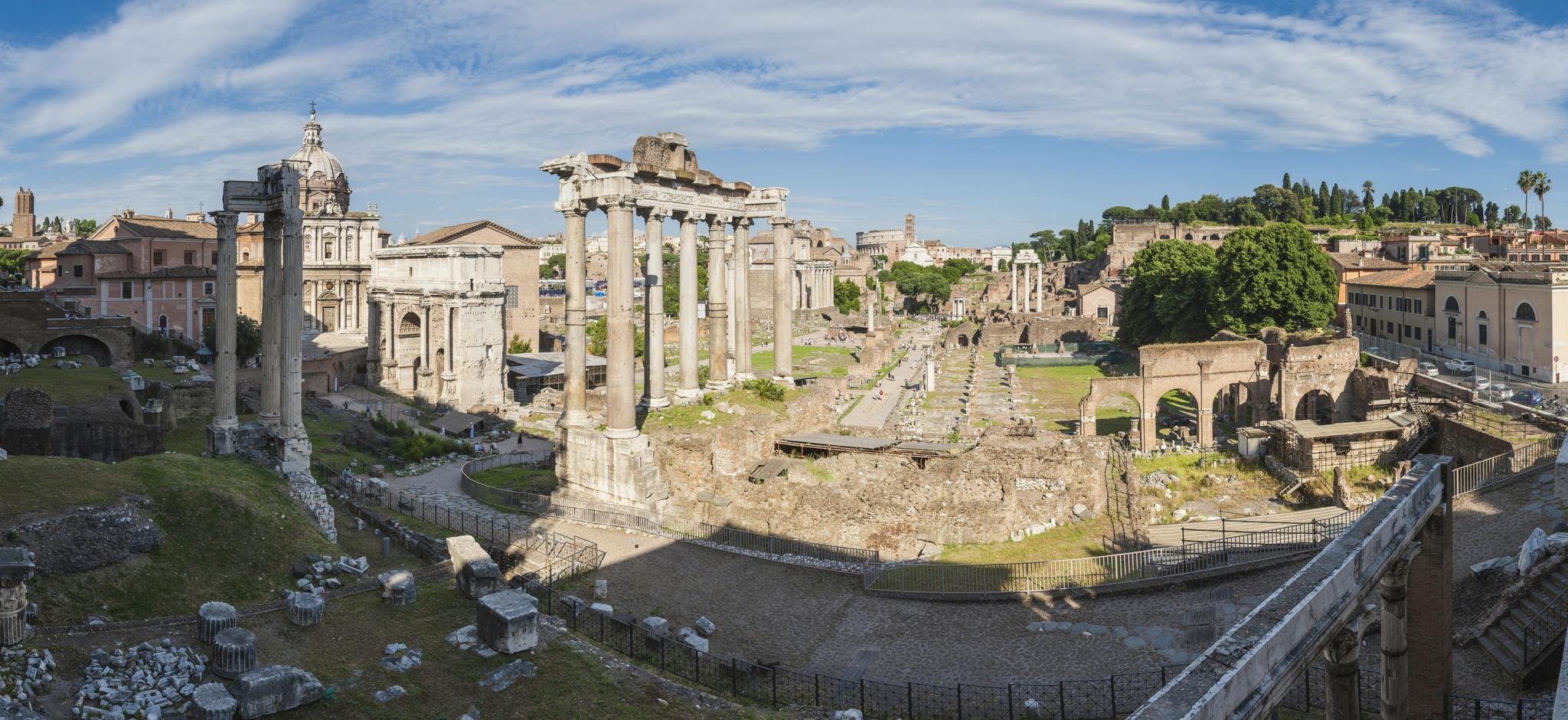
Lictors carrying bundles of rods walked ahead of him, and crowds parted as he strolled the Forum. He sat in an ivory-trimmed curule chair, his toga bordered in purple, and at dawn his hall filled with clients who all wanted favors.
Caesar wanted more, and it would take a war.
Debt was the first problem.
Plutarch says he owed 1,300 talents before he held a single office. Once, on his way to govern Spain, his creditors nearly blocked him from leaving Rome until Crassus bailed him out.
Now his enemies were lining up. Suetonius tells us two incoming praetors opened an inquiry into his consulship before he left Rome.
A governor with imperium, the legal power to command troops, couldn’t be tried while he held command.
Pompey had come home from conquering the East and celebrated a triumph that took two days to pass through Rome. A consul served one year, and Caesar’s remaining debts and his enemies would outlast his term.
He longed for a name to match Pompey’s.
A province would shield him from court, and the legions that came with it could win him glory and loot.
Caesar needed a war. Now.
In a place Suetonius says was “the most likely to enrich him and furnish suitable material for triumphs.”
Thank you for reading! Your support makes Past Passport possible. Paid subscribers get:
3 weekly history essays. Easy reading. No dull dissertations.
3 weekly quick summaries of how we use AI to create every essay.
1 monthly extra newsletter, rotating between a full AI breakdown for writers and video, and a Stoic philosophy article.
Open DM sessions on the month’s top article.
Only $5 per month.
Gaul Was Caesar’s Option B
The Senate wanted to keep Caesar small. Suetonius says it assigned the incoming consuls a command over "woods and cattle tracks" in Italy. For an ambitious politician, about as attractive as a posting to Siberia in January.
His allies went around the Senate.
A tribune named Vatinius took a bill straight to the popular assembly, skipping the higher chamber. The lex Vatinia gave Caesar northern Italy and Illyricum, across the Adriatic, for five years.
One year was normal. Five years is a campaign. For five years, no court could touch Caesar.
Caesar's first war was probably meant for the Balkans, against the Dacian king Burebista. Three of his four legions sat near Aquileia, at the head of the Adriatic, which points the same way.
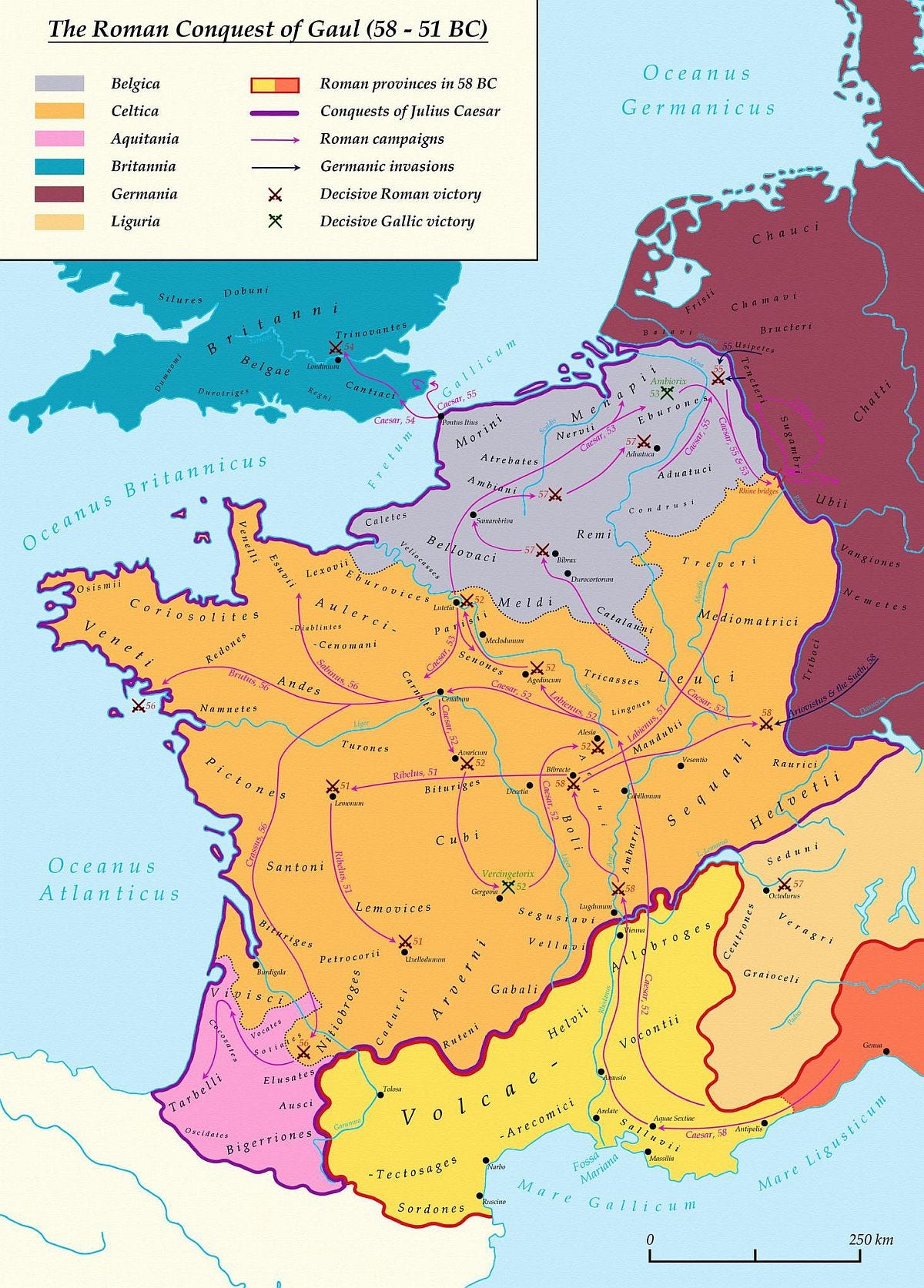
Then Metellus Celer died. He governed Transalpine Gaul, the Roman province in southern France. The Senate handed it to Caesar too, partly because the assembly would have given it to him anyway.
He had legions and five years, and free, feisty Gaul sat next door.
The Allies Dial the Helpline
Two crises hit Caesar in 58 BC, back-to-back, and he used both.
The first was the Helvetii. They burned their own towns on the Swiss plateau and set out for the Atlantic coast, 368,000 people, according to census tablets Caesar says he found in their camp.
The direct route ran through the Roman province. They asked permission to cross.
Caesar stalled. While the Helvetii waited for his answer, his men built a wall along the Rhône, nineteen Roman miles long and sixteen feet high. Then he said no.
So they took the long way, through the land of the Aedui. The Aedui were Rome’s allies. They asked Caesar for help.
He marched out of his province and crushed the Helvetii.
He could have stopped there. Instead, he sent the survivors back to Switzerland. His stated reason was to keep Germans from settling the empty land.
The second crisis was Ariovistus.
A Suebian king, invited across the Rhine by the Sequani to fight their enemies. He stayed and took a third of their land.
Rome knew him. In 59 BC the Senate had named him a friend of the Roman people, with Caesar as consul.
Gallic chiefs asked Caesar to get rid of him. Caesar demanded he stop bringing Germans over the Rhine. Ariovistus refused. In Caesar’s telling, he ruled by right of conquest, same as Rome did.
Caesar attacked and drove him back across the Rhine.
Two wars in one summer, and Caesar wasn’t going home.
