

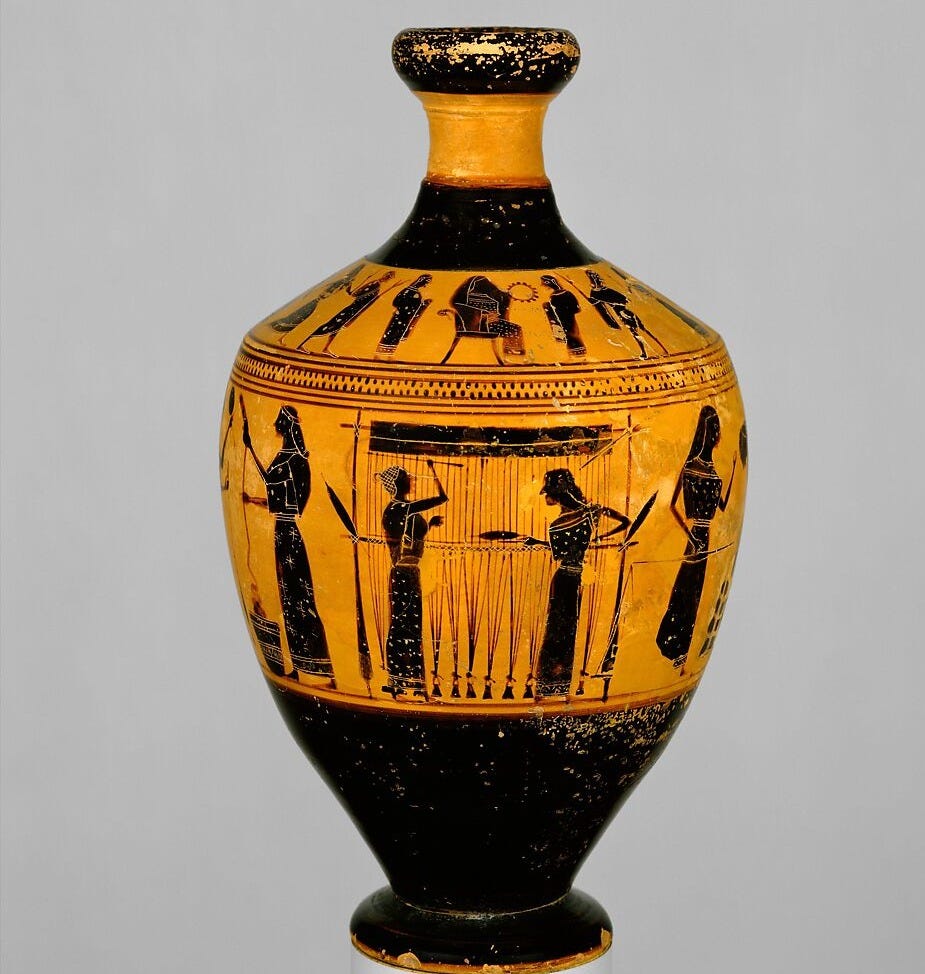
400 BC.
Thousands filled the stone seats of the theater at Epidaurus, Greece, under a clear summer sky, the limestone worn smooth by generations. The audience leaned forward as the rhapsode in a blue-dyed cloak climbed the platform and began reciting the Odyssey.
They were words much of the crowd already knew by heart.
Voices murmured lines before he reached them. Odysseus lashed himself to the mast against the Sirens’ song, twenty years’ journey from Ithaca. His voice carried effortlessly to the back row. The theater had been built for moments like this.
In Plato’s dialogue Ion, the rhapsode describes looking down mid-performance to see thousands of faces streaming with tears, caught in the same fear his voice was describing.
Twenty-four hundred years later, the seats are full again. Nolan’s Odyssey has surged past $700 million in twelve days, tracking toward a billion with China still to open.
A single thread runs from a fire circle to a clay tablet, from a stone amphitheater to a mead-hall, and from there to an IMAX seat tonight. And the thread is us.
Crimson for War. Blue for the Sea.
That scene at Epidaurus isn't invented. Plato's Ion opens with the rhapsode Ion arriving in Athens fresh off a win at Epidaurus's own festival of Asclepius, where he'd just been crowned the best rhapsode in the competition, reciting Homer.
Socrates, curious what that actually feels like, starts asking questions.
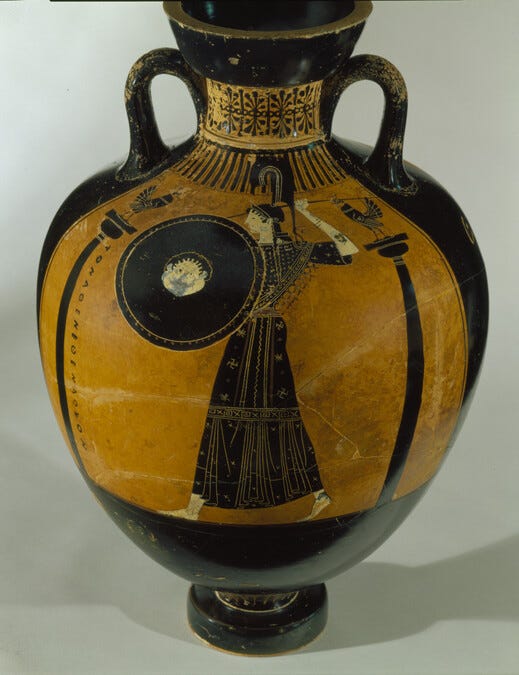
The real force behind Homer’s survival was the Panathenaea, Athens’s great religious festival. Every four years the city filled with processions, sacrifices to Athena, athletic contests, and days of musical competition. Rhapsodes competed with one another.
By law, reportedly introduced under the tyrant Hipparchus in the sixth century BC, each performer had to pick up exactly where the previous one stopped.
Together they recited the Iliad and the Odyssey from beginning to end without skipping or repeating a line.
They were clothed in elaborate robes and gold crowns, colors tied to the material: crimson for the bloodshed of the Iliad, blue for the sea-wandering of the Odyssey.
Plato’s Ion, written about 380 BC, captures what those performances did to a body. Socrates presses the rhapsode on whether he remains in his right mind while performing, and Ion admits he doesn’t:
“When I speak of pity, my eyes fill with tears; when I speak of what is fearful and awful, my hair stands on end for terror, and my heart leaps.”
Socrates asks: does it make sense for a grown man in fine robes and a golden crown to stand before twenty thousand friendly people and tremble as though danger were real?
Ion doesn’t argue. He says he can see the same thing happening in the crowd below him: faces turned upward, tears, fear, twenty thousand people living inside the story right alongside him.
Strip away the Cyclops, the gods, and the sea, and it’s a man trying to get home to people who’ve been waiting twenty years for him.
It is a story that needed no translation in 400 BC, and needs none tonight.
Augustus’s Sister Fainted at a Book Reading
Three centuries later, Rome produced something new: an epic with one named author writing alone at a desk, instead of a story shaped across generations of oral performance.
Virgil composed the Aeneid under Augustus, consciously building on Homer rather than descending from him. Yet even a written epic still needed an audience.
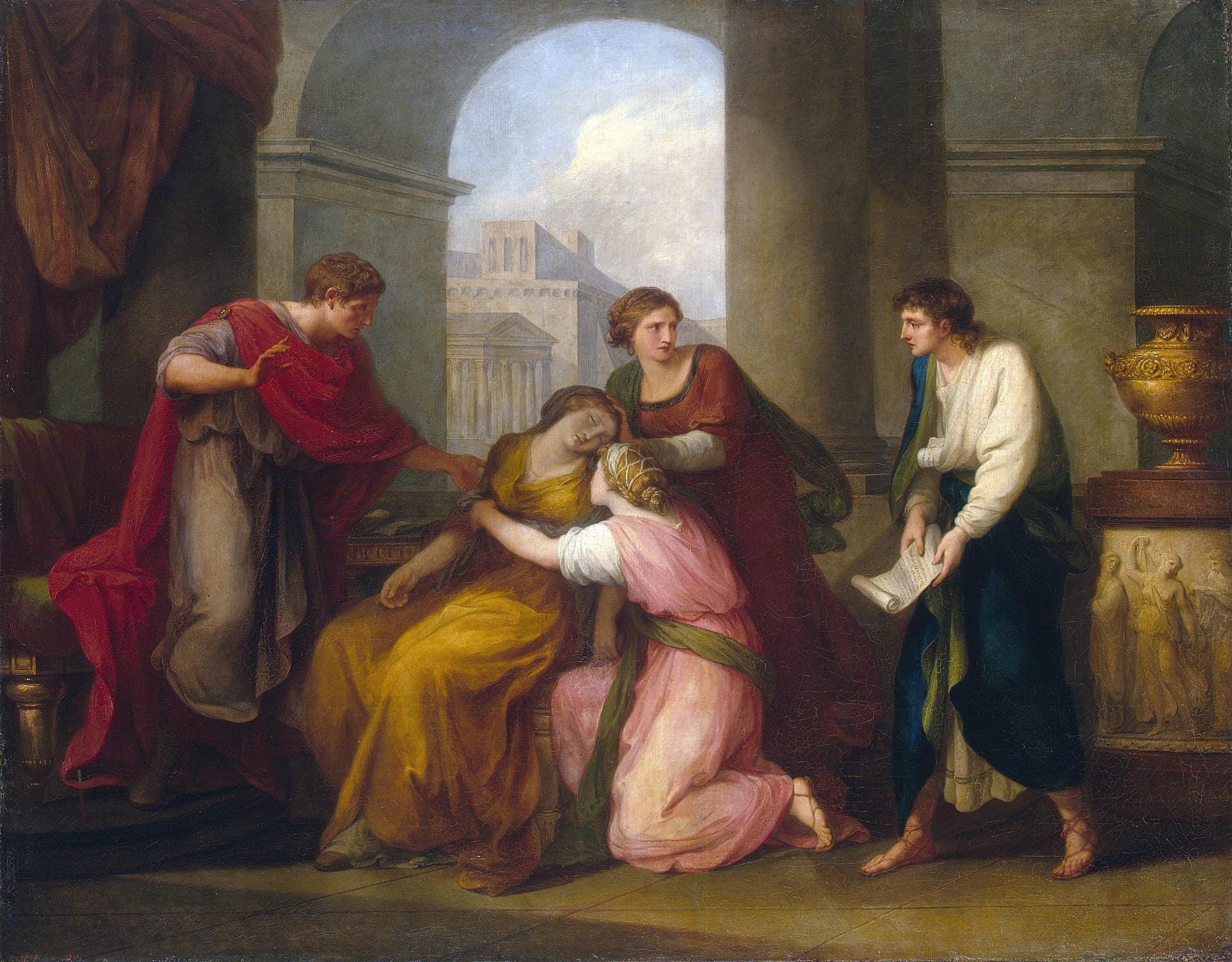
The ancient biographer Aelius Donatus records Virgil reading Book 6 aloud to Augustus’s own family.
He reached the line “tu Marcellus eris,” you will be Marcellus, and Augustus’s sister Octavia, whose son had died young and shared that name, is said to have fainted on the spot. She was revived only with difficulty, and reportedly rewarded Virgil with ten thousand sesterces for every line in the passage.
Aeneas leaves the woman he loves to found a nation instead.
We think we invented the conflict between love and duty. Virgil buried a queen over it two thousand years ago.
He Might Not Live to Hear the Ending
Move north and centuries forward, and the venue changes again.
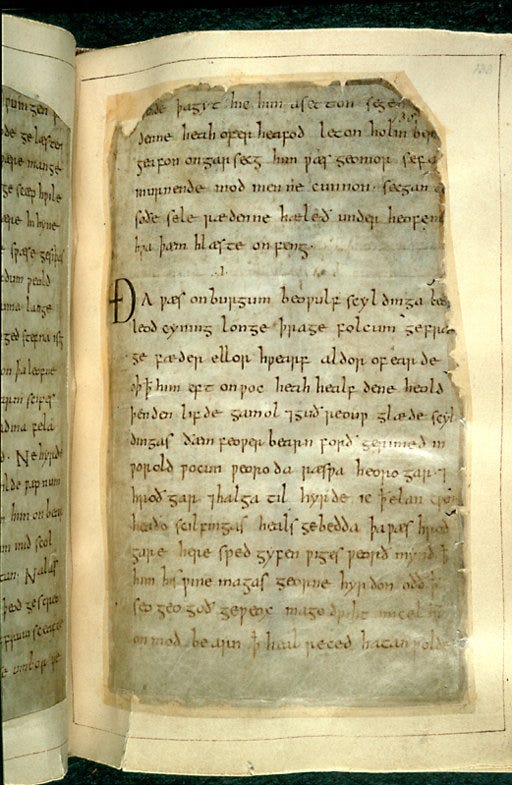
Beowulf was composed for performance in the mead-hall, a scop with a harp, reciting for warriors who would fight the following morning and might never hear how the story ended.
Only later did monks commit it to vellum, preserving something that had already survived generations without a single written word.
Every culture invents its own Grendel: something in the dark nobody wants to face alone. Every culture also produces someone willing to go first.
The Idea Outlasted Troy, Gotham, and Deep Space
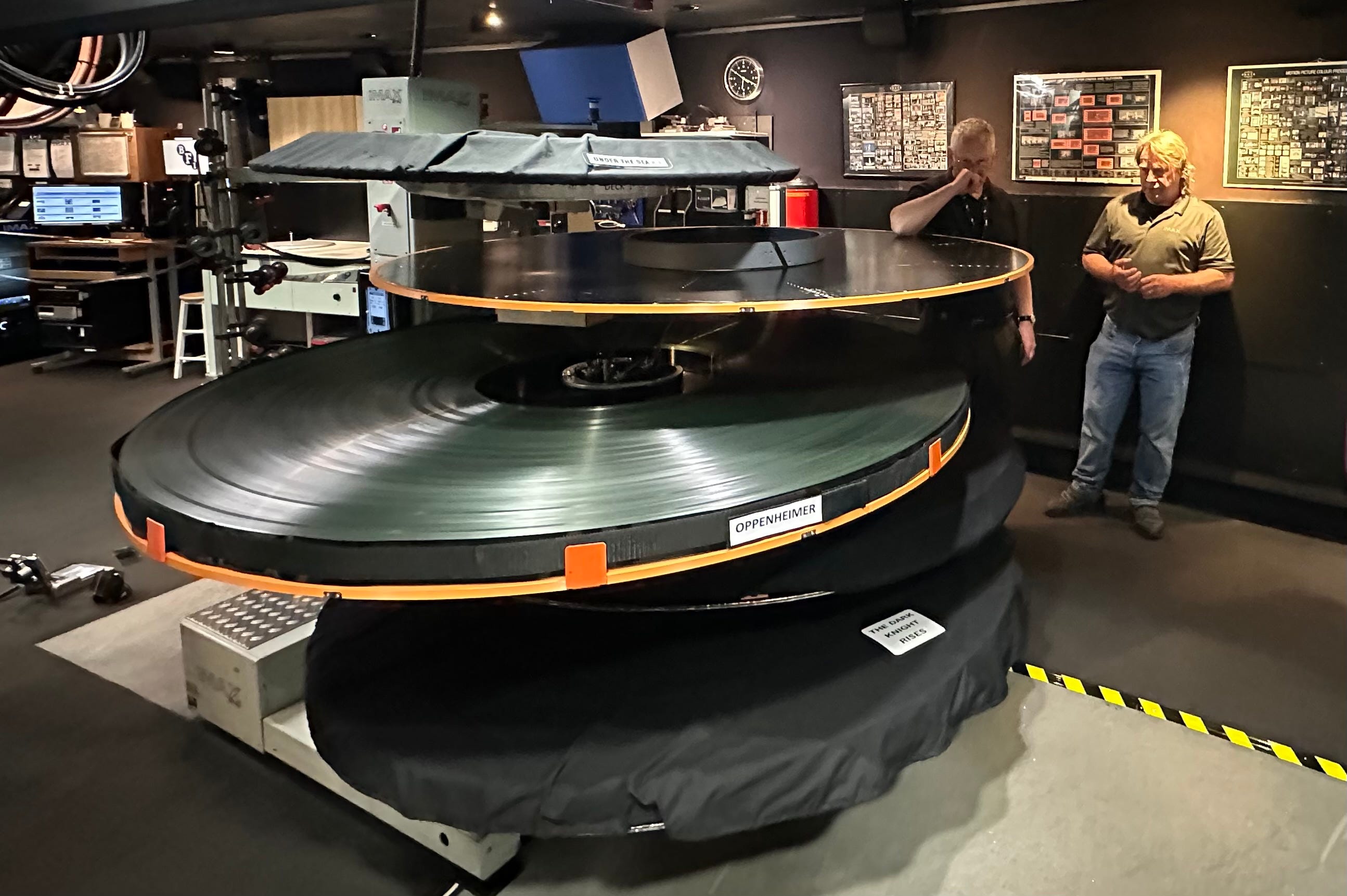
In 2004, Christopher Nolan was in talks to direct Troy, based on the Iliad. The deal fell through. He carried the idea for years through Gotham, deep space, and Los Alamos before finally returning to Homer.
His Odyssey has already sold hundreds of millions of dollars in tickets in less than two weeks. China is still waiting for opening night, not because the marketing worked, but because the story being sold is the oldest one there is.
Before there were books, there was firelight. Before there were theaters, there was a circle of people waiting for someone to begin.
We still are.
If you found your way here because of Nolan's Odyssey, welcome. This is what Past Passport does every week: takes whatever's actually happening right now and follows the thread back as far as it goes.
The world isn't ending. It never has. Three history essays arrive in your inbox weekly, free, for anyone who wants proof that the future is bright.
Past Passport also covers AI use and strategies for non-technical creators. Today’s tip discusses how different AIs have different strengths during the editing process.
Reconciling AI Contradictions During Editing
I draft and outline my essays with Claude, then edit heavily. Once a draft is close, I run it through ChatGPT for a final pass.
Many writers prefer Claude for long-form writing, and I do too, but ChatGPT has a well-known strength: it’s less wordy, and it’s good at compressing a paragraph into one line that sticks in one’s memory.
That’s the editing pass I use it for. The history is mine, the research is mine, the essay structure is mine, but the final “mic drop” line in a few of these sections is helped by ChatGPT.
Especially loved this one, with the artful shifts from one kind of ancient world to another, really sets out the sheer universality of the message. Thank you
Thanks !