


Caesars Head rises more than 3,200 feet above sea level in South Carolina.
Some say the rock’s profile resembles Julius Caesar.
It’s about 4,900 miles from Rome. Caesar has been dead since 44 BC.
This is the week’s free article. Your support makes Past Passport possible. Subscribe and receive:
3 weekly history essays. Easy reading. No dull dissertations.
1 monthly extra newsletter, rotating between a full AI breakdown for writers and video, and a Stoic philosophy article.
Open DM sessions on the month’s top article.
Only $5 per month. Free trial included.
He laughed at his kidnappers
Most of us would be terrified if we were kidnapped.
Now imagine laughing at the men who did it.
Around 75 BC, Cilician pirates seized a young Roman named Julius Caesar at sea. They demanded 20 talents to release him.
Caesar laughed. Legendary nerve. He told them they had no idea who they had snatched. He offered 50.
Caesar spent 38 days in their camp while his companions raised the rest of the ransom.
Caesar was in charge even as a captive.
He ordered them to be quiet when he wanted to sleep. He read them his poems, and when they failed to admire them, he jeered at them as illiterate barbarians.
And he told them, often and laughing, that he would crucify them all.
The pirates took it for boyish humor.
You probably would have too.
Caesar kept his word once the ransom was paid.
He raised a fleet and caught most of them still at anchor. He crucified every one as promised.
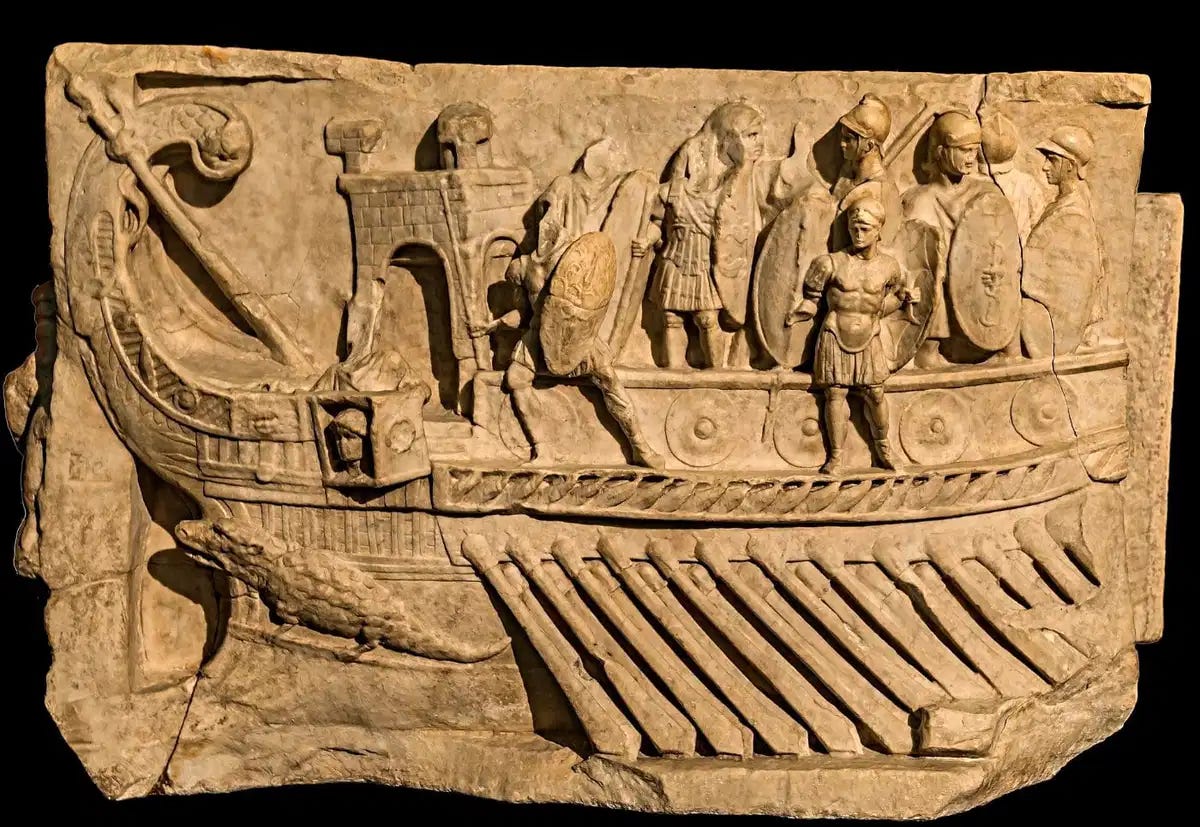
Suetonius adds one merciful detail. Before the crucifixions, Caesar had the pirates’ throats cut.
Caesar’s nerve stayed with him.
About 25 years later, in January of 49 BC, he crossed the Rubicon with one legion, roughly 5,000 men. Bringing an army over that river was treason.
Pompey, Rome’s most famous general, abandoned Italy in roughly two months, before a pitched battle.
In 47 BC, at Zela, Caesar reported his victory to a friend in three words:
“Veni, vidi, vici.”
I came, I saw, I conquered.
He made mercy a weapon
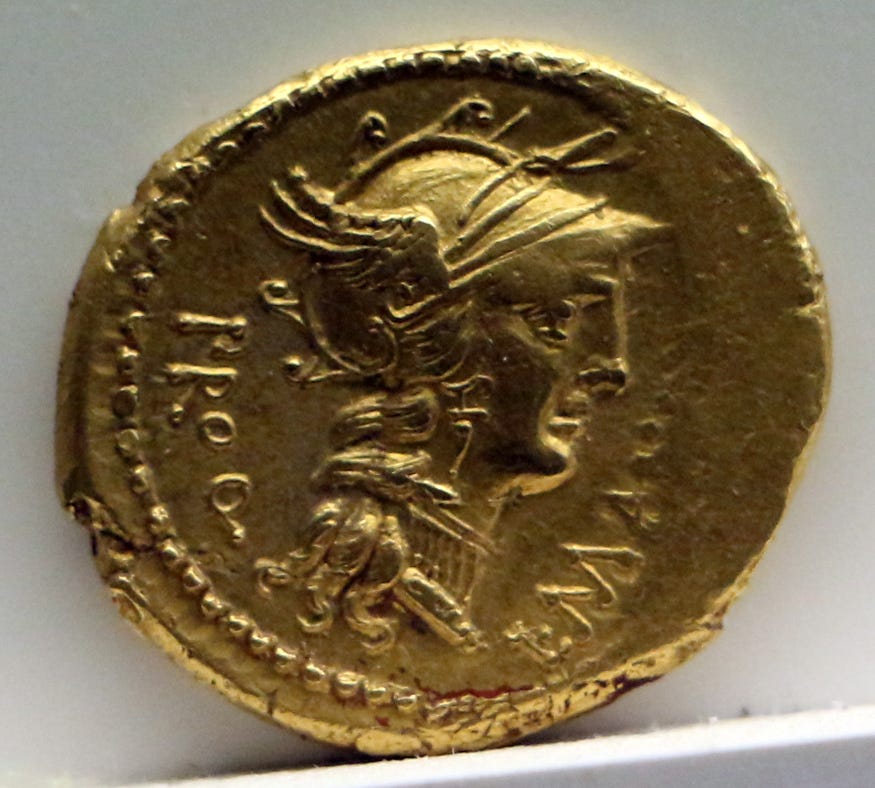
Lucius Cornelius Sulla was a Roman general who ruled Rome when Caesar was young.
He was old-school with his enemies. He killed them.
The policy was chiseled on his tomb. According to Plutarch, the epitaph boasted:
No friend ever outdid me in kindness, and no enemy ever outdid me in harm.
He meant it.
In 88 BC, he marched his army into Rome, the first Roman general to do so. He came back in 82 BC and won a civil war.
Days later, he called the Senate to a temple and began to speak.
Outside, his soldiers were killing prisoners. Plutarch says 6,000.
The senators heard the screams. Sulla told them to keep listening. Some criminals were being punished on his orders.
Plutarch says his face never changed.
Sulla posted lists of his enemies in the Forum. Anyone could kill a man on the list and collect a reward. If your name was up there, that included your neighbor.
They seized the listed man’s property. They displayed his head in the Forum.
Sulla went after a young Caesar too.
Marius and Cinna had made him a priest of Jupiter as a teenager. The job came with rules. No riding a horse. No looking at an army. It would have kept him out of politics and war.
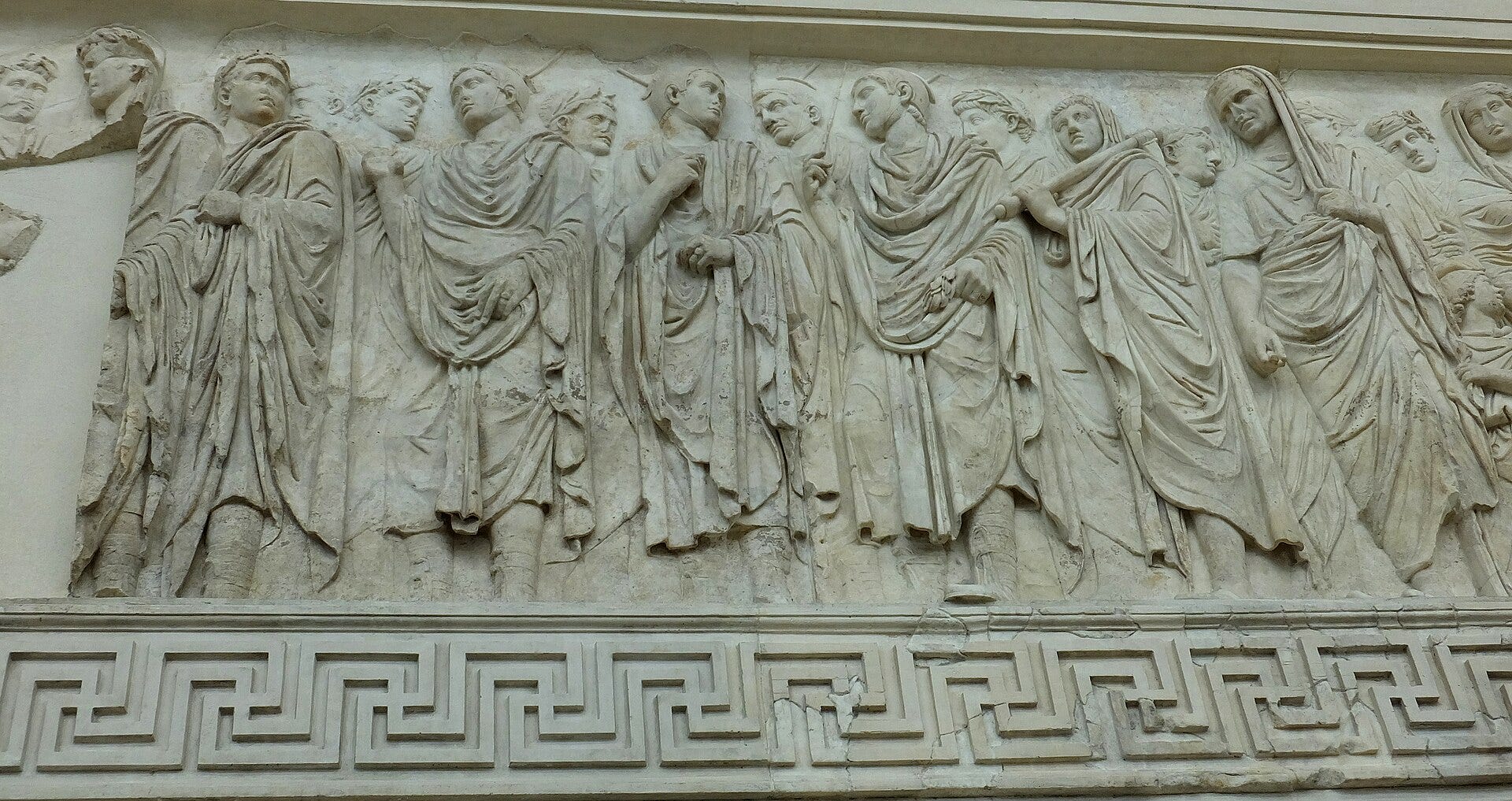
Sulla ordered him to divorce Cinna’s daughter. Caesar refused.
He lost the priesthood and went into hiding, and Suetonius says Sulla gave in only after the Vestal Virgins and Caesar’s relatives pleaded for him.
A priest of Jupiter could never look at an army. Caesar made a career of it.
Thirty-three years later, he had his own army and faced the same choice.
At Corfinium in 49 BC, he captured the Roman commander Lucius Domitius Ahenobarbus and let him go.
Then he wrote to his agents Oppius and Balbus about it. Cruelty never bought a lasting victory, he said, with one exception: Sulla. Caesar wrote that he would not follow Sulla’s example.
He called mercy a new way of conquering.
Ahenobarbus went straight back to fighting.
Caesar kept pardoning anyway. Every Roman watching learned that surrendering to him was survivable. He also restored the sons of Sulla’s victims, whose rights had been stripped.
In Gaul, when severity paid, he chose severity. At Uxellodunum in 51 BC, he spared the defenders’ lives and had their hands cut off as a warning.
He used mercy as a weapon when it worked. In the civil war, it worked very well.
But some of the men he pardoned were among those who killed him.
He wrote his own history
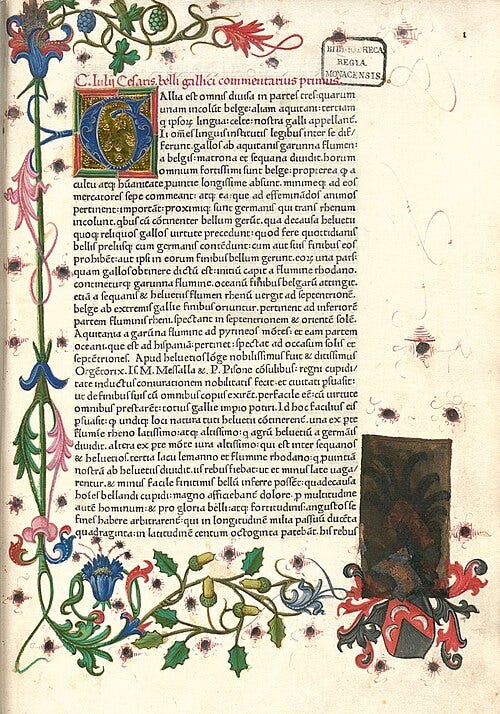
While the war in Gaul was still being fought, Caesar wrote its story well in his Gallic War.
In the third person and in plain Latin.
In 46 BC, Cicero, who had backed Pompey against him, read Caesar’s history and called it bare and pleasing, with every ornament stripped off like clothing.
It’s how I try to write too. Fact first and no costumes.
Cicero also said anyone with sense would think twice before rewriting it.
They did think twice. Much of what we know about the Gallic War comes from Caesar himself.
He wrote as “Caesar,” and every victory reads like a report from a neutral observer. The observer was Caesar.
He puts two German tribes, the Usipetes and Tencteri, at 430,000 people and says the Romans lost no one in the final battle. Scholars still argue over those numbers.
The battle itself is real. In 2015, Dutch archaeologists announced they had found the field near Kessel: swords, spearheads, a helmet and the bones of men, women and children, dated to the first century BC.
His own war reports helped keep him remembered for two thousand years.
A worn copy of his Gallic War is on my desk.
He changed the calendar
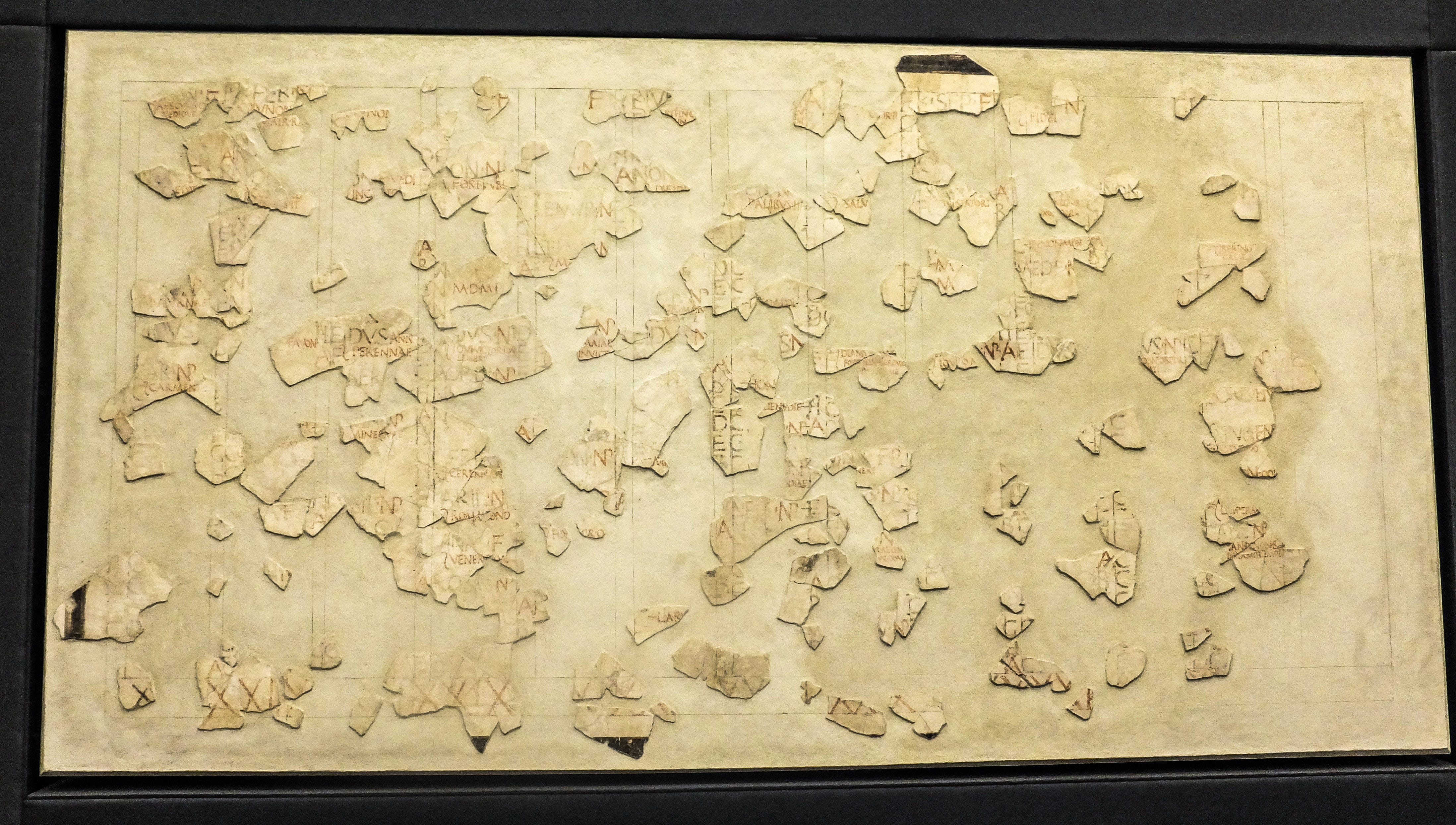
Caesar is remembered for fixing time itself.
By 46 BC, the Roman calendar had drifted out of step with the seasons, because the priests in charge of correcting it had skipped their corrections.
Their chief was Caesar.
Caesar added 90 days to the year.
That year ran 445 days and became known as the year of confusion.
In 45 BC, the new calendar began. It had 365 days, with an extra day every fourth year.
Much of Europe used it for more than 1,600 years. In 1582, Pope Gregory XIII changed the leap-year rule to fix a small error. The calendar on your wall is Caesar’s, with that repair.
After his death, Rome renamed the month of his birth in his honor.
Every July, English speakers say his name. So do the French, Germans, Russians, and Greeks.
This is this week’s free article. We write history like this three times a week:
Every generation thinks the world is ending. It never has. Join our community of historical optimists.