

A billboard flashed past my car window on I-30 in Arkansas, still 700 miles from my hometown in Ohio: PHONE ADDICTION? THERE’S HELP. A 1-800 number underneath in two-foot-high print, like a drug abuse hotline.
The addiction’s real. Reviews.org found Americans check their phones 186 times a day, once every five minutes they’re awake.
You know the routine: a negative news headline blares on the rectangle in your hand, and you're upset before you've even registered what happened.
The reaction is a distinct step, and it happens so fast it seems automatic.
It’s not.
A Roman emperor spent fourteen years on the Danube frontier learning to slow the reaction step down, two thousand years before smartphones existed.
Marcus Aurelius wrote down exactly how. It still works, whether the thing that ambushed you was a headline or a habit you can’t break.
A Messenger Rode in with the Empire Dying

A plague hit Rome in 166 AD, brought home by soldiers returning from the east. At its peak, the historian Cassius Dio reported 2,000 deaths a day in the city alone.
Marcus Aurelius spent the next fourteen years on the Danube frontier fighting the Marcomannic
Wars while that same plague tore through his own army and likely killed his co-emperor, Lucius Verus.
Couriers rode in daily, each one on a fresh horse handed off at the last relay station: sealed tablets, casualty counts, unrest reports from provinces he’d never see in person.
He read every one of them the way you read depressing headlines on your phone. Bad news pouring in faster than he could process it. No button to close the app, though.
Most of us haven’t dealt with empire-level problems, but a run of bad headlines can hit you in 30 seconds on your smartphone, each one demanding a reaction before you’d finished forming one about the last.
You’re irritable at breakfast with your kids and don’t fully know why.
The Emperor Wrote the Fix in Meditations
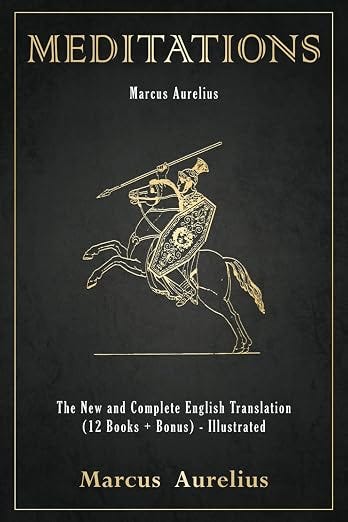
Somewhere in those dark years, Marcus started writing private notes to himself on papyrus scrolls, never meant for anyone else to read.
Those notes became Meditations, one of the most famous Stoic texts ever written, and survived only by chance.
In one entry, he applies a lesson Epictetus had spent a career teaching him:
Every report arrives twice, once as fact, and once as the verdict you attach to it.
Epictetus called the raw report an impression, phantasia: what you read and your brain sees before you’ve done anything with it.
He called the reaction assent, sunkatathesis: the verdict you give the report.
A courier didn’t hand Marcus a crisis. He gave him a fact. The crisis existed only once Marcus decided what the fact meant. That part, Epictetus insisted, was the only part that had ever been his to control.
You get a vote in the half-second between reading the story on your Android and reacting to it.
Most people never realize they have one.
Two Stoic Tools From Marcus's Notebook

Rome had a version of the negative news feed: a board in the Forum called the Acta Diurna, posted daily since 59 BC with trial verdicts, military reports, births, deaths, and scandal for anyone to read.
Marcus’s own dispatches, plague counts and battlefield losses, likely ended up posted on it. He was managing the news and dealing with it on the battlefield in real time.
The emperor left us two Stoic tools that worked then and now on the negative newsfeed:
Name it before you judge it.
When you read a headline like “Nolan Alters Odyssey Ending, Draws Backlash Over Maids’ Fate,” say the bare fact to yourself first. “Nolan changed an ending.” Not “he’s ruining Homer” or “nobody respects the source material anymore.”
Hold the fact alone in your mind for one breath before the reaction Marcus did this in ink. You can do it in the time it takes to unlock your phone.
Expect one hard thing before you open the app.
Ten seconds, before you scroll: name one difficult thing you already assume you’ll see. Maybe a politician you hate announces a program you think is bad for the country.
The Stoics called this rehearsal premeditatio malorum. It turns the feed from an ambush into a cost you already agreed to pay. Nothing that follows gets to surprise you into a worse mood than you came with.
Marcus was managing plague and army deaths. You’re reacting to headlines. Scale doesn’t matter, though. The mechanism is identical: a bad report arrives, then a separate step decides what it means.
Epictetus pointed out that the second step is the only one anyone ever controls, whether the report says an army lost 1,000 men, or a stranger on your phone said something insulting.
A Horseback Messenger Versus Social Media Algorithms
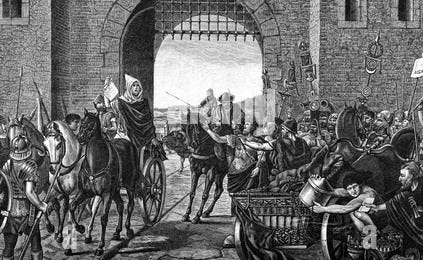
Marcus had it easier in one way. His bad news arrived on horseback at 10 mph, a few times a week, chosen by men who had to physically ride it to him.
Your bad news arrives on a feed built and tested by people whose job is measuring exactly what makes you react, click, and keep scrolling, then rebuilding the feed around whatever worked best.
In 1968, a researcher named George Gerbner found that heavy TV viewers believed the world was more dangerous than it actually was. He called it mean world syndrome. The smartphone news feed runs the same technique faster.
I learned this last January. I decided to cut political news out of my phone and start a history newsletter instead.
Three days in, I noticed something fascinating: my creativity exploded.
Ideas came for articles, and new chapters showed up for the novel I hadn’t touched in two years.
I’d spent years forming negative opinions almost instantly about events I couldn’t control. The moment I stopped reacting, that same mental energy found better things to do. I’d discovered, without knowing it, what the emperor had figured out 2,000 years earlier.
I think about that billboard often. Some days I enjoy reading bad news again. Part of me relishes the jolt when something’s finally as bad as I suspected, the small rush of being right about how bad things are.
Marcus’s Stoic tool doesn’t erase that feeling, and Epictetus never promised it would. What it gives me is an awareness that I have a choice in how I react to negative news.
History is full of people who faced worse and kept building anyway. That's the whole premise of Past Passport: three essays a week for readers who'd rather learn from that than doomscroll past it. Join us.
Editor's note: Past Passport also shares tips and strategies on using AI, even if you're not technical. Skip this section if it's not for you, plenty of readers find it useful.
Starting August 1, 2026, AI tips and a monthly AI newsletter move to paid subscribers only, on top of the three weekly history essays. It's $5 a month. Subscribe today.
Use AI to Fix Bad Headlines Fast
I spend real time on headlines and subheads for every history essay, but sometimes the one I pick still bombs. Usually, I know within an hour of posting: if clicks and read-through are running well below average, there’s a good chance the headline is the problem, not the essay.
When that happens, I ask Claude to generate several headline options based on the finished essay, not the other way around. If I swap one in, I wait about ten minutes, then check Substack’s stats again. More often than not, the clicks and read-through percentage jump.
AI can’t predict which headline will actually work. But it’s useful for generating options fast enough to test one on the fly instead of sticking with a headline that isn’t working.
The feed wants a reaction. Marcus Aurelius would probably tell us to make it wait.
I was not expecting to see a reference to George Gerbner in a history article. But very appropriate!